|
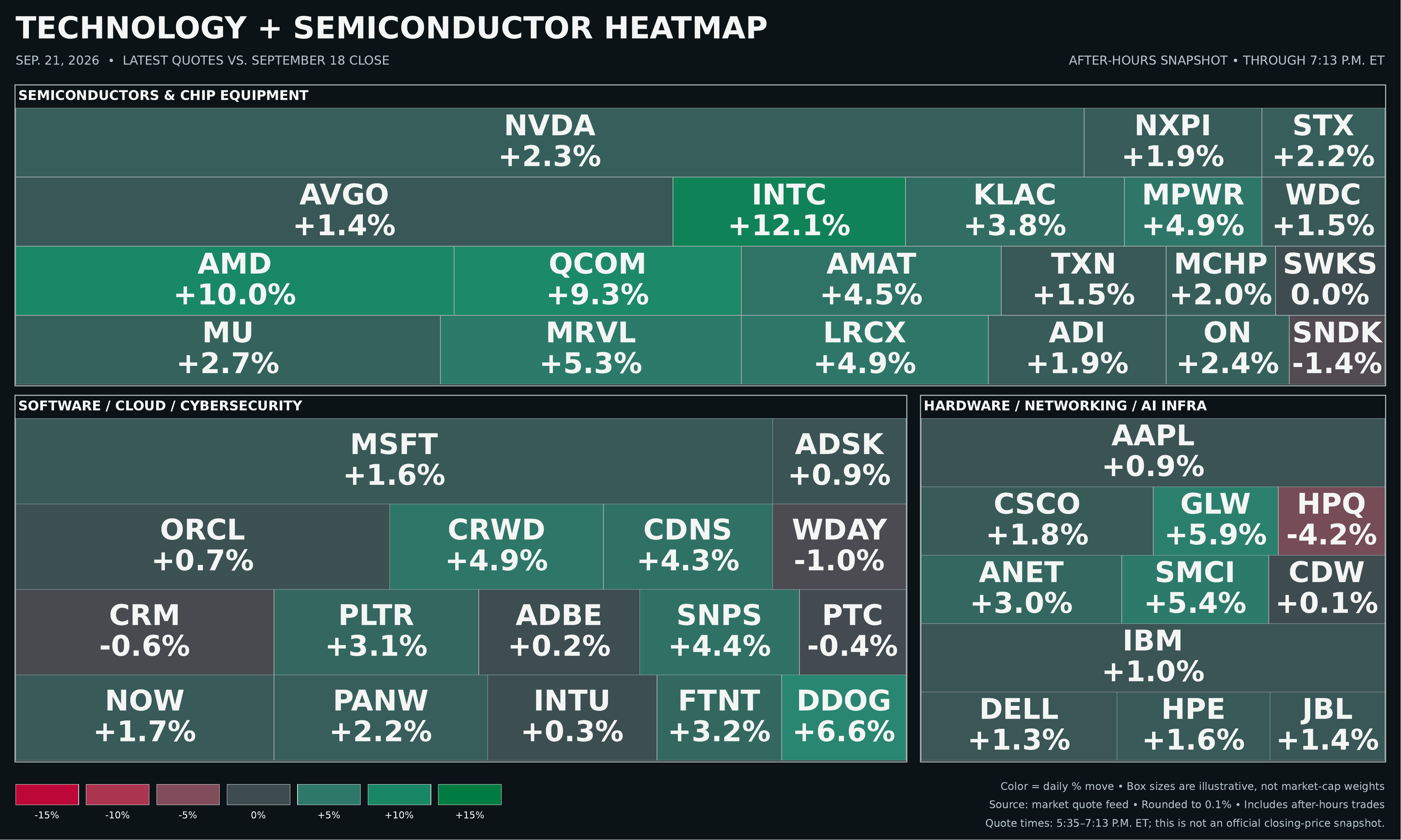
AMD crossed $1 trillion in market value Monday as shares jumped roughly 10%, marking a major shift in how Wall Street values the chipmaker's role in artificial intelligence. Investors are betting that AMD can capture a larger share of spending on the processors and complete systems powering the next generation of AI.
The financial results give that enthusiasm substance. Second-quarter revenue reached $11.54 billion, up 50% from a year earlier, while Data Center revenue climbed 107% to $6.7 billion, accounting for 58% of total sales. Demand for EPYC server processors and Instinct AI accelerators drove the expansion. Net income reached $2.3 billion, with earnings of $1.38 per share, or $1.66 on an adjusted basis. Growth was uneven elsewhere: PC processor revenue increased 23%, but gaming revenue fell 31%.
The next stage centers on Helios, AMD's complete AI server rack, which combines 72 graphics processors, 18 server CPUs, networking and software. That broadens the company's opportunity to supply more of each customer's infrastructure budget. OpenAI expects to begin bringing Helios online in the fourth quarter of 2026, with deployments accelerating through 2027. Meta has also been testing and validating workloads on the systems ahead of larger deployments.
The customer agreements show the potential scale. OpenAI and Meta each announced plans for six gigawatts of AMD-powered AI capacity. These are multiyear deployment plans, however, and should not be confused with revenue already earned. Both agreements also include performance-based warrants for up to 160 million AMD shares apiece, creating potential shareholder dilution as the specified milestones are met.
Anthropic adds another planned deployment of up to two gigawatts, with the first gigawatt scheduled to begin in the first half of 2027. AMD has committed to invest up to $5 billion in Anthropic, making the relationship both a hardware opportunity and a significant capital commitment.
For the nearer term, AMD forecasts third-quarter revenue of $12.7 billion to $13.3 billion. The midpoint represents approximately 41% annual growth, with an expected adjusted gross margin of 56%. At a $1 trillion valuation, AMD is worth roughly 19 times that midpoint multiplied by four — a simple annualized sales comparison, not a full-year forecast. That calculation illustrates how much future expansion investors are already pricing in.
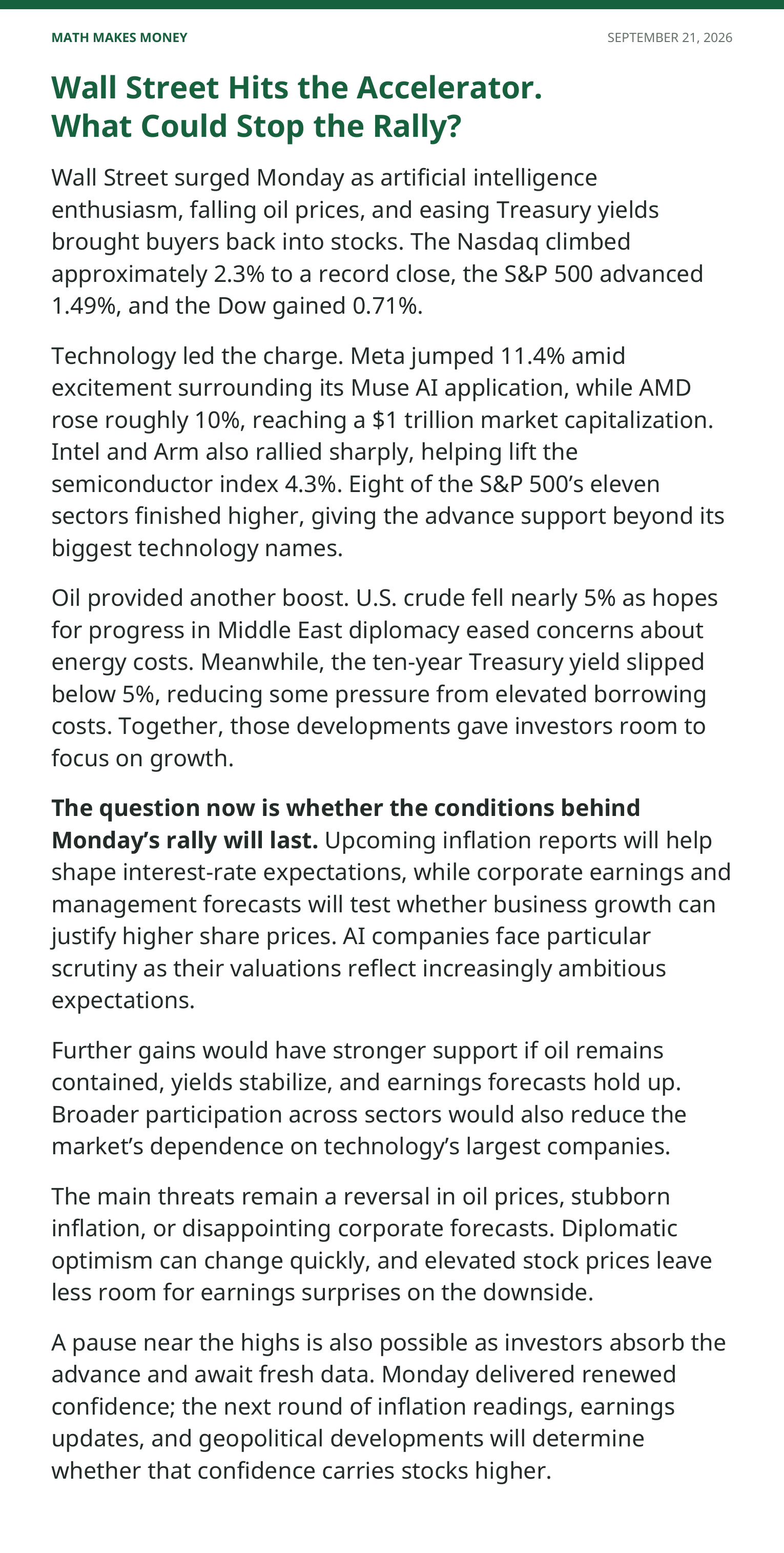
Monday's broader rally supplied additional momentum: the semiconductor index gained 4.3%, Treasury yields retreated and the Nasdaq reached a record close. For AMD, the coming quarters will reveal how quickly scheduled installations become recognized revenue — and how much profit remains after the cost of delivering them.
Maria's Bottom Line FOMO. That explains it all. |
|