Issue No. 76 • Wednesday September 9, 2026 The Trading Addict Newsletter by Maria Helmick 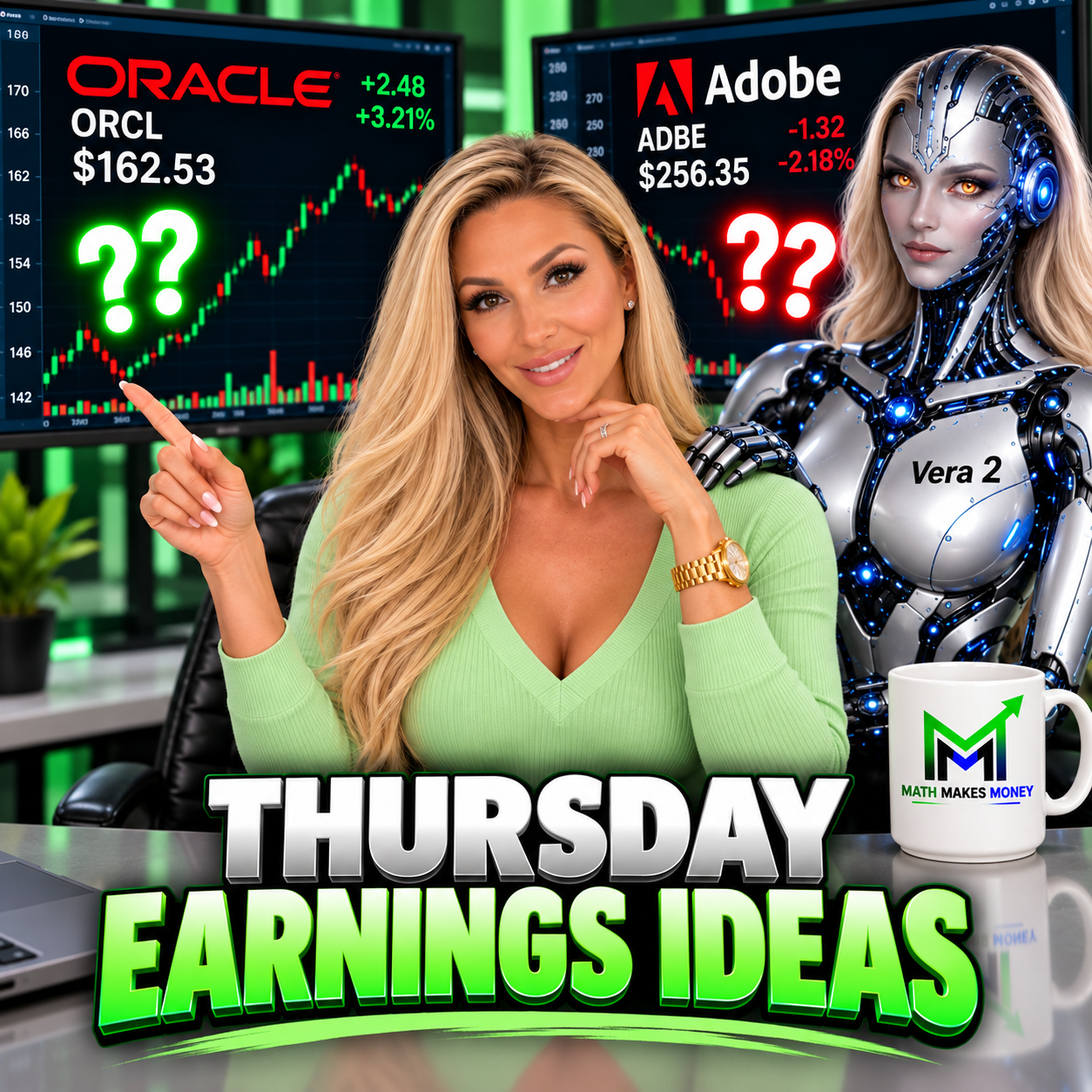 Tap the image to view full size Vera 3.0 · Earnings Watch Decisions, Decisions: What Earnings Play Should I Do? (If Any)Oracle or Adobe? The better earnings setup may still be no trade at all. | |
Oracle and Adobe both report Thursday after the close, and the question is whether either offers an earnings trade worth taking. Adobe appears steadier, but Oracle has the more interesting story. Unfortunately, more interesting does not mean safer.
Oracle has become one of the clearest publicly traded ways to participate in OpenAI's enormous demand for computing power. OpenAI reportedly agreed to purchase approximately $300 billion of computing capacity from Oracle over five years. That could fuel years of cloud growth, but Oracle must spend heavily on chips, data centers and power before much of that revenue arrives. Investors will be looking for evidence that Oracle's enormous backlog is becoming revenue fast enough to justify all that spending.
Adobe faces a different challenge. Its finances are more predictable, but investors worry that generative AI could weaken Creative Cloud. Adobe needs to show that its AI products are attracting customers, supporting subscriptions and producing meaningful revenue. Even an earnings beat may not be enough if guidance disappoints.
What the Market Is Expecting
|
Oracle (ORCL) |
Adobe (ADBE) |
| Expected revenue | ~$19.14B | $6.67–$6.72B |
| Adjusted EPS | $1.72–$1.76 | $6.05–$6.10 |
| Main question | Backlog becoming revenue? | AI strengthening growth? |
| Biggest concern | Spending and debt | AI competition |
| Expected move | ~9.5% | ~8% |
The stocks are also coming into earnings with very different setups. Oracle traded between approximately $158 and $171 before finishing near $163, while Adobe fell about 3.5%, dropping from around $263 to a low of $254.25 before settling near $257.
For a naked put, however, predicting the earnings reaction is not the goal. The more important question is where the stock would still be worth owning if the reaction is bad. Premium matters, but basis matters more.
How Much Room Do the Strikes Provide?
| Trade |
Expected downside |
Strike |
Extra room |
| ORCL October | ~$147 | $140 | ~$7 |
| ORCL November | ~$147 | $135 | ~$12 |
| ADBE October | ~$236 | $230 | ~$6 |
| ADBE November | ~$236 | $225 | ~$11 |
The November strikes provide about $5 more room than October for both stocks. They also leave more time for the trade to recover if the initial earnings reaction is unfavorable. There is no requirement to hold until November — a favorable move or the post-earnings volatility crush could provide an earlier exit.
Of the four possibilities, the ORCL November $135 put is the most interesting. At around a $6 premium, the effective basis would be approximately $129. That is a 4.4% credit relative to the strike, with a basis well below the market's expected post-earnings downside.
That premium is attractive, but it deserves respect. Earnings premium is high because earnings risk is high. This is where the Vera rules come in: good stock, good strike, good pay. A large premium cannot make up for a bad strike, and the trade only makes sense if the stock is worth owning at the effective basis.
Adobe remains the steadier alternative. Its November $225 strike offers a similar cushion, but Oracle has the edge because of the additional strike room, potentially attractive premium and the changing AI growth story.
Vera's Decision
The decision for now is WAIT. The goal is to let Thursday's volatility improve the premium rather than moving to a higher strike just to get paid. If the ORCL November $135 put approaches $6 and the $129 effective basis still looks attractive, the trade becomes worth considering. If the premium is not there, there is no reason to force it.
Oracle is the more interesting trade. Adobe is the steadier trade. And no trade may still be the best trade. We will watch Thursday. |
|
Join the Math Makes Money Trading Team One-Button AI Bot Trading Join Today — Trade with Rob's AI Bot (Phil) Today. Live VIP Group Video with Rob and Nick. ↓ Click the big red button below to join ↓ » Join the Team Now » |
 Tap the image to view full size Market & Technology Meta's Muse: Helpful Assistant or Privacy Nightmare? | |
Meta's newest AI does not just answer questions. It can send emails, book appointments, fill out forms, plan trips, compare products and make payments. That sounds wonderfully convenient — until you remember who is asking for access to your personal life. The new assistant is called Muse, and unlike a traditional chatbot, it is designed to complete jobs instead of simply explaining how to do them. Connect it to your email, calendar and other apps, give it an assignment, and Muse can work through the steps in the background. Instead of telling you where to find the cheapest flight, it could compare the choices, organize the itinerary and make the reservation.
Muse is initially available in the United States through its own app and WhatsApp, with Ray-Ban smart-glasses support planned later. There is a free version, along with $20 and $100 monthly plans. That is the part Wall Street should be watching. Meta generated $60.8 billion in its latest quarter, with approximately 98% coming from advertising, while it expects to spend between $130 billion and $145 billion this year, much of it on AI infrastructure.
|
The Opportunity — and the Risk |
Meta is also considering taking a percentage of purchases completed through Muse. If the agent can recommend an item and complete the sale, Meta moves from selling the billboard to taking a cut at the cash register. But an AI agent that can reach emails, financial services, home devices and private accounts can make a much bigger mess than a chatbot giving a bad answer. Meta says Muse operates in a protected environment and asks permission before sensitive actions, but trust may be the hardest part.
Maria's Bottom Line I think Muse has a real backbone. As AI works its way into everyday life, people are going to want — and eventually may need — an assistant that does more than answer questions. If Meta can make Muse genuinely useful without making people feel as though they have handed over the keys to the house, it could become a meaningful source of recurring revenue. That would give Meta income beyond advertising, help offset its enormous AI spending and strengthen the company's bottom line. The demand should be there. Now Meta has to prove people will trust Muse with both their personal information and their credit cards. |
|
A Market Tidbit · 1913 Congress Calling. Except It Wasn't.How Wall Street's original wolf used another man's voice to manipulate the market. | |
In 1913, J.P. Morgan adviser Lewis Cass Ledyard answered the telephone and heard Congressman A. Mitchell Palmer on the line. “Palmer” began applying pressure over Morgan and U.S. Steel, one of America's most closely watched stocks. A threat from Washington could frighten investors and knock millions from a company's value. There was just one problem: the congressman had never made the call.
The voice belonged to David Lamar, a Wall Street speculator and con man gifted at imitating powerful people. Lamar understood that fear moved stocks, and sometimes one believable voice suggesting trouble was enough. His act unraveled during a congressional investigation into Washington lobbyists. The fake congressman was exposed before the real Congress, and Lamar was convicted of impersonating a federal official with intent to defraud. He received two years in prison.
Lamar had made and lost real fortunes, lived on Fifth Avenue, owned racing horses, and carried a diamond-studded walking stick. Yet when Wall Street's original wolf died in a modest Manhattan hotel in 1934, police reportedly found only $138 in his room. Lamar could imitate a congressman, intimidate Wall Street, and live like a millionaire.
The only role he never mastered
was knowing when to hang up. |
|
» TRADE WITH US  » TAP THE CARD ABOVE TO JOIN THE MATH MAKES MONEY TRADING TEAM » EARNINGS WATCH · SEP 7 – 11 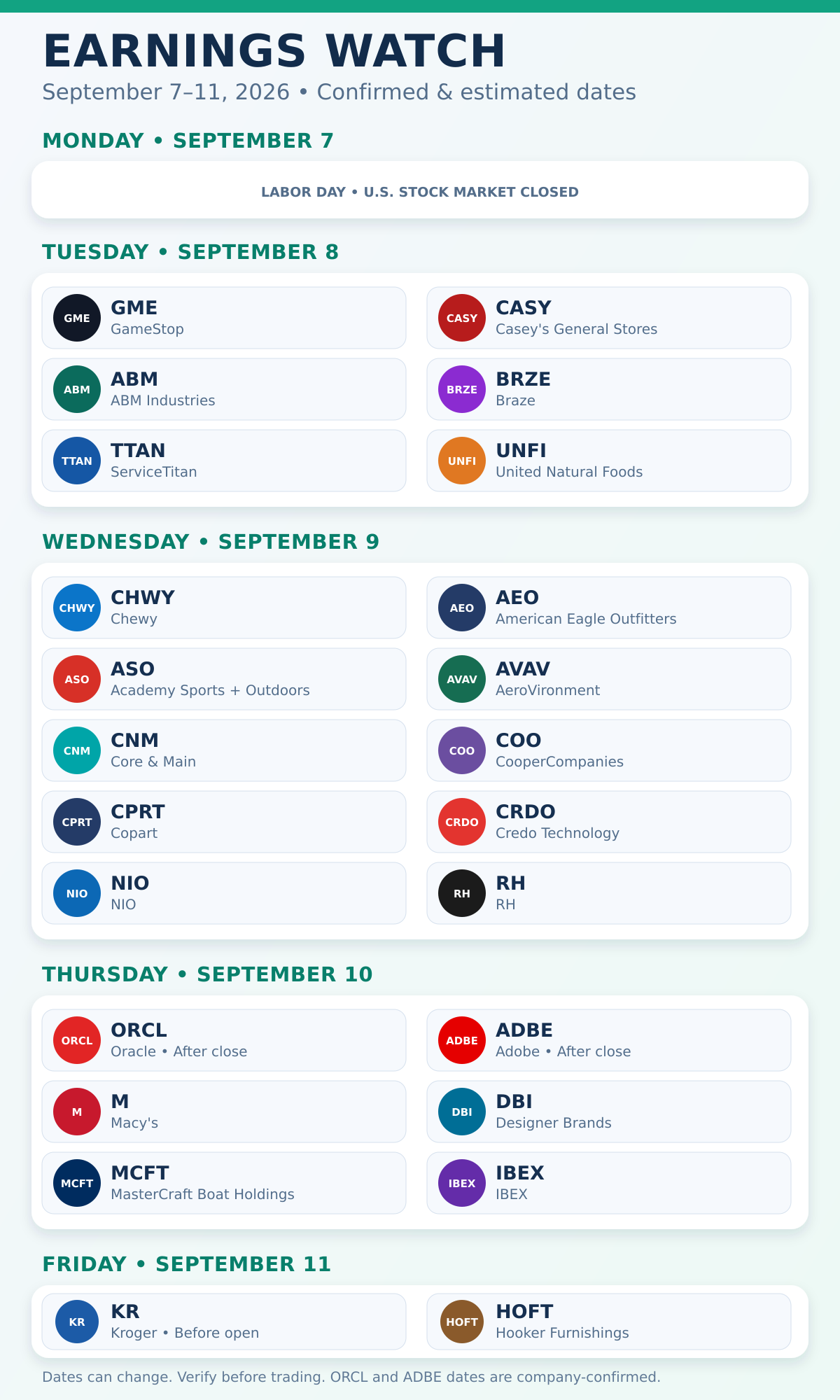 Tap to view full size » TECH & SEMI HEATMAP · SEP 8 CLOSE 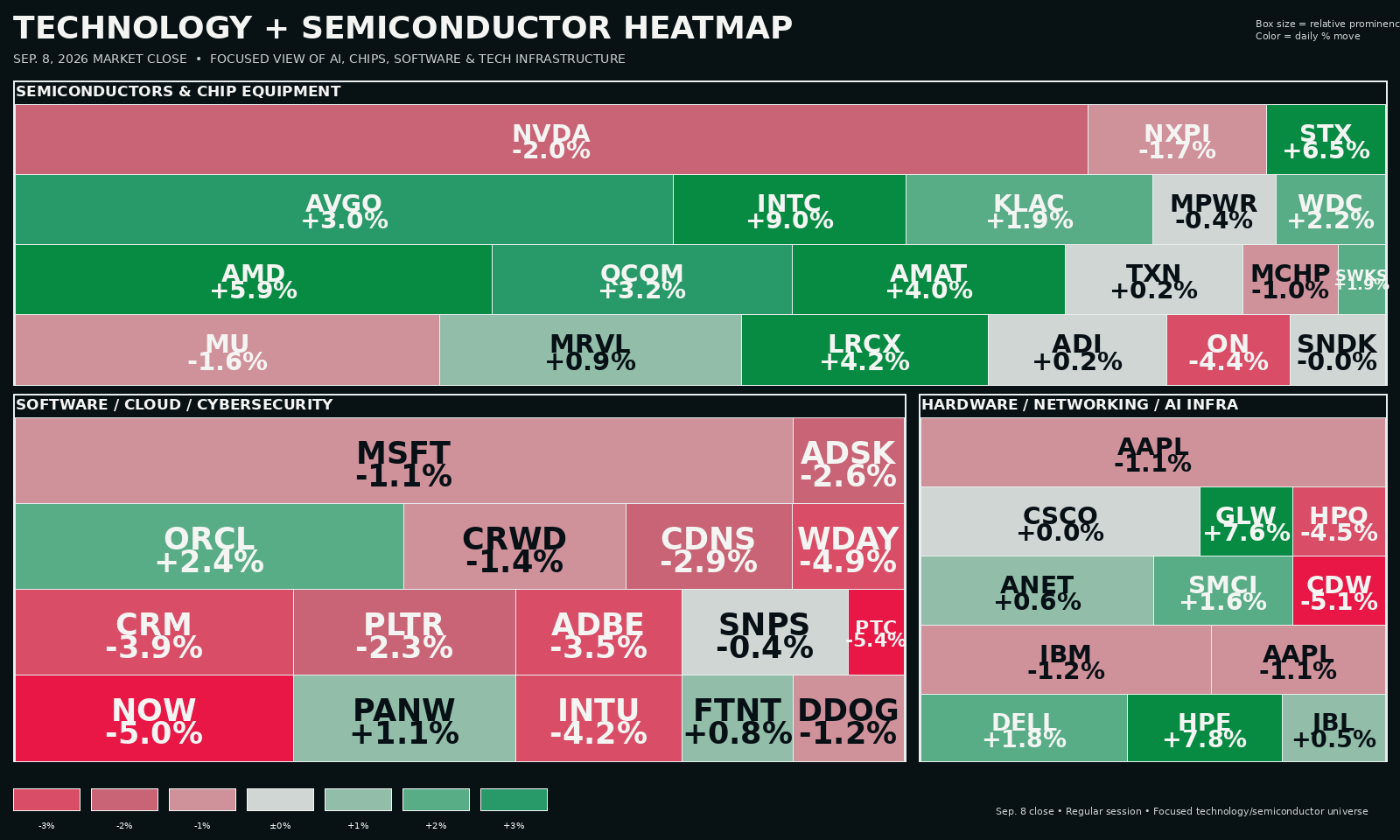 Tap to view full size » DAY 223 · TUE SEP 8 · DAILY TRADING UPDATE 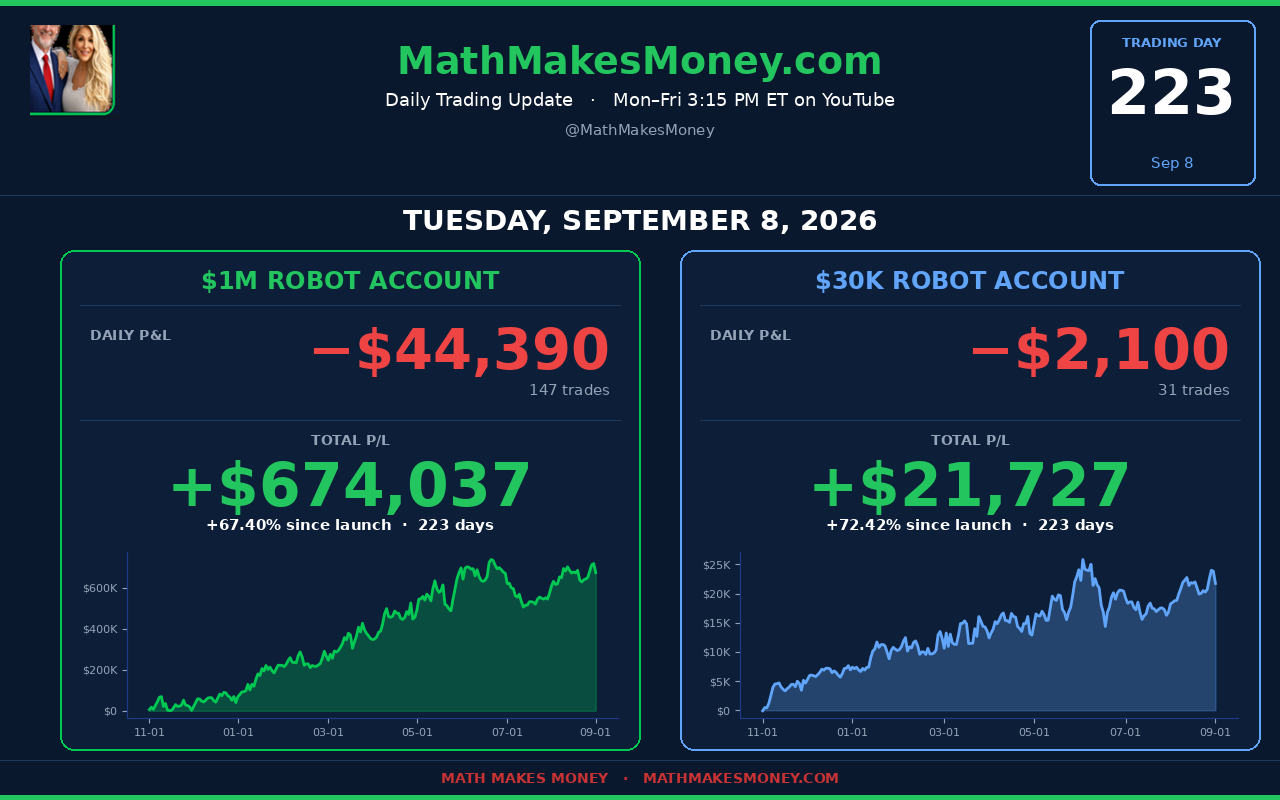 Tap the dashboard to see the full summary online » TODAY'S LIVE SHOW  » Tap to watch today's live show — 9:15 AM & 3:15 PM ET Monday through Friday, plus Sunday 5:55 PM ET Free Community Join our Discord with over 1,000 like-minded traders who believe that math makes money when it comes to trading Trade ideas, screenshots, daily banter. Zero cost. Join the Discord → |
MATH MAKES MONEY Rob and Maria Helmick and Nick Battista · The Trading Addict Newsletter MathMakesMoney.com Educational only. Not investment advice. Trading options involves substantial risk. Past performance does not guarantee future results. |
|