Issue No. 75 • Monday September 8, 2026 The Trading Addict Newsletter by Maria Helmick 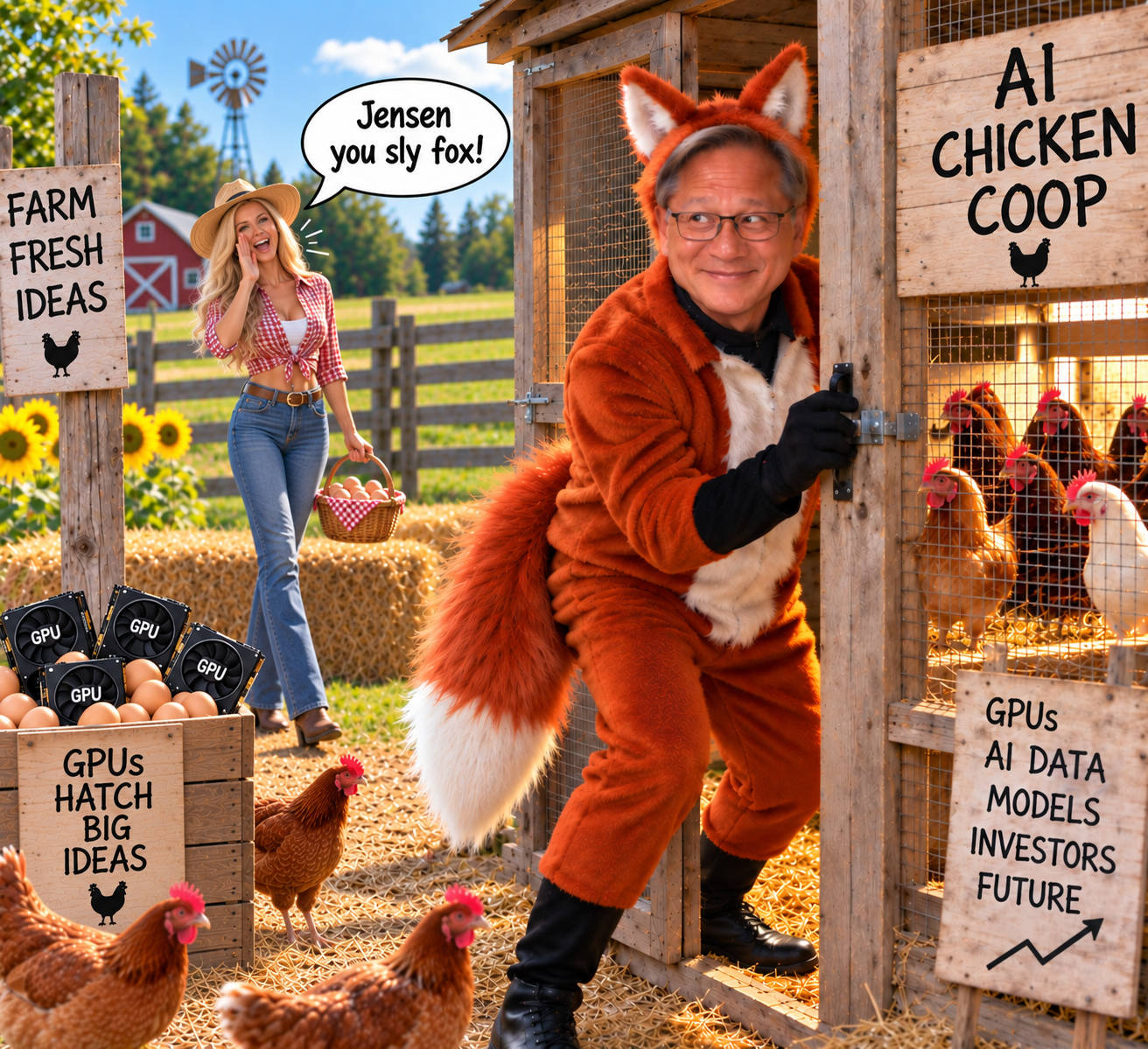 Tap the image to view full size Market Intelligence · AI & Semiconductors Nvidia's $12.9 Billion Shortcut to AI's Developers | |
Nvidia has agreed to buy Hugging Face for $12.93 billion — nearly three times the company's $4.5 billion valuation in 2023.
That is a staggering premium, but Nvidia is not buying Hugging Face for what it earns today. It is buying influence over where artificial intelligence may be headed next.
18M+ Users |
200K Companies |
3M+ Models |
$12.93B Price |
Why Hugging Face matters
Hugging Face is often called the GitHub of AI. Developers use it to find models, share code, work with datasets and turn experiments into commercial products. According to Nvidia, the platform has more than 18 million users and 200,000 corporate customers. It hosts over 3 million models, 500,000 datasets and 1 million AI applications.
That puts Hugging Face at the beginning of countless AI projects — often before developers decide which processors, software or cloud services they will use.
Protection from its own customers
Nvidia already dominates the hardware powering AI. Its problem is that some of its largest customers are building alternatives. Google, Amazon, Microsoft and Meta have developed their own processors. OpenAI is pursuing custom chips, while AMD continues trying to capture more of the market.
Owning Hugging Face gives Nvidia protection against that growing threat. A developer could find a model on Hugging Face, customize it and then move it into production using Nvidia's software and processors. Nvidia would not have to require its hardware. It would only need to make the Nvidia route faster, simpler and better supported than the alternatives.
The promise — and the conflict
Nvidia says Hugging Face will remain open to every model, cloud provider and chipmaker. Jensen Huang has promised that developers will not need Nvidia hardware to use it. That promise sounds good, but it also creates an obvious conflict.
|
This is where the deal begins to look like putting the fox in charge of the henhouse.
Hugging Face is supposed to be neutral. Yet the world's dominant AI-chip company will own it. Nvidia does not need to lock out AMD or Intel. Its chips could simply receive faster updates, clearer instructions, better placement and smoother support.
The fox does not have to eat the chickens to take control. It only needs to control the door.
|
The information advantage
Hugging Face could also show Nvidia which models are becoming popular, where developers are running into problems and which new applications will require the most computing power. That information could help Nvidia recognize important trends before they begin showing up in hardware orders.
Regulators will likely examine whether this deal gives Nvidia too much influence over the AI market. Nvidia must also keep the developers who made Hugging Face valuable. Those developers trusted the platform because it was seen as an independent meeting place for the entire AI community. If they believe Nvidia is tilting it toward its own products, they can move their work elsewhere.
Nvidia is not simply buying an AI platform. It is buying a direct connection to the people deciding where the next generation of AI will run. That could make this one of Nvidia's smartest investments — provided it does not destroy the independence that made Hugging Face worth buying.
Maria's Bottom Line Nvidia says Hugging Face will remain open and fair to everyone. Maybe it will. But Jensen just paid nearly $13 billion for the keys to the henhouse. Jensen, you're one sly fox — that's for sure. |
|
Join the Math Makes Money Trading Team One-Button AI Bot Trading Join Today — Trade with Rob's AI Bot (Phil) Today. Live VIP Group Video with Rob and Nick. ↓ Click the big red button below to join ↓ » Join the Team Now » |
 Tap the image to view full size Market Notes · September 2026 Michael Burry Takes on AI — and Tries Lululemon on for SizeThe AI boom tests his shorts. Lululemon tests his conviction. | |
Michael Burry spent August buying unpopular stocks while betting against some of the market's biggest AI winners. Several of his value picks performed well, but his bearish trades had a rough month. Palantir jumped 51.4%, CoreWeave gained 17.4%, Oracle rose 16.2%, Micron added 13.3% and Nvidia climbed 8.4%. Meanwhile, two of his long positions, Veeva Systems and Adobe, gained 35.8% and 16.4%.
Burry's August Scorecard |
| Side |
Ticker |
Aug. |
Side |
Ticker |
Aug. |
| SHORT | PLTR | +51.4% | LONG | VEEV | +35.8% | | SHORT | CRWV | +17.4% | LONG | ADBE | +16.4% | | SHORT | ORCL | +16.2% | SHORT | MU | +13.3% | | SHORT | TSLA | +12.1% | SHORT | NBIS | +9.9% | | SHORT | NVDA | +8.4% | LONG | FNMA | +7.2% | | LONG | MELI | +4.7% | LONG | HCA | +3.8% | | LONG | LULU | MIXED* | LONG | PYPL | -6.2% | | * LULU depended on entry timing: the early purchase was down about 5%; a later addition was up about 5%. |
Timing changes the score
Those percentages do not represent Burry's exact profits or losses. His results depended on when he entered and whether he used shares or options. Nebius, for example, rose during August but finished the month well below Burry's reported short entry near $247. Palantir was a much clearer miss, yet Burry is not backing away from his bearish view.
Burry is still betting against Palantir
Burry says Palantir's market value, which he placed at roughly $432 billion, could eventually fall below $100 billion — nearly 77% lower. He believes the company looks more like a consulting business than the high-margin software company investors think they own.
He points to Palantir's deferred revenue and the fact that one customer reportedly accounts for 25% of its receivables while producing less than 10% of revenue. Those concerns are worth watching, but Palantir keeps delivering. Revenue grew 93% in its latest quarter, management raised guidance and demand for its AI platform remains strong. Burry may eventually be right about the valuation, but for now, Palantir's growth keeps getting in the way of his argument.
Conviction with a safety net
Burry also deserves credit for protecting himself when the market moves against him. Although he remains bearish on Nvidia, he bought calls before earnings as a hedge and reportedly sold half within 24 hours for a gain of approximately 50% to 60%. He also covered some shorts, reduced other positions and raised his cash level to around 12%. Burry has strong convictions, but he is not too stubborn to adjust when necessary.
Lululemon becomes the real test
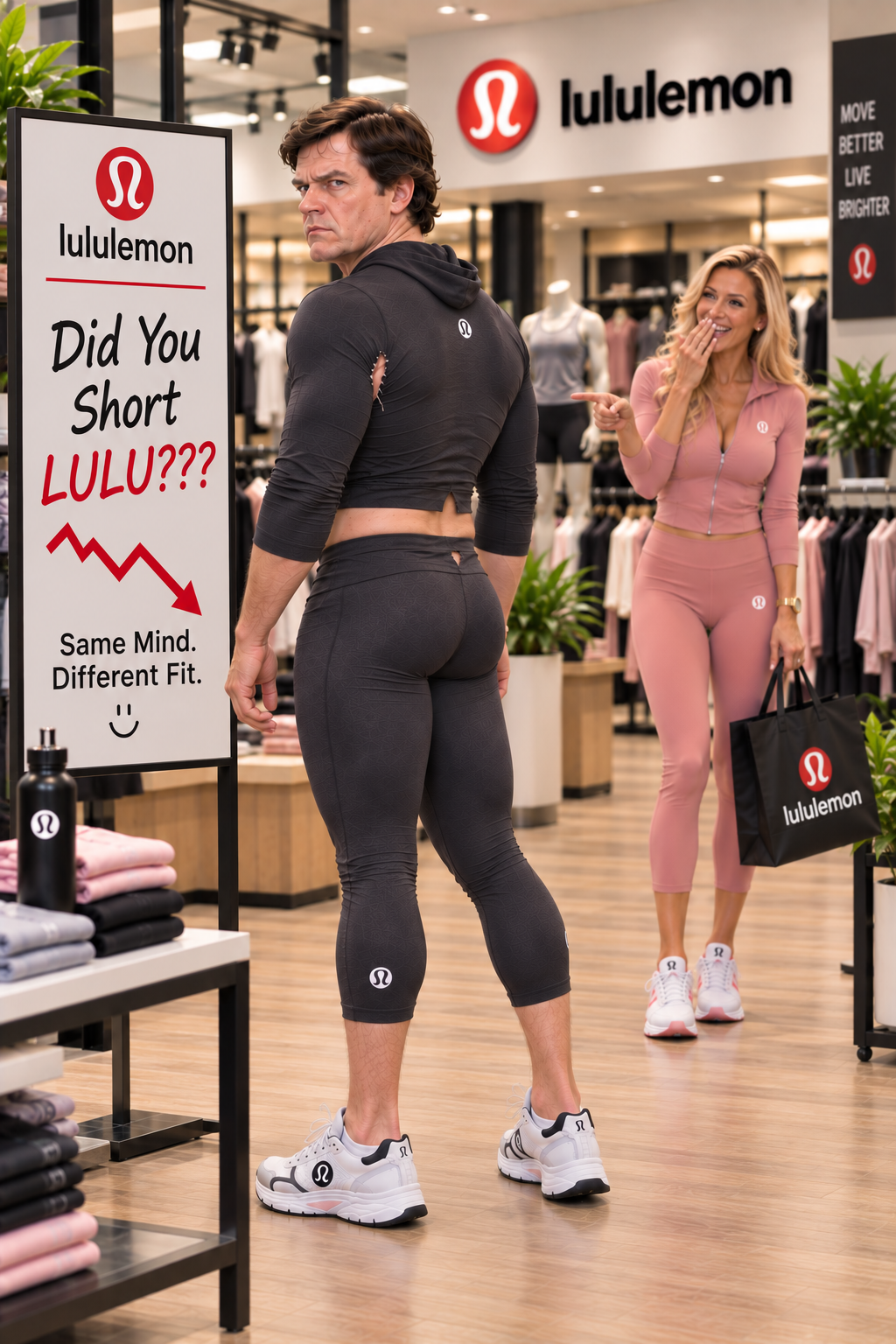
While Burry was betting against expensive AI stocks, he continued buying Lululemon until it became approximately 17.4% of his disclosed portfolio — his largest long position. Then the company reported weak results, lowered guidance again and watched its stock plunge approximately 18%.
Burry said Lululemon had fallen roughly 20% below his latest purchase and called it the “trickster” in his portfolio. But he is not selling. He says he will buy more below $100 because he believes most of the bad news is already reflected in the price. He likes the balance sheet, thinks the valuation has become attractive and believes an eventual new CEO will have a low bar to clear. Burry calls Lululemon a “fat pitch.”
Maria's Bottom Line
I'll give Burry credit where it is due. Hedging Nvidia was smart, and reducing his exposure showed discipline. He may also be right that Palantir has become dangerously expensive. But calling for nearly 77% downside while revenue is growing 93% is still one enormous bet.
I'm not ready to join his AI bear camp. Some AI stocks will get too expensive, and there will certainly be corrections, but I believe the long-term AI story is far from over.
As for Burry's “fat pitch” in Lululemon, we'll just have to wait and see how that trade fits. |
Sources: Stocktwits reporting dated Aug. 31 and Sept. 3–4, 2026; subsequent reporting on Burry's Sept. 2 Palantir analysis. Monthly stock moves do not represent exact portfolio profit or loss, especially when options are involved.
|
A Market Tidbit Nike Gets the BootAn iconic name loses its place as technology moves in | |
This one surprised me. After 18 years, Nike is being removed from the S&P 100, the index made up of 100 of America's largest and most established companies. Nike will remain in the broader S&P 500, so it is not disappearing from the major indexes, but this is still a meaningful demotion for a brand that once looked nearly untouchable.
The stock has fallen roughly 78% from its 2021 high as sales slowed, business weakened in China and competitors such as Hoka and On attracted more customers. Some of the damage was self-inflicted. Nike pulled many of its products from major retailers to focus on selling directly to consumers. While Nike gave up shelf space, its competitors moved in, became easier to find and gave shoppers more choices.
The most revealing part is who will replace Nike and the other companies leaving the index: Dell, Palo Alto Networks, Arista Networks and SanDisk. All four are technology companies. That makes this more than a story about Nike losing momentum. It shows how quickly Wall Street's idea of a leading American company is changing.
Nike is still one of the best-known brands in the world and it may find its footing again. For now, though, the company famous for telling everyone else to ‘Just Do It’ has some catching up to do.
|
» TRADE WITH US  » TAP THE CARD ABOVE TO JOIN THE MATH MAKES MONEY TRADING TEAM » EARNINGS WATCH · SEP 7 – 11 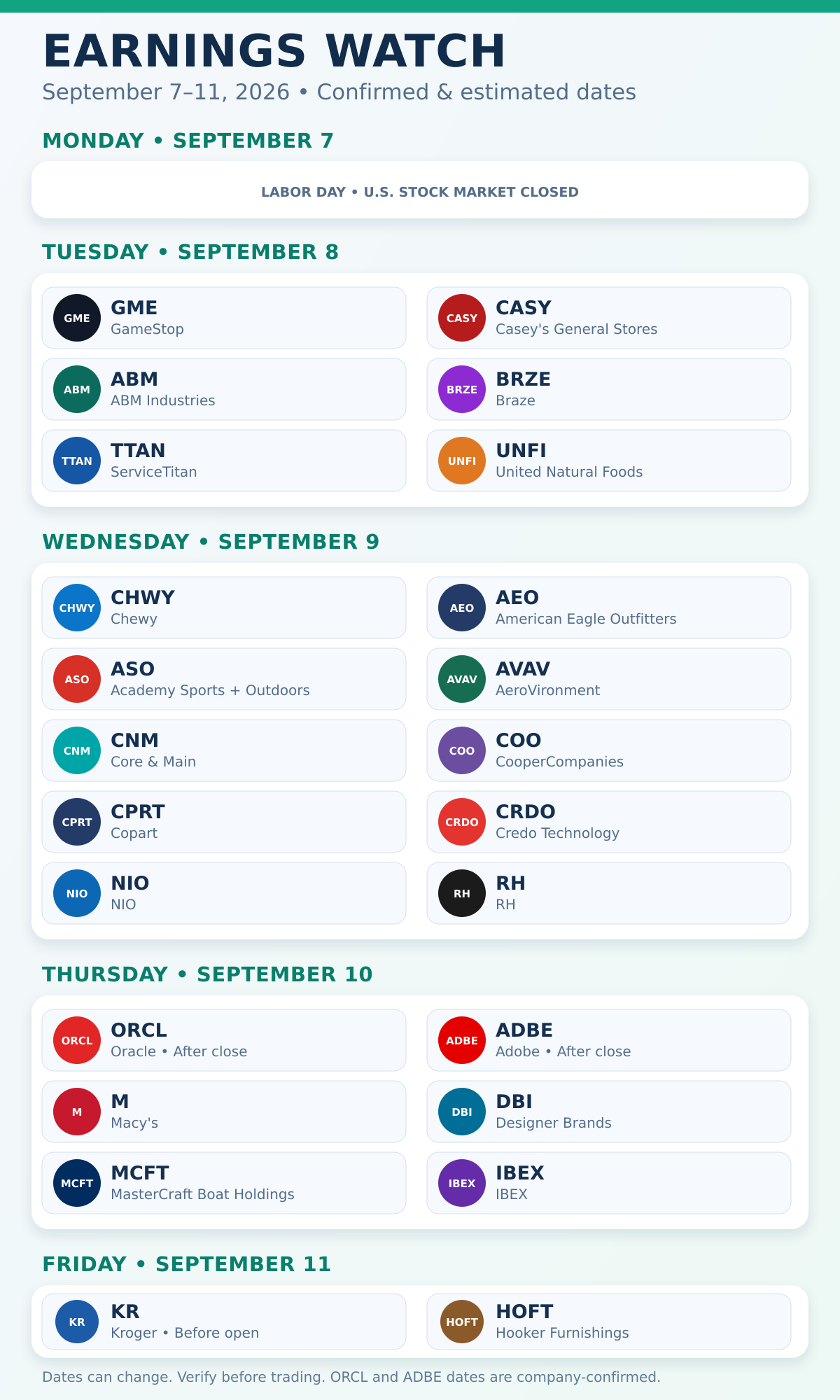 Tap to view full size » DAY 222 · FRI SEP 4 · DAILY TRADING UPDATE 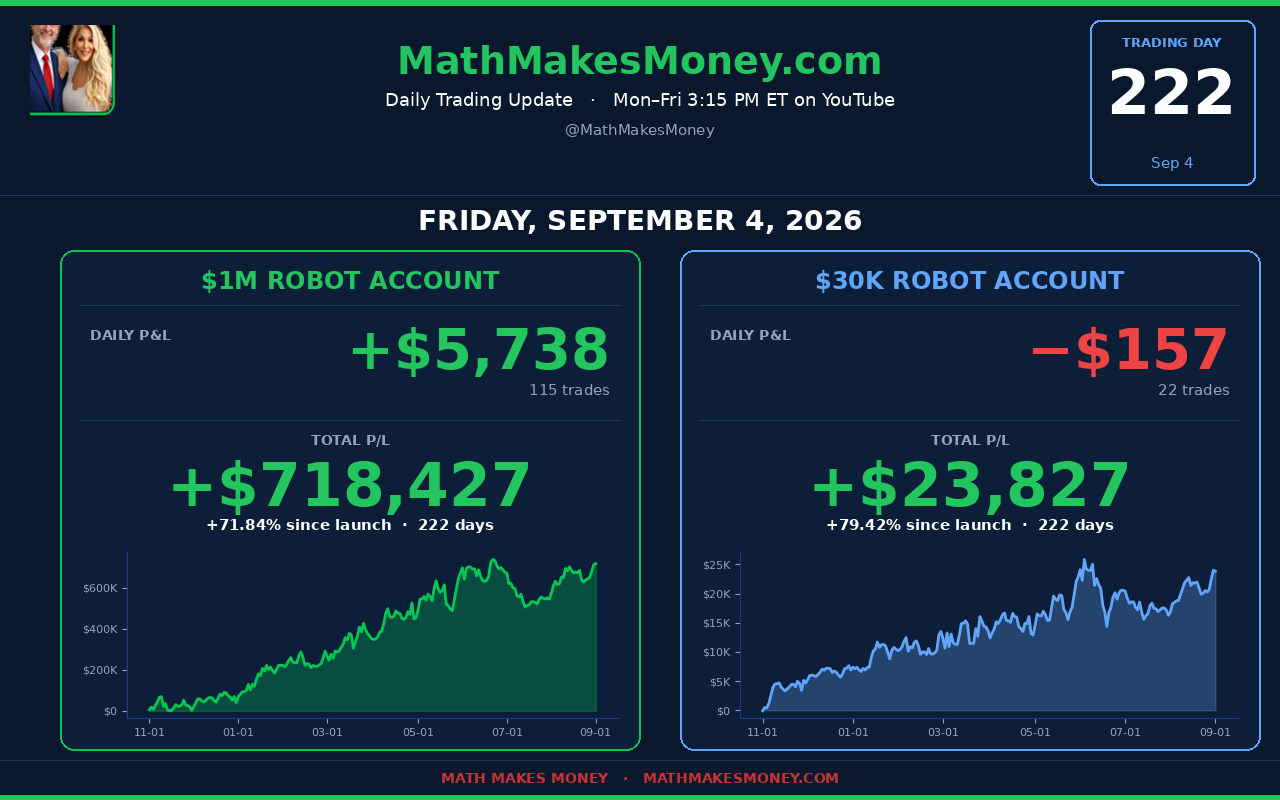 Tap the dashboard to see the full summary online » TODAY'S LIVE SHOW  » Tap to watch today's live show — 9:15 AM & 3:15 PM ET Monday through Friday, plus Sunday 5:55 PM ET Free Community Join our Discord with over 1,000 like-minded traders who believe that math makes money when it comes to trading Trade ideas, screenshots, daily banter. Zero cost. Join the Discord → |
MATH MAKES MONEY Rob and Maria Helmick and Nick Battista · The Trading Addict Newsletter MathMakesMoney.com Educational only. Not investment advice. Trading options involves substantial risk. Past performance does not guarantee future results. |
|