Why This Meeting MattersThe G20 does not make laws, but it brings finance, central-bank, trade and technology officials into the same room. Markets can react to one unexpected comment long before the final statement is released. This week, those remarks will reach a market already balancing a hawkish Fed, elevated Treasury yields, geopolitical risk in oil and demanding valuations across AI stocks. Inflation remains the Fed's immediate challenge. July core PCE was 3.3% year over year, while the estimated probability of a September rate increase jumped to 58% following Jackson Hole. Friday payrolls are expected near 50,000 after the economy lost 23,000 jobs in July. The Money MeetingTreasury Secretary Scott Bessent hosts the Asheville meeting August 31 and September 1. Central pressure points: America's debt, tariffs, China's export strength and U.S. efforts to isolate Iran. Iran presents the most immediate market risk. Tougher restrictions on oil buyers, shipping companies or banks could lift crude prices, revive inflation concerns and push bond yields higher. That combination would challenge technology stocks and other high-valuation assets. Signs of de-escalation could remove part of oil's geopolitical premium. Additional tariff threats could pressure manufacturers, automakers and retailers while reinforcing the Fed's inflation concerns. Foreign unease about U.S. borrowing could also lift long-term Treasury yields; coordinated or reassuring language could help stabilize the bond market. Possible Headline — Likely Market Focus | Tougher Iran sanctions → Oil, inflation expectations and yields | New tariff threat → Dollar, volatility, retailers and manufacturers | Concern over U.S. debt → Long-term yields and high-valuation growth stocks | Cooperation or de-escalation → Lower oil or yields; relief for risk assets |
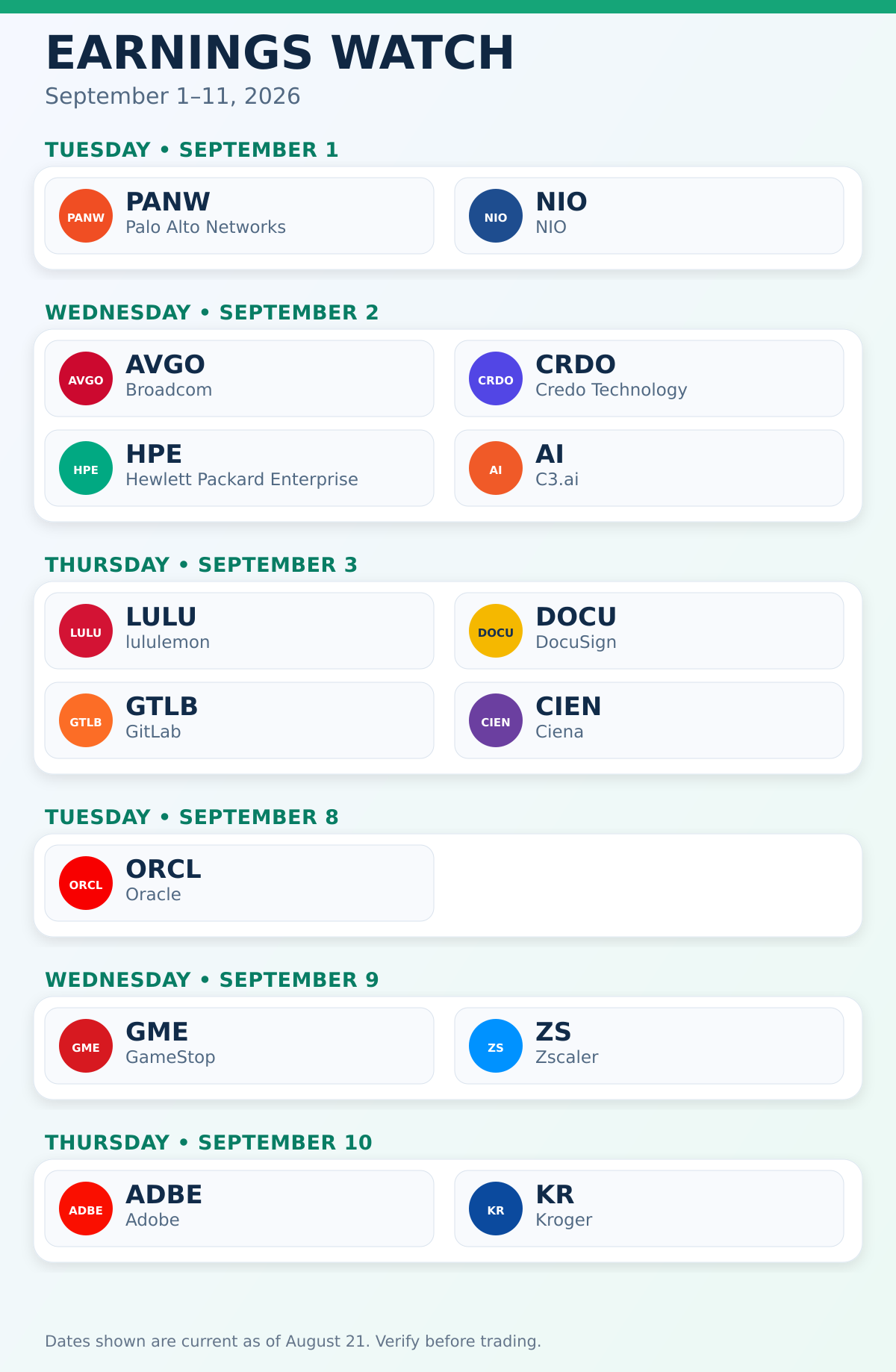
The AI MeetingCommerce Secretary Howard Lutnick will speak separately with Nvidia CEO Jensen Huang and OpenAI CEO Sam Altman. The United States favors lighter AI regulation and fewer barriers to adoption — a position that could accelerate demand for data centers, chips, networking, memory, electricity and cooling. Wall Street will listen for comments on Rubin production, chip supply, sovereign AI projects, power constraints and export restrictions. Altman's remarks may offer clues about the computing power required by future OpenAI models. The most sensitive names include NVDA, AVGO, AMD, ANET, MU, HPE and ORCL. The U.S. proposal is expected to be non-binding and to favor a light-touch regulatory framework rather than a new international AI authority. Elon Musk, venture capitalist David Sacks and Meta executive Dina Powell McCormick are expected to participate virtually. How It Fits Into This Week• Monday: No major U.S. report. G20 headlines have more room to move a thin late-summer market. • Tuesday: Manufacturing and job-openings data arrive as the G20 Innovation Ministerial begins. • Wednesday: ADP employment, the Fed's Beige Book, and G20 technology comments shape the discussion. • Thursday: Services data and Fed speakers test rate expectations. • Friday: The jobs report delivers the week's final test for rates, yields, and overall market direction. Market Backdrop WTI crude recently traded near $83.30/bbl. The 2-year Treasury yield ended the week near 4.34%, the 10-year near 4.73%, the 30-year near 5.21%. Those levels leave technology valuations sensitive to any G20 headline that changes the outlook for inflation, government borrowing or global energy supplies. |
Sources: U.S. Treasury, Reuters, Schwab, MarketWatch, Kiplinger. |