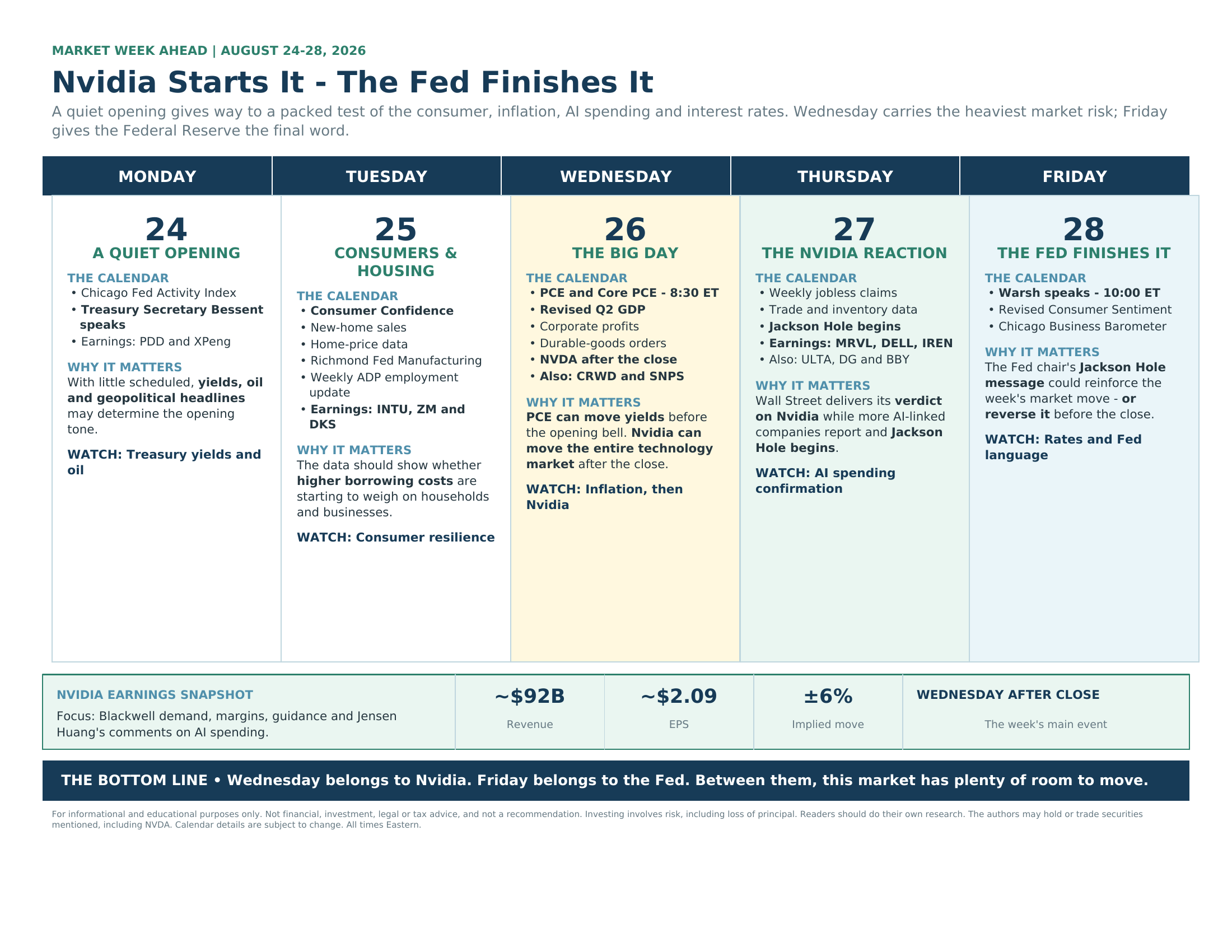
May Revenue $81.6B +85% year over year | Adjusted EPS $1.87 vs. $1.76 estimate | Revenue Guide $91B next quarter |
When Excellent Is No Longer EnoughNvidia has created a problem most companies would love to have: being great is no longer enough. Wall Street already expects record revenue, enormous demand for artificial-intelligence chips, strong margins and confident guidance. Those expectations are built into the stock before the company reports. That changes the earnings test. A routine beat may satisfy the spreadsheet and still disappoint the market. Nvidia must deliver an exceptional quarter, then convince investors that demand, execution and profitability can remain exceptional in the quarter ahead. Great Results, Falling StockFebruary showed how high the bar has become. Nvidia reported quarterly revenue of $68.1 billion, up 73% from a year earlier. Data-center revenue reached $62.3 billion, up 75%. Adjusted earnings were $1.62 per share, and management guided the following quarter to roughly $78 billion in revenue. The stock nevertheless fell 5.5% the next day to $184.89, erasing roughly $259 billion in market value. The headline numbers were excellent. The reaction reflected a different debate: how much excellence was already priced in and whether margins and guidance could keep clearing an increasingly high bar. Why the First Move Can MisleadAn earnings-day decline does not automatically mean investors rejected the business. It can mean the market is adjusting its expectations, taking profits or demanding stronger evidence about the next quarter. That distinction matters when evaluating a company whose growth remains strong. The February ResetAfter closing March at $174.40, Nvidia rallied to $235.74 on May 14 — a $61.34 rebound. At $208.48 on August 24, shares remained $23.59 above the immediate February post-earnings close. The pullback changed the entry price; it did not settle the stock's final direction. Five Reports, Four DeclinesNvidia beat expectations in each of the five periods below, yet shares declined on the next trading day after four reports. | May '25 | +3.3% | | Aug '25 | -0.8% | | Nov '25 | -3.2% | | Feb '26 | -5.5% | | May '26 | ~ -1% to -2% |
The immediate reaction is only the opening verdict. What Other Earnings Reactions ShowFrom each stock's latest earnings-reaction close through August 24, some moves continued while others faded or reversed. | Microsoft | +$36.21 | +8.0% | | Palantir | +$13.23 | +8.1% | | Amazon | -$9.51 | -3.5% | | Nvidia | -$11.03 | -5.0% | | Google | -$36.51 | -9.5% | | Micron | -$303.13 | -25.0% |
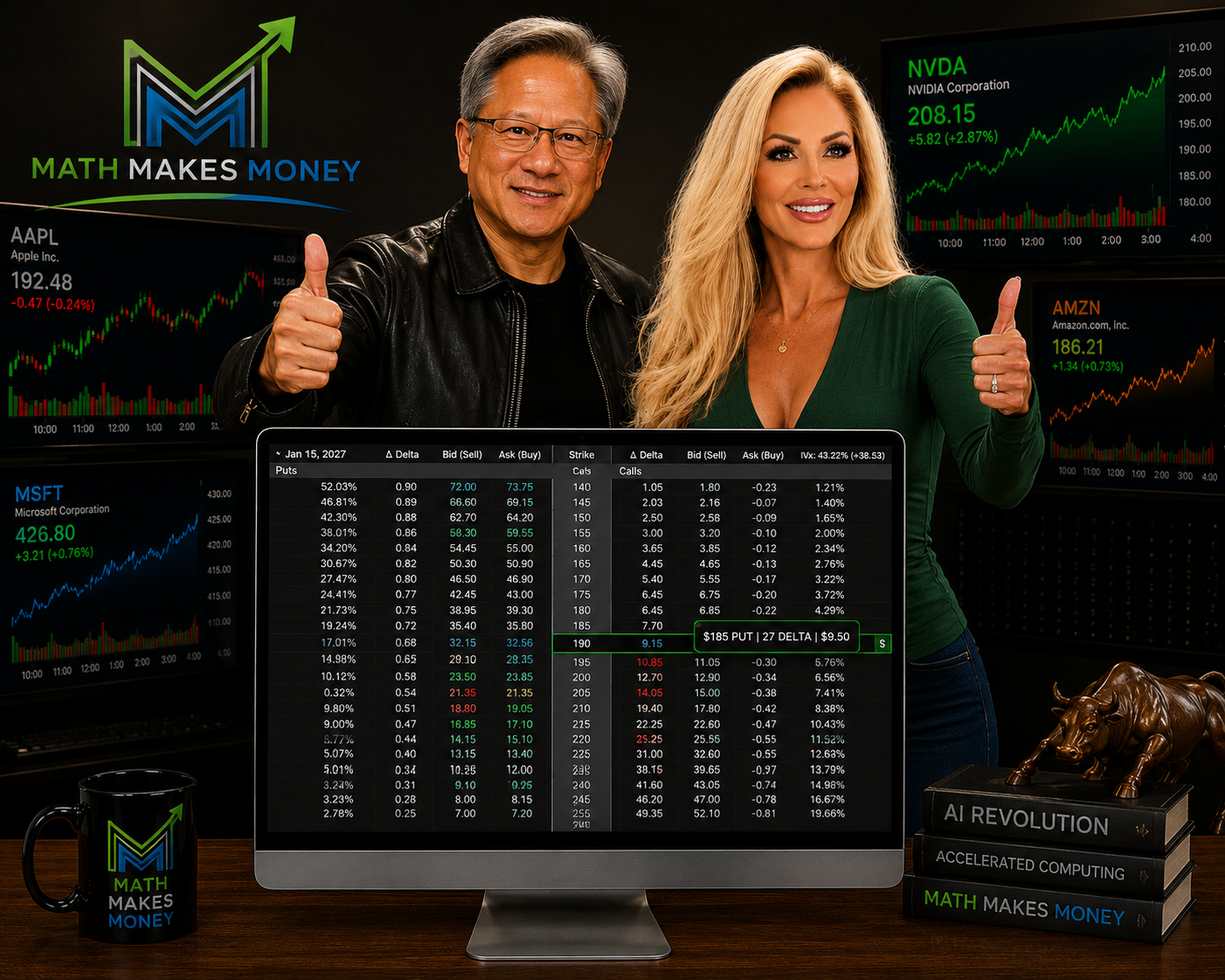
Microsoft and Palantir extended their gains. Amazon kept most of its jump but surrendered $9.51. Nvidia gave back $11.03, while Google and Micron experienced much larger reversals. The first move can continue, fade or reverse as investors reassess the quarter. Valuation Demands ContextAt roughly 23 to 25 times forward earnings, Nvidia recently traded below the Nasdaq-100's multiple of about 26 and far below AMD's multiple above 70. Nvidia is not cheaper than every large technology company, but its valuation is restrained relative to expected growth. Its trailing P/E was also about 31% below its 10-year average. What Wall Street Needs to HearAnother clean beat is only the starting point. Investors want exceptional guidance, durable AI demand, proof of customer returns, smooth execution across Blackwell and the next platform cycle, adequate supply, disciplined margins and any improvement in China. If guidance only matches what investors assumed, traders may still sell the news. A Pullback Can Create the EntryFor investors who already want Nvidia exposure, temporary weakness can be useful. A lower price can create room to scale into shares rather than chase pre-earnings excitement. It can also create an opportunity to sell puts at a strike where ownership would make sense, collecting premium while accepting the possibility of assignment. That approach still requires discipline. A pullback is not automatically a bargain, and selling puts can create an obligation to buy shares during a deeper decline. The decision should begin with a price the investor is genuinely willing to own, appropriate position sizing and enough cash to handle assignment. The Practical TakeawayThe earnings-day move may be noisy, but the opportunity is straightforward: separate the company's long-term performance from the market's short-term expectations, then use the reset only when the price and risk fit the plan. Maria's Bottom Line Nvidia investors know the earnings routine. The company can deliver outstanding numbers and the stock may still pull back because perfection is already expected. My long-term opinion has not changed. I firmly believe Nvidia still has plenty of room to grow. A little temporary weakness is exactly what creates opportunity — it gives me a chance to add shares or sell puts at a price where ownership makes sense. This is not panic. This is how I scale into a great company without chasing it, and that is exactly what I'm looking forward to. |
Sources: Nvidia investor relations; Reuters; historical closing prices from Nvidia, Digrin, Investing.com and Stock Analysis. Market prices through August 24, 2026. |