Issue No. 60 • Monday August 17, 2026 The Trading Addict Newsletter by Maria Helmick  Tap the image to view full size Maria's Market Watch · Special Risk Edition Black Monday 2.0 — How Low Could Today's Market Go?Michael Burry is warning that a 1987-style decline is possible. We ran the numbers across the Dow, SPX, SPY, QQQ and /NQ — and separated the stress test from the scare headline. | 22.6% 1987 One-Day Drop | 12,152 Dow Points at Risk* | 70–90 Possible VIX Stress Range |
What Burry's Warning Actually MeansMichael Burry may sometimes sound like Wall Street's Chicken Little, warning that the sky is about to fall. But even if he is early — or ultimately wrong about the timing — the risk deserves attention. The next crash would probably not repeat 1987 in a single uninterrupted collapse. Today's sky could fall in pieces: an overnight gap, a trading halt, a temporary rebound and then another wave of selling. That distinction matters when considering the 12,152-point figure. It is not Burry's price target; it comes from applying Black Monday's historic 22.6% one-day decline to a Dow reference level near 53,770. The calculation is a tail-risk stress test — a way to measure the possible damage from a rare, severe market break, not a prediction that another Black Monday is imminent. *Reference levels and calculations are scenario inputs from Aug. 12–13, 2026. Rounded values may differ slightly. The Numbers — A Black Monday Stress TestIf each market fell by the same 22.6% used in the article, the hypothetical levels would look like this: | Market | Reference | Potential Loss | Stress Level | | /NQ | 30,202 | -6,826 pts | 23,376 | | QQQ | $732.07 | -$165.45 | $566.62 | | SPX | 7,748.50 | -1,751.16 pts | 5,997.34 | | SPY | $777.88 | -$175.00 | $602.88 | | DOW | 53,770.27 | -12,152.08 pts | 41,618.19 |
1987, in ContextThe Dow lost 508 points on Black Monday — still its largest one-day percentage decline. Market-wide circuit breakers followed in 1988, and the VIX arrived in 1993, so the crash has no official VIX reading. Yet the Dow recovered 57% of the loss within two trading sessions, and U.S. stocks surpassed their pre-crash highs in less than two years. Why a Modern Crash Would Look Different — When Market Calm Gives Way to CrisisThe VIX was near 15 — a sign of calm conditions and little demand for protection. If selling accelerated, that calm could reverse quickly as investors rushed to buy options and dealers repriced risk. The VIX closed at 80.86 in 2008 and at a record 82.69 in March 2020, making 70–90 a credible stress range rather than a precise forecast. Black Monday was extraordinary because so much damage was concentrated in one uninterrupted session. Today, a 7% or 13% S&P 500 decline triggers a 15-minute halt before 3:25 p.m. ET, while a 20% decline ends trading for the day. Futures have price limits as well. Those safeguards create pauses that did not exist in 1987, making an identical replay less likely. But a pause is not the same as protection. Pressure could move into overnight futures, appear as a sharp opening gap, spread rapidly through stocks and ETFs, and then continue across several sessions. Crowded positions, margin calls, automated risk controls and dealer hedging can transmit stress quickly, while disappearing buyers may allow prices to fall farther than normal before liquidity returns. The defining difference may therefore be the shape of the event rather than its ultimate severity. A modern crash could arrive in waves — a gap lower, a trading halt, a temporary rebound and another round of selling — instead of one continuous collapse. We do not need to expect that outcome every day, but we should understand our exposure and remember that today's safeguards can slow a crisis without removing the underlying risk. Maria's Bottom Line Reviewing this scenario does not mean another Black Monday is imminent. It means we should respect how quickly risk can move and make sure our exposure is appropriate before volatility erupts — especially if we sell puts on /NQ futures. Still, I can't help but think about those juicy premiums if the VIX exploded into the 70–90 range. That volatility could create incredible opportunities for disciplined, properly protected put sellers. Protection first. Premium second. Survival always. |
Sources: Federal Reserve research on the 1987 crash; SEC market-structure and liquidity research; NYSE Rule 7.12; Cboe VIX history. |
 Tap the image to view full size The Week's Big Question · Trading Addicts Monday Market The Consumer Takes the StandFour major retailers. Three reporting days. One question Wall Street needs answered: is the consumer still holding up? | TUESDAY HOME DEPOT Housing + big projects | WEDNESDAY TARGET + LOWE'S Discretionary + housing | THURSDAY WALMART America's value shopper |
For months, investors have been trying to decide whether higher prices, expensive borrowing costs and a slowing pace of job creation are finally wearing down the American consumer. This week we get something more useful than another survey: we get the cash registers. Home Depot starts the conversation Tuesday. Target and Lowe's take over Wednesday. Walmart finishes the major retail run Thursday. Together they cover home improvement, discretionary purchases, groceries, necessities and the increasingly important value shopper. That gives Wall Street a broad look at where consumers are still willing to spend — and where they may be pulling back. The details may matter as much as the headline sales numbers. Are shoppers trading down? Are promotions increasing? Are higher-income consumers behaving differently from lower-income households? Are homeowners finally taking on larger renovation projects, or are elevated financing costs still keeping those projects on hold? Guidance will be especially important. A company can beat the quarter that just ended and still disappoint investors if management sees softer demand ahead. Conversely, steady guidance could reinforce the idea that the consumer is bending under pressure but has not broken. » What Could Move the Market? | WALMART — Value shopping, grocery strength, pricing and margins. | | TARGET — Whether discretionary purchases are improving or necessities still dominate. | | HOME DEPOT / LOWE'S — The health of housing-related spending and larger home projects. | | GUIDANCE — What management sees for the rest of 2026 may matter more than last quarter. |
Maria's Bottom Line Forget the surveys for a minute. This week America's biggest retailers tell us what people are actually doing with their money. If the consumer is changing, I want to hear it from the companies ringing up the purchases. |
|
Market Mood Are We Running Out of Reasons to Sell?The market keeps absorbing bad news. That does not make it invincible — but it makes the next catalyst more interesting. | “The bears keep getting catalysts. They just aren't getting much follow-through.” The market has spent much of 2026 doing something that can be extremely frustrating for bears: absorbing reasons to fall without falling very far. Inflation worries have resurfaced. Rate expectations have shifted. Geopolitical headlines have created sudden volatility. Yet the major averages have repeatedly found buyers, and the S&P 500 reached another record close last week. That does not mean risk has disappeared. Markets can become vulnerable precisely when investors begin assuming every dip will automatically be bought. But it does change the question. Instead of asking whether there are risks — there are always risks — investors may want to ask which risk is powerful enough to actually change positioning. This week gives the market several chances to answer that. Retail earnings could expose weakness in the consumer. Wednesday's Fed minutes could reveal a wider policy disagreement than investors expect. Friday's preliminary business surveys could change the growth conversation. Any one of those could create volatility; the bigger question is whether sellers can finally make it stick. For investors holding cash, that distinction matters. A one-day red screen is not necessarily the opportunity we have been waiting for. A genuine repricing — where good companies finally come back to levels that improve the risk/reward — would be much more interesting. » Three Ways This Week Could Play Out Bulls Get Their Way Retail holds up, the Fed minutes bring no major surprise, and pullbacks keep attracting buyers. | Bears Get Traction Consumer commentary weakens while the Fed sounds less friendly than expected. | Frustration Trade Neither side wins. Stocks chop around while everyone waits for the next real catalyst. |
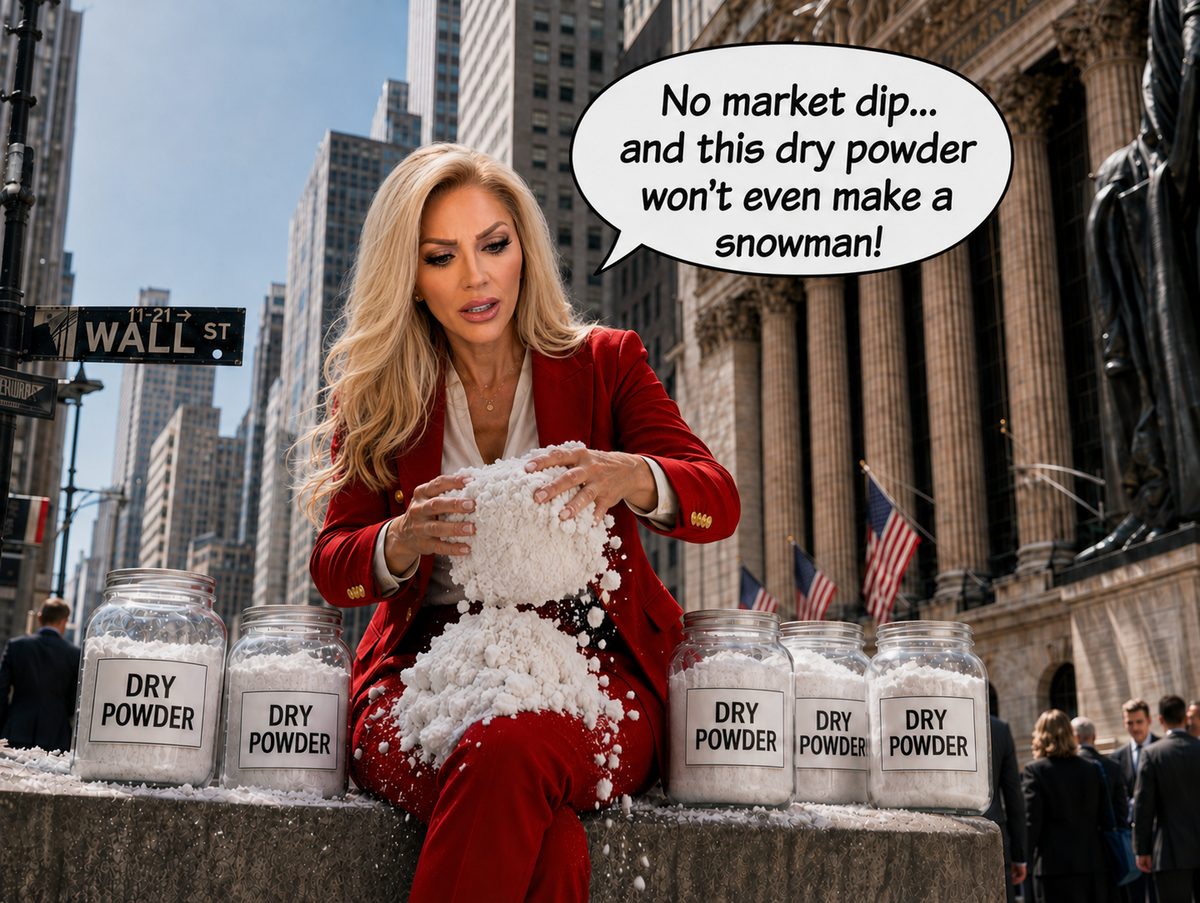
Maria's Bottom Line I am still bullish, but I do not need to chase a market sitting near its highs. I have dry powder for a reason. If the market wants to give me better prices, I am perfectly happy to wait for them. |
|
Wednesday · 2:00 P.M. ET Fed Minutes: A Nothingburger — Unless...Most Fed minutes are backward-looking. Wednesday's release only becomes important if it changes what investors think comes next. | The July FOMC minutes arrive Wednesday at 2:00 p.m. Eastern. By then, investors already know the policy decision and have heard the chair's press conference, which is why the minutes often generate more headlines than lasting market movement. This time, traders will be searching the discussion for clues about how divided policymakers were and how officials viewed the balance between inflation and growth. The release matters if those details meaningfully change expectations for September — particularly if the committee sounded more concerned about inflation, growth or the labor market than investors realized at the time. » What Would Make the Minutes Matter? | 1. A bigger policy split — Evidence that officials were more divided than investors realized. | | 2. More inflation concern — Language suggesting price pressures remain a bigger obstacle to easier policy. | | 3. A September surprise — Anything that materially changes expectations for the next Fed meeting. |
Jackson Hole — Why Wall Street Cares Jackson Hole is August 27–29, the following week. The Kansas City Fed's annual symposium brings together central bankers, economists, academics, government officials and financial-market leaders from around the world. In recent decades, remarks from the Fed chair have become one of the most closely watched parts of the event. Why can it matter? Unlike Wednesday's minutes, which describe a meeting that already happened, Jackson Hole gives policymakers a chance to talk about the economy and the direction of policy closer to the September Fed meeting. If the Fed wants to sharpen, soften or reframe its message, investors will listen carefully — and rates, bonds, the dollar and stocks can react. But Jackson Hole is not automatically a market-moving event. It is a policy symposium, not an FOMC meeting, and no rate decision is made there. Some years produce an important shift in tone; other years produce more discussion than action. For 2026, the official theme is “Financial Innovation: Implications for Payments and Policy.” So the market significance will depend heavily on what Fed officials actually say, not simply on the fact that the conference is taking place. |
Maria's Bottom Line I would not build my whole week around the Fed minutes. But I would respect 2:00 p.m. Wednesday. If the release changes the market's view of September, it matters. If it doesn't, Jackson Hole the following week may give us a more current read on how the Fed wants to frame the road ahead. |
Sources: Federal Reserve Board; Federal Reserve Bank of Kansas City. The 2026 Jackson Hole Economic Policy Symposium is scheduled for Aug. 27–29. Earnings dates and times should be verified before trading. |
The Week Ahead Earnings Calendar · Aug 17–21 | 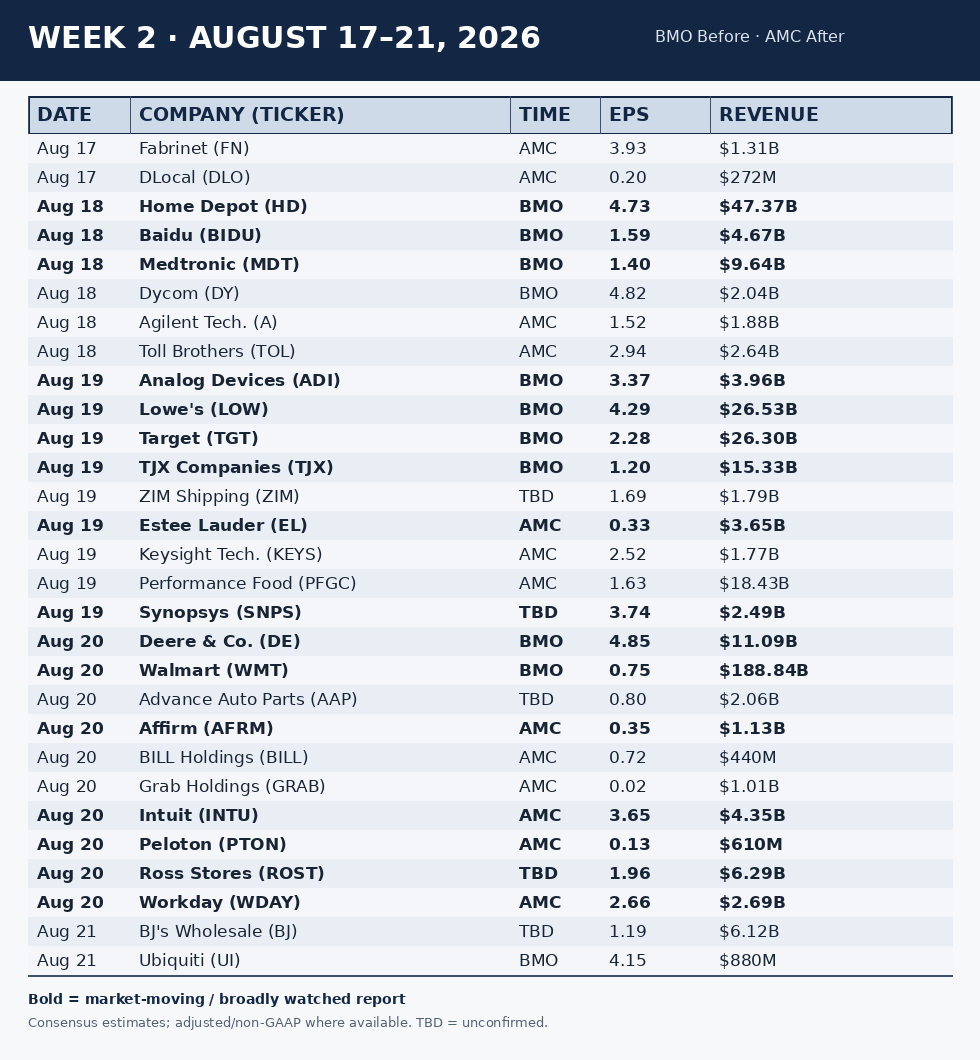 Tap the chart to view full size |
» MARKET TIDBIT 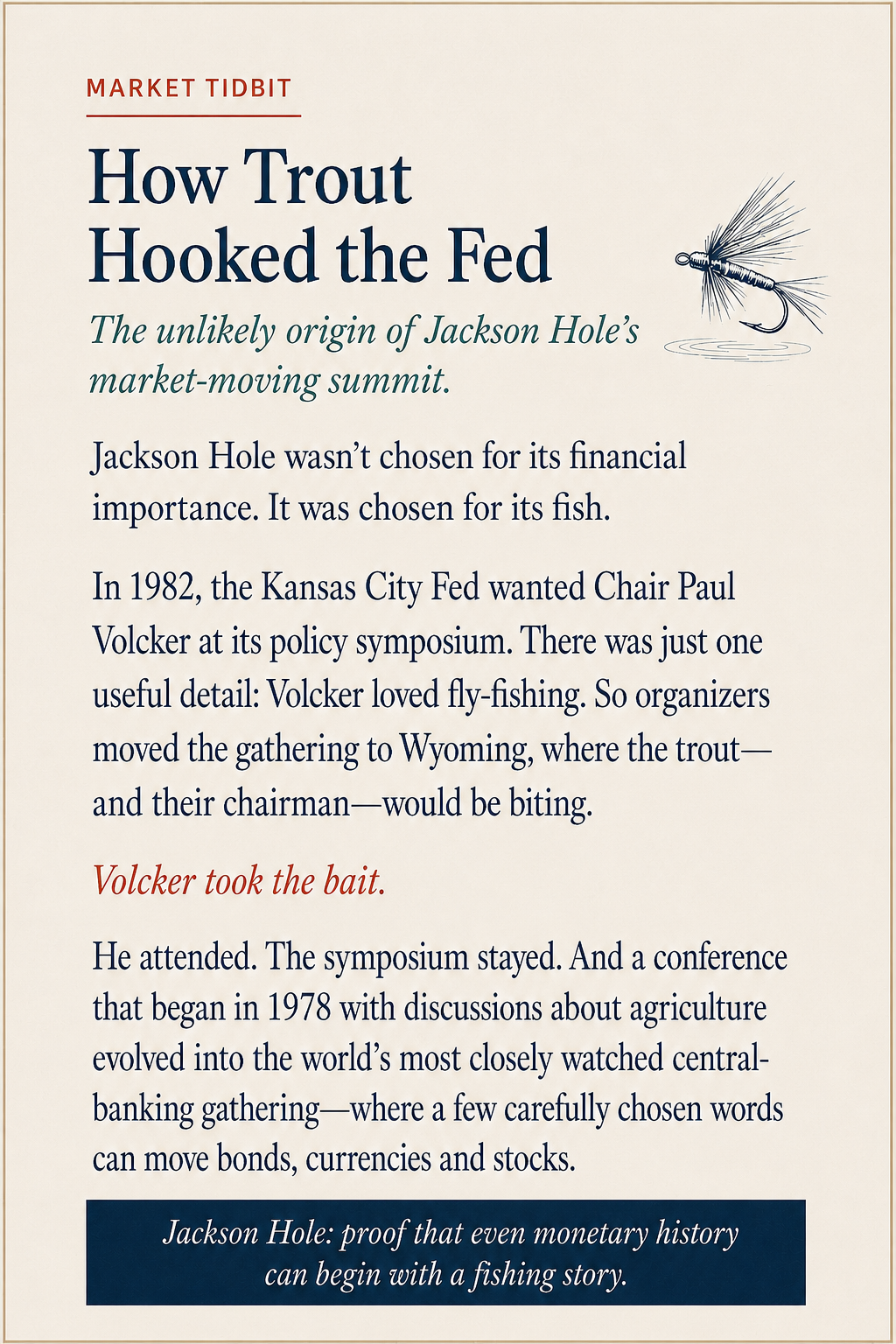 Tap the tidbit to view full size » DAY 207 · FRI AUG 14 · DAILY TRADING UPDATE 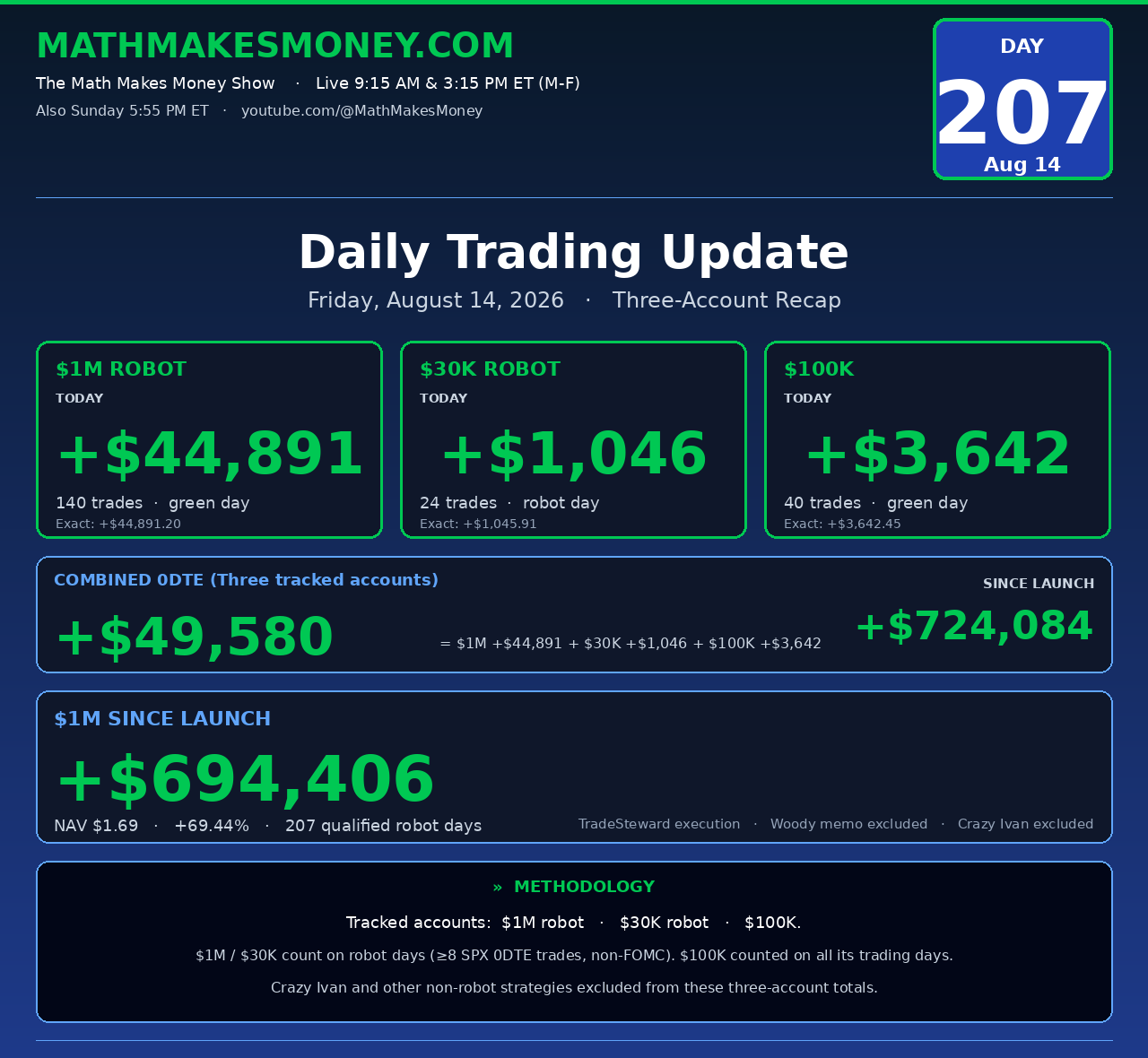 Tap the dashboard to see the full summary online  » Tap to watch the live daily show at 9:15 AM and 3:15 PM ET Monday through Friday, and Sunday at 5:55 PM ET » TRADES OF THE WEEK Week of August 17 — Two SPX 0DTE trades | | Entry Time | Strategy | | 11:32 | 225 M 95 50 00 | | 15:17 | 225 M 95 50 00 |
Two SPX 0DTE plays — same 225 M 95 50 00 strategy, morning and afternoon. |
Free Community Join our Discord with over 1,000 like-minded traders who believe that math makes money when it comes to trading Trade ideas, screenshots, daily banter. Zero cost. Join the Discord → |
MATH MAKES MONEY Rob and Maria Helmick and Nick Battista · The Trading Addict Newsletter MathMakesMoney.com Educational only. Not investment advice. Trading options involves substantial risk. Past performance does not guarantee future results. |
|