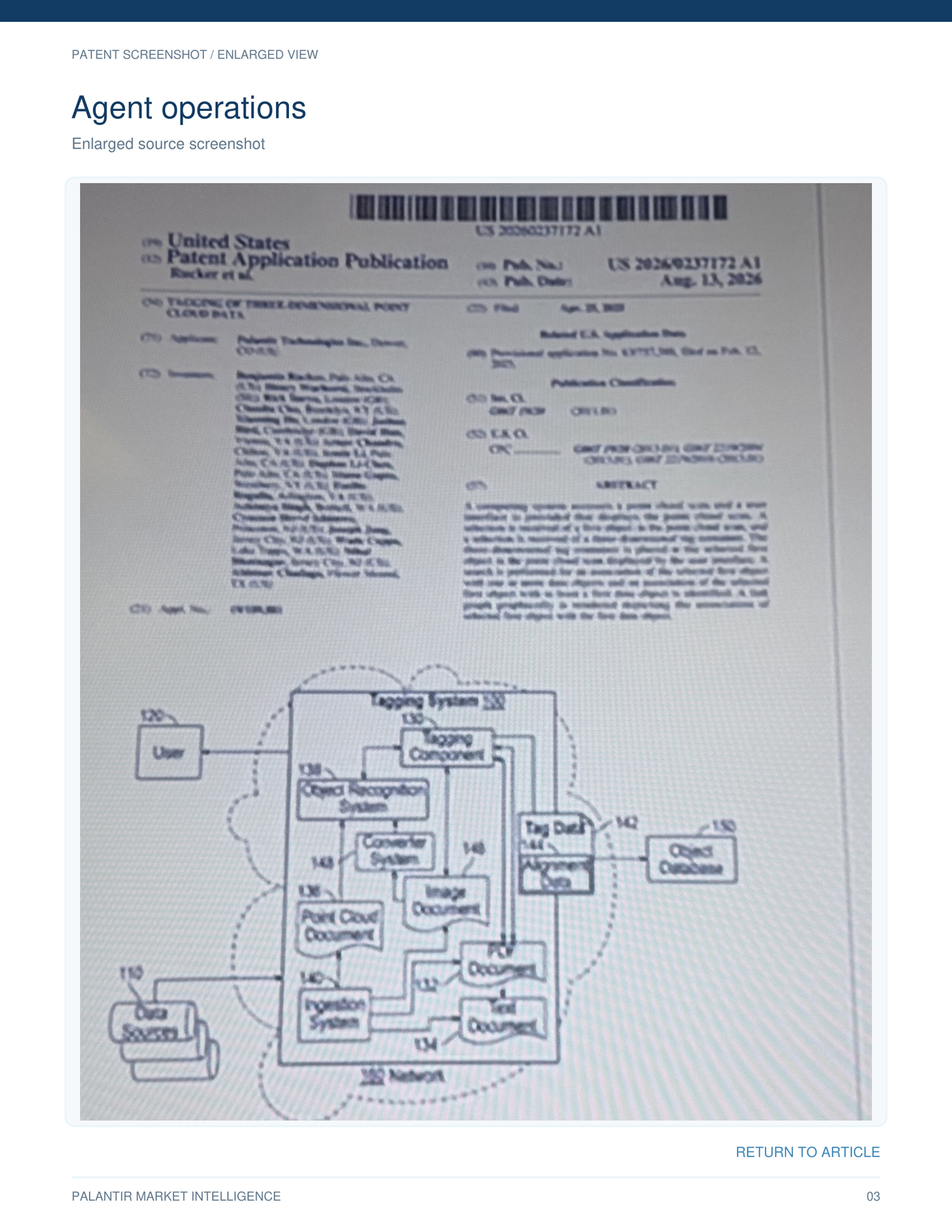
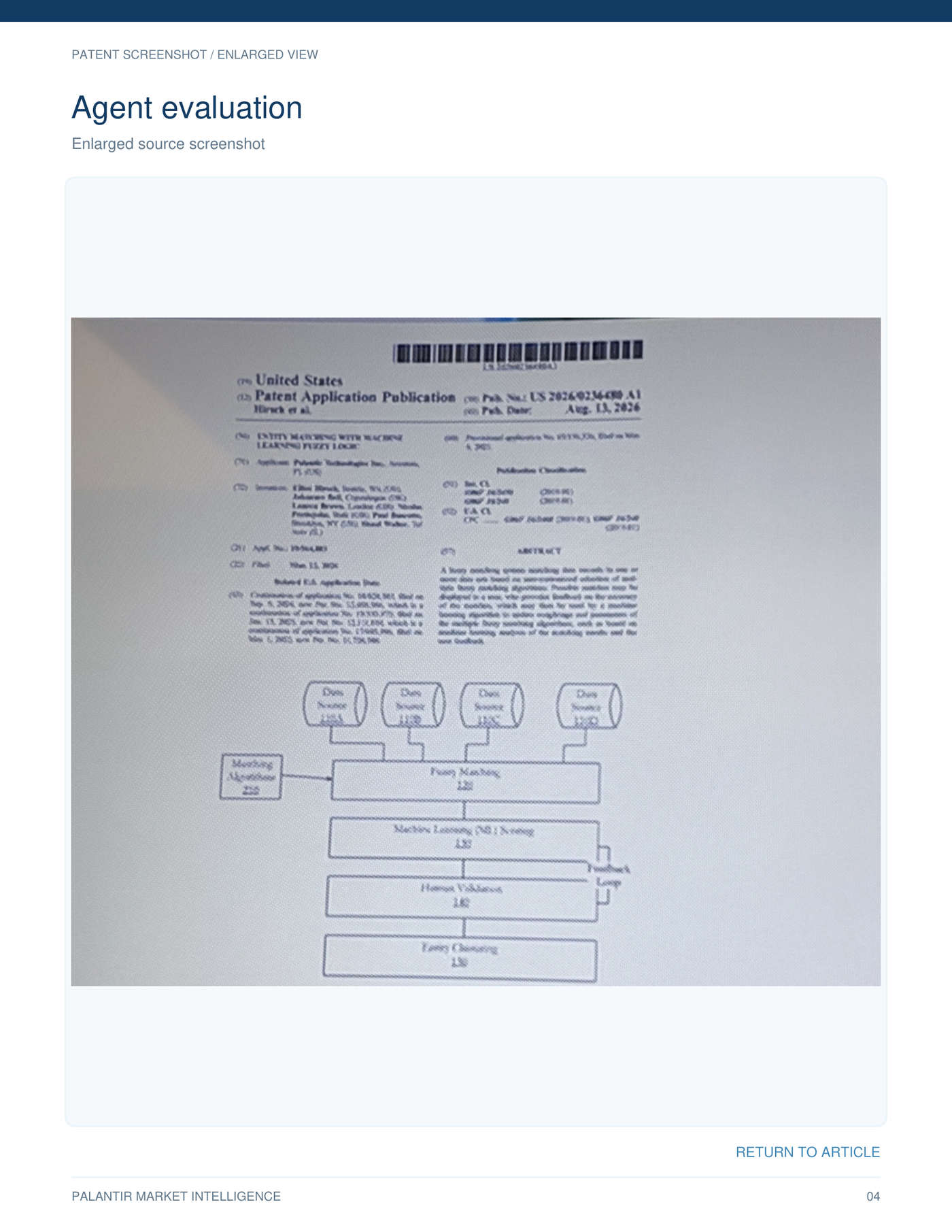
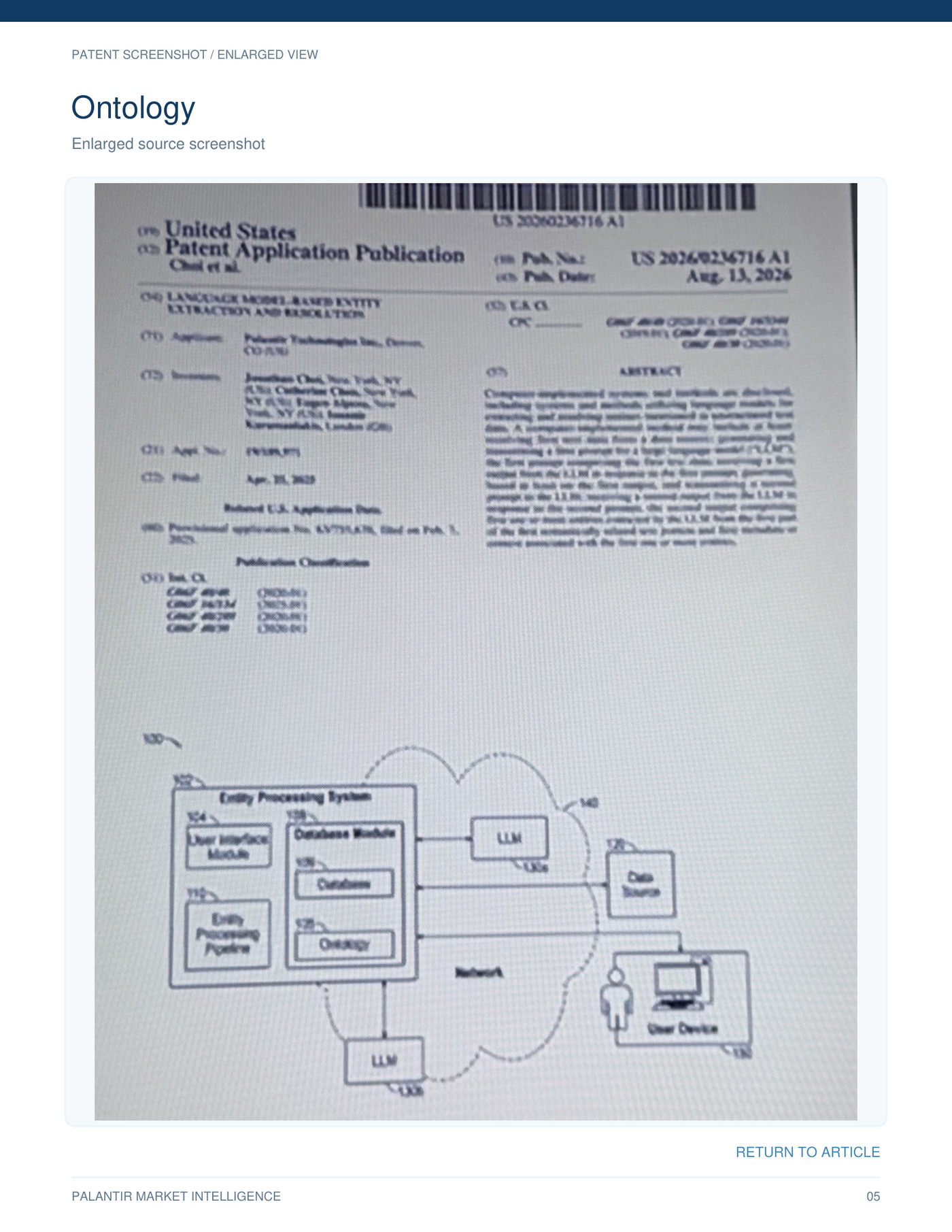
Issue No. 59 • Friday August 14, 2026 The Trading Addict Newsletter by Maria Helmick 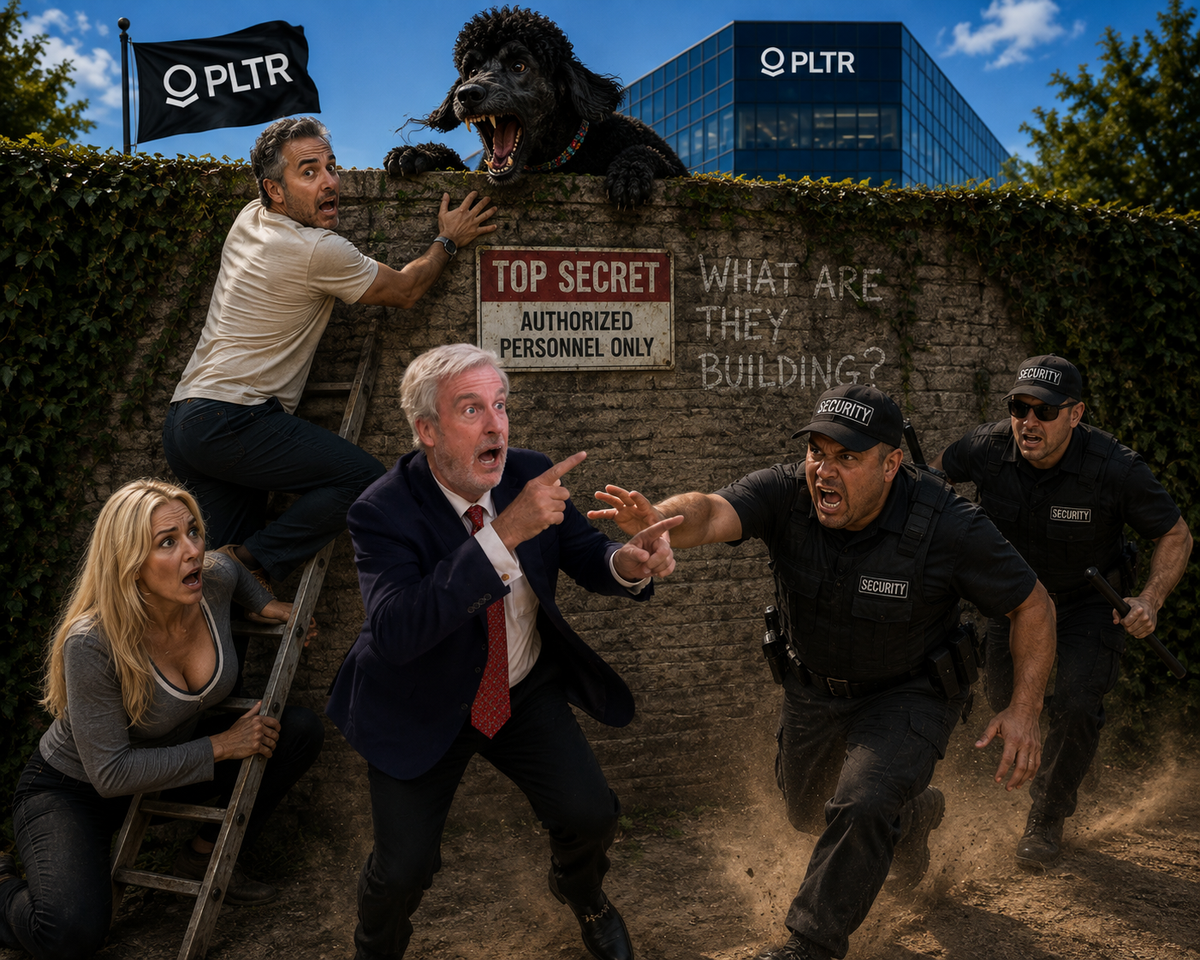 Tap the image to view full size Market Intelligence · Palantir Technologies (PLTR) What Is Palantir Quietly Building?A trail of AI patent filings offers a surprisingly clear clue: Palantir appears to be designing pieces of an AI workforce for the enterprise. | Something interesting is showing up in Palantir's patent filings. Look at the applications together and they begin to resemble pieces of the same system: build an AI agent, connect it to a company's real operations, control what it is allowed to access, let agents work with tools and one another, and then evaluate whether they actually did the job correctly. That is a much bigger idea than another chatbot. Palantir appears to be working toward AI that can function inside an organization — using approved data, interacting with business systems and carrying out tasks while remaining inside defined security and permission rules. » Three Patent Views · Tap Any to Open Full Size in New Tab 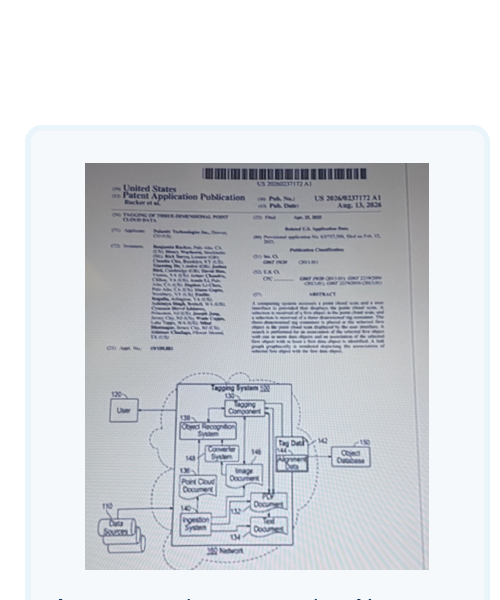 Agent operations: managing AI agents, models, tools and enterprise data. | 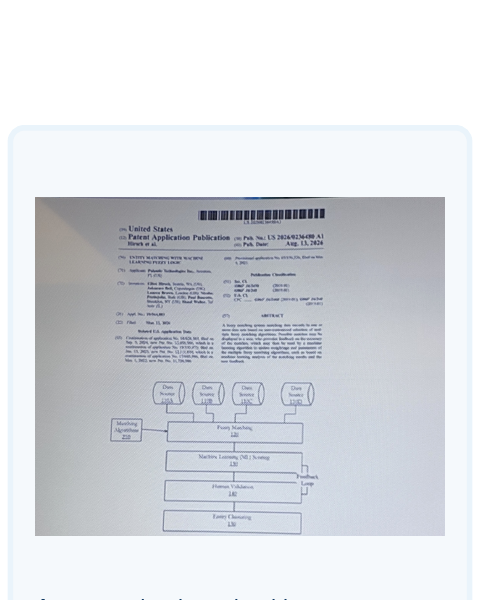 Agent evaluation: checking performance, steps, results and problems. | 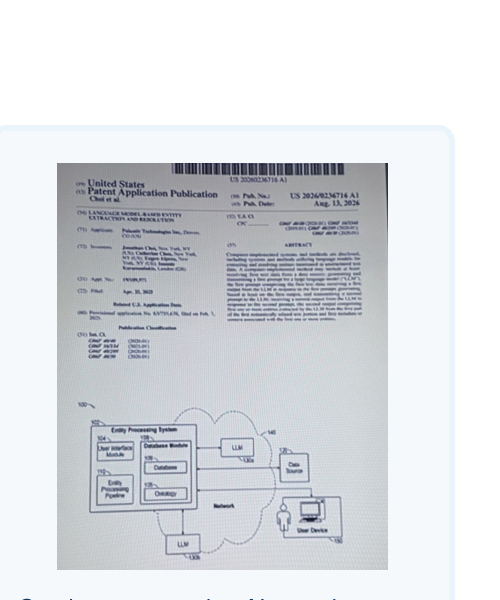 Ontology: connecting AI to real business objects, permissions and operations. |
Three patent views, presented as an interactive visual brief. The emerging systemOne filing describes an Agent Ops Framework. In plain English, it is about managing AI agents as workers: giving them tasks, connecting them to models and tools, allowing them to use resources and coordinating how the work gets done. Instead of one AI answering one question, the architecture points toward specialized agents handling parts of a larger job. From AI worker to enterprise systemAnother filing focuses on evaluation. If companies are going to trust AI agents with real work, they need a way to judge them. Palantir's Agent Evaluation Framework describes technology for evaluating an agent's behavior and results, comparing configurations and identifying problems. In effect, Palantir is not only thinking about the AI worker; it is also thinking about the supervisor. Then comes Palantir's Ontology. This is where the pieces start to connect. An ontology can tell the AI what the company's data actually represents — which machine belongs to which factory, which order belongs to which customer, which employee has permission to do what, and how those pieces relate to one another. That gives an AI agent something far more useful than a pile of data: context about how the business works. There is another piece that makes these filings particularly interesting: NVIDIA. Palantir and NVIDIA are already working together on operational AI, combining NVIDIA's accelerated computing and Nemotron AI models with Palantir's AIP and Ontology. In simple terms, NVIDIA can provide the engine while Palantir provides the system that connects that intelligence to the actual business. That makes the patents around agents, evaluation and Ontology look less like isolated filings and more like pieces of a larger enterprise AI architecture. Put the filings together and a possible roadmap emerges: create the agent, connect it to the enterprise, give it controlled access and tools, allow agents to cooperate, and evaluate the work they produce. Patent applications do not guarantee that Palantir will win this market, but they can reveal where engineering resources are going and what the company believes may be important enough to protect. Maria's Bottom Line I'm not an engineer, and I'm not going to pretend I understand every technical detail in these patents. But I understand enough to know this makes the Palantir story more interesting. Palantir appears to be preparing for a world where AI does more than answer questions — it becomes part of how businesses actually operate. PLTR is clearly trying to put itself in the middle of that shift, and as the company keeps expanding its technology and reach, that gives me a very good reason to keep watching it. |
|
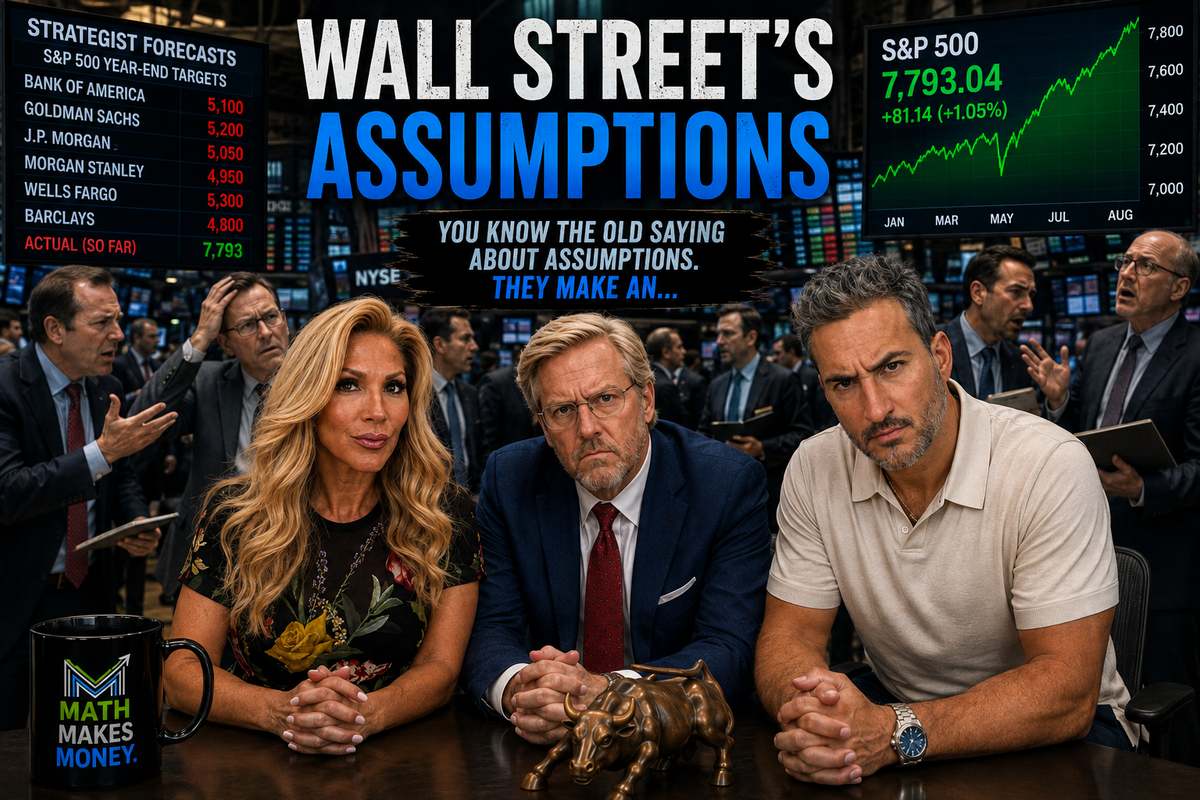 Tap the image to view full size Market Perspective · Math Makes Money Wall Street's AssumptionsYou know the old saying about assumptions. They make an... The S&P 500 keeps making records while strategists keep moving their targets. Maybe the better question is not where the market will finish in December, but what earnings, margins and productivity are telling us right now. | A forecast is an educated guess. The market is the final score. Corporate profits remain strong, margins are near historic highs, and every year Wall Street strategists still try to tell us exactly where the market will be in December. The problem is those targets are often wrong. Jason Zweig of The Wall Street Journal has described the annual forecasting exercise as a “ritual of wrong.” One review found the S&P 500's actual return landed outside the entire range of strategist forecasts in seven of eight years studied. That raises a fair question: where is the accountability? In most businesses, if someone repeatedly makes important projections that miss badly, eventually somebody wants answers. On Wall Street, a target can miss by a mile, get adjusted along the way, and then the following year begins with another new prediction. Strategists still have value. Their research, economic work and company analysis can be excellent. But a year-end target should be treated for what it is: an educated estimate, not a fact. And when the forecasts keep missing, maybe the better question is not what Wall Street predicts next, but whether some of the assumptions behind those predictions need to change. Maybe the Market ChangedThere is another possibility: maybe the strategists are not just missing the market. Maybe some of the old assumptions are no longer working as well. S&P 500 profit margins are near historic highs, and companies are finding ways to turn more of every revenue dollar into profit. AI could push that even further. If companies can produce more without costs rising just as fast, margins expand, profits grow faster, and some traditional growth and valuation models may start to look outdated. That is what could make AI bigger than another tech boom. If it truly changes the economics of corporate America, Wall Street may be trying to value a new economy with an old calculator. And we have seen a version of that before. In the late 1990s, Alan Greenspan faced an economy that was growing faster than many economists thought it could without creating inflation. Productivity was rising, companies were producing more efficiently, and some of the old assumptions about growth and inflation were no longer working quite the same way. That is where the comparison gets interesting. Greenspan Has Seen a Version of This BeforeGreenspan noticed that productivity was rising much faster than expected. Labor-productivity growth had averaged less than 1% in the early 1990s. By 1999, it was running at roughly 3%. Companies were producing more without labor costs rising at the same pace, which helped keep inflation under control. In fact, Fed officials acknowledged that stronger productivity had caused economists to underestimate economic growth and overestimate inflation. AI raises a similar question today: what if companies can produce more, lower costs and grow profits through AI? The economy may be able to grow faster than the old models assume without automatically creating the same inflation pressure. That does not mean the 1990s are repeating themselves. But it does raise a very interesting possibility: What if AI is changing the speed limit of the economy? Maria's Bottom Line I listen to Wall Street strategists and read the research. There are plenty of smart people out there. But after a while, how many wrong calls are we supposed to keep treating like gospel? Fool me once, shame on you. Fool me twice, shame on me. If the weatherman keeps predicting rain and you keep walking outside into sunshine, eventually you stop relying on the forecast and make your own call. The market is no different. Listen to Wall Street. Use the research. But in the end, look at the earnings, the margins, the economy and the price action — and make your own evaluation. Forecasts are guesses. The market is the final score. |
|
The Market Undercurrent · Thursday Aug 13, 2026 Deep in the Earnings WoodsDeep in earnings season: the market-moving reports still ahead and what traders should watch next. | We are well into earnings season, but the calendar is not finished with us yet. The next wave could reshape retail, consumer and AI sentiment — and guidance may be the thing lurking behind the headline numbers. Dates and times are based on company calendars available at publication. Home Depot (HD) · Aug. 18, before open · Options: Yes Consensus centers near $47.3B revenue and roughly $4.72 EPS. High mortgage rates and slow housing turnover continue to weigh on big-ticket remodeling. CEO Ted Decker began a temporary medical leave on Aug. 12 and is expected to return within a few months. Ann-Marie Campbell is overseeing daily operations; CFO Richard McPhail is overseeing financial management and the Pro subsidiaries. Trade focus: Comparable sales, contractor demand, leadership continuity and any change to the full-year outlook. |
Baidu (BIDU) · Aug. 18, before open · Options: Yes Consensus revenue is near RMB32B. Search advertising remains under pressure, while cloud, applications and AI-native marketing have supplied the growth counterweight. An Aug. 26 shareholder meeting follows Baidu's move toward a dual-primary Hong Kong listing. Trade focus: Whether AI revenue is scaling fast enough to offset advertising weakness, plus any listing-related update. |
Lowe's (LOW) · Aug. 19, before open · Options: Yes Analyst EPS estimates cluster around $4.20–$4.40. Higher borrowing costs and soft discretionary DIY demand remain the central headwinds. Lowe's recorded $96M of acquisition-related pre-tax expense in Q1 as it integrates Foundation Building Materials and Artisan Design Group. Trade focus: Comparable sales, Pro-customer demand, integration costs and how the results compare with Home Depot. |
Target (TGT) · Aug. 19, before open · Options: Yes Target enters the report under CEO Michael Fiddelke after a 5.6% comparable-sales decline in Q1. The company plans roughly $2B of incremental 2026 investment, including more than $1B of additional capital spending, while maintaining a $7.50–$8.50 adjusted EPS outlook. Trade focus: Traffic, discretionary sales, inventory and whether investment spending is pressuring margins. |
Walmart (WMT) · Aug. 20, before open · Options: Yes Consensus is near $186.7B revenue and about $0.74 adjusted EPS. Market-share gains have supported the stock, leaving a demanding valuation. This is also an important report under CEO John Furner following Walmart's leadership transition. Trade focus: Comparable sales, grocery inflation, e-commerce profitability, guidance and execution under the new CEO. |
Alibaba (BABA) · Aug. 20, before open · Options: Yes Consensus revenue is near RMB268B, with non-GAAP EPS around $1.59 per ADR. Cloud accelerated last quarter, while heavy AI investment and quick-commerce competition pressure margins. Trade focus: Cloud growth, AI demand, Chinese consumption and how much margin is being traded for growth. |
On the Horizon NVIDIA (NVDA) · Aug. 26 after the close - 2:00 PM PT · Options: Yes Why it deserves the spotlight: NVIDIA is the report most likely to reset expectations across the entire AI trade — from chipmakers and networking suppliers to power, cooling and data-center stocks. First-quarter fiscal 2027 revenue reached $81.6B, including $75.2B from Data Center. Management guided the second quarter to $91B, plus or minus 2%, with gross margin near 75% and no China Data Center compute revenue assumed. What to watch: The market will focus on whether demand is still outrunning supply, the pace of next-generation system deployments, gross-margin durability and the effect of China export restrictions. Because NVIDIA can move the wider AI complex, traders often position early — which can lift both the stock and implied volatility well before the report. A strong quarter may still disappoint if guidance does not clear elevated expectations. |
» Still Lurking on the Calendar | Estee Lauder (EL) · Options: Yes · Aug. 19, before open | | TJX Companies (TJX) · Options: Yes · Aug. 19, before open | | Deere (DE) · Options: Yes · Aug. 20, before open | | Ross Stores (ROST) · Options: Yes · Aug. 20, after close |
Dates, leadership changes and company developments were checked against company materials. Consensus figures, options availability and liquidity can change. Prepared Aug. 13, 2026. For education and market awareness only. Not investment advice. |
» MARKET TIDBIT 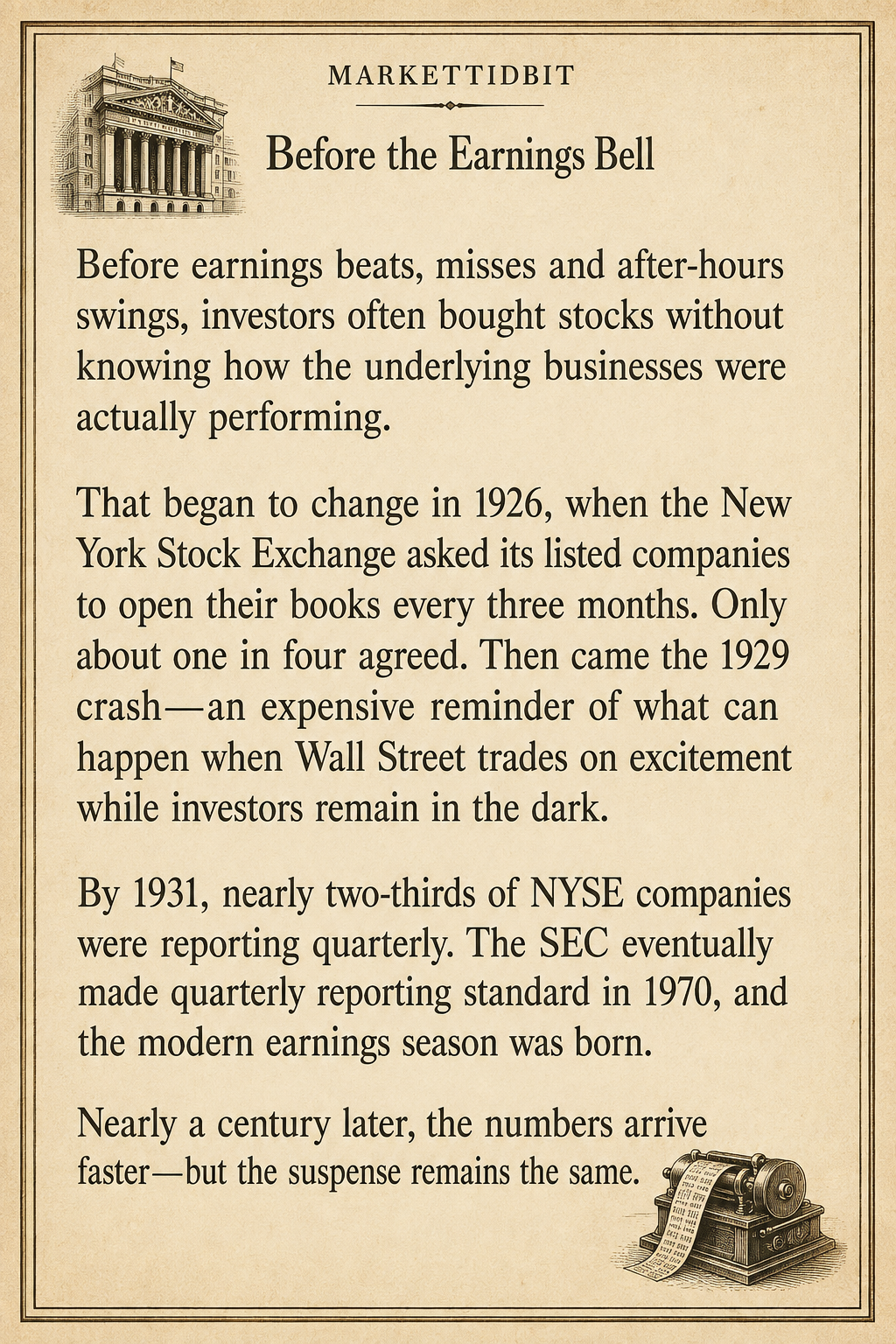 Tap the tidbit to view full size » AFTER HOURS EARNINGS 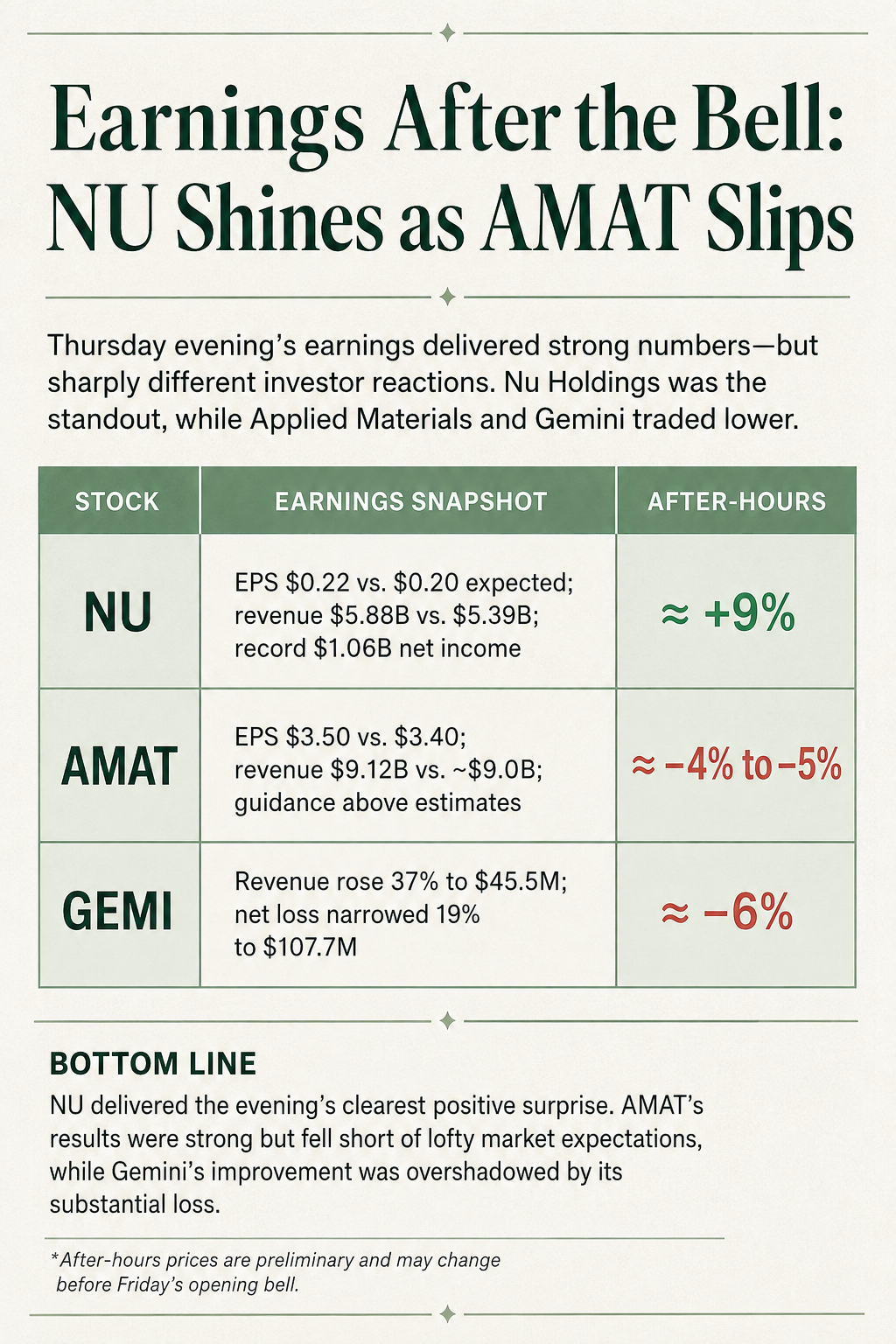 Tap for full size The Week Ahead Earnings Calendar · Aug 10–14 | 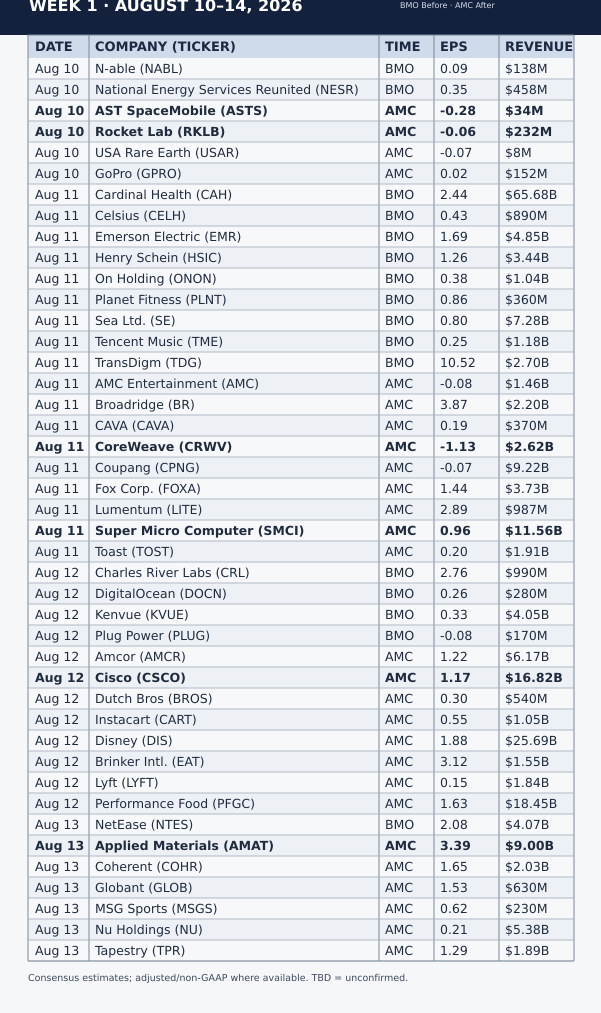 Tap the chart to view full size |
» DAY 206 · THU AUG 13 · DAILY TRADING UPDATE 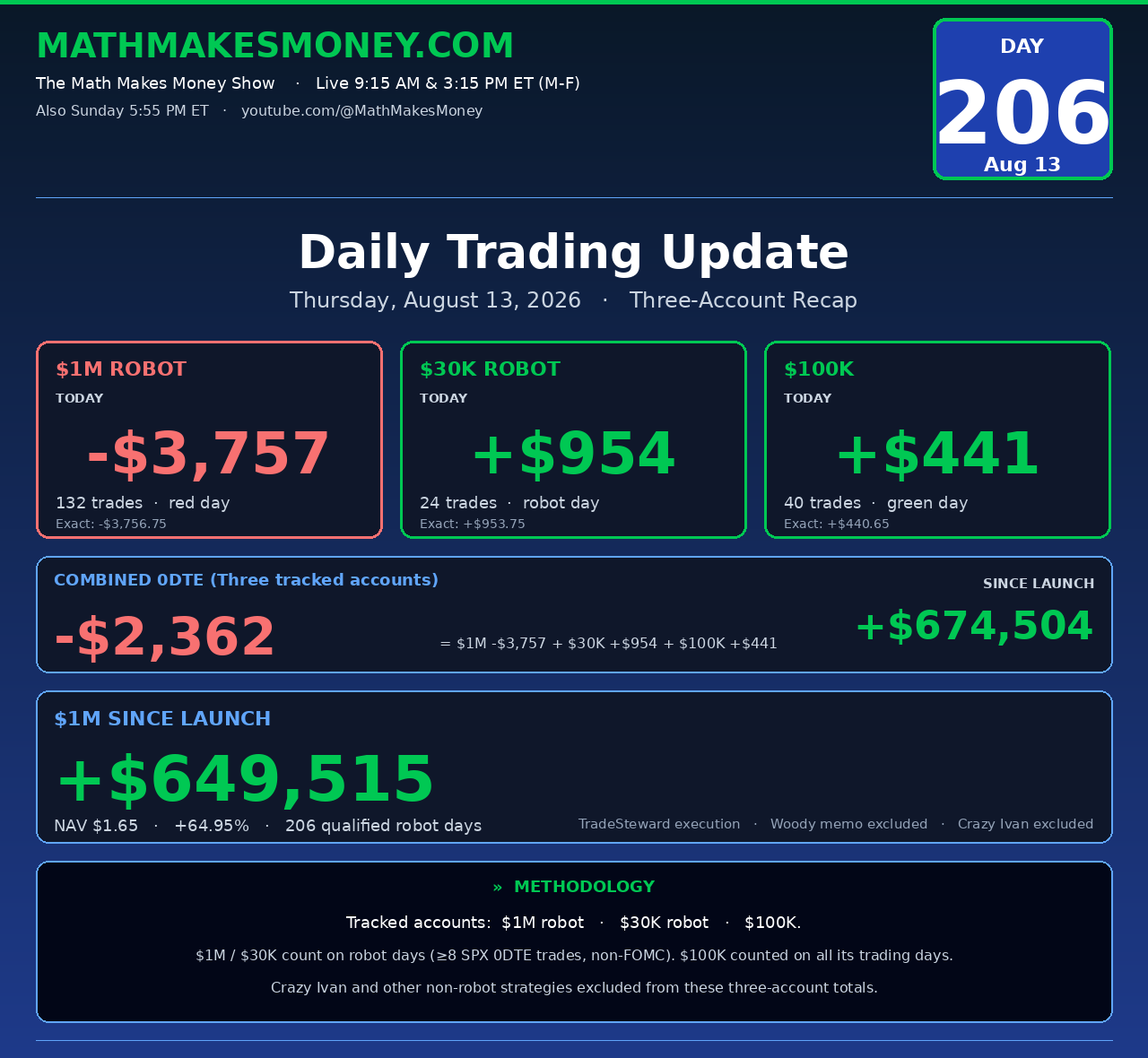 Tap the dashboard to see the full summary online  » Tap to watch the live daily show at 9:15 AM and 3:15 PM ET Monday through Friday, and Sunday at 5:55 PM ET » TRADES OF THE WEEK Week of August 10 — Two SPX 0DTE trades | | Entry Time | Strategy | | 11:25 | 225 M 95 50 00 | | 15:23 | 225 M 95 50 00 |
Two SPX 0DTE plays — same 225 M 95 50 00 strategy, morning and afternoon. |
Free Community Join our Discord with over 1,000 like-minded traders who believe that math makes money when it comes to trading Trade ideas, screenshots, daily banter. Zero cost. Join the Discord → |
MATH MAKES MONEY Rob and Maria Helmick and Nick Battista · The Trading Addict Newsletter MathMakesMoney.com Educational only. Not investment advice. Trading options involves substantial risk. Past performance does not guarantee future results. |
|