Issue No. 44 • Friday July 24, 2026
THE TRADING ADDICT
NEWSLETTER
by Maria Helmick
» AI & Semiconductors
Tap the image to view full size
AMD JUST MADE ITS AI AMBITIONS HARDER TO IGNORE
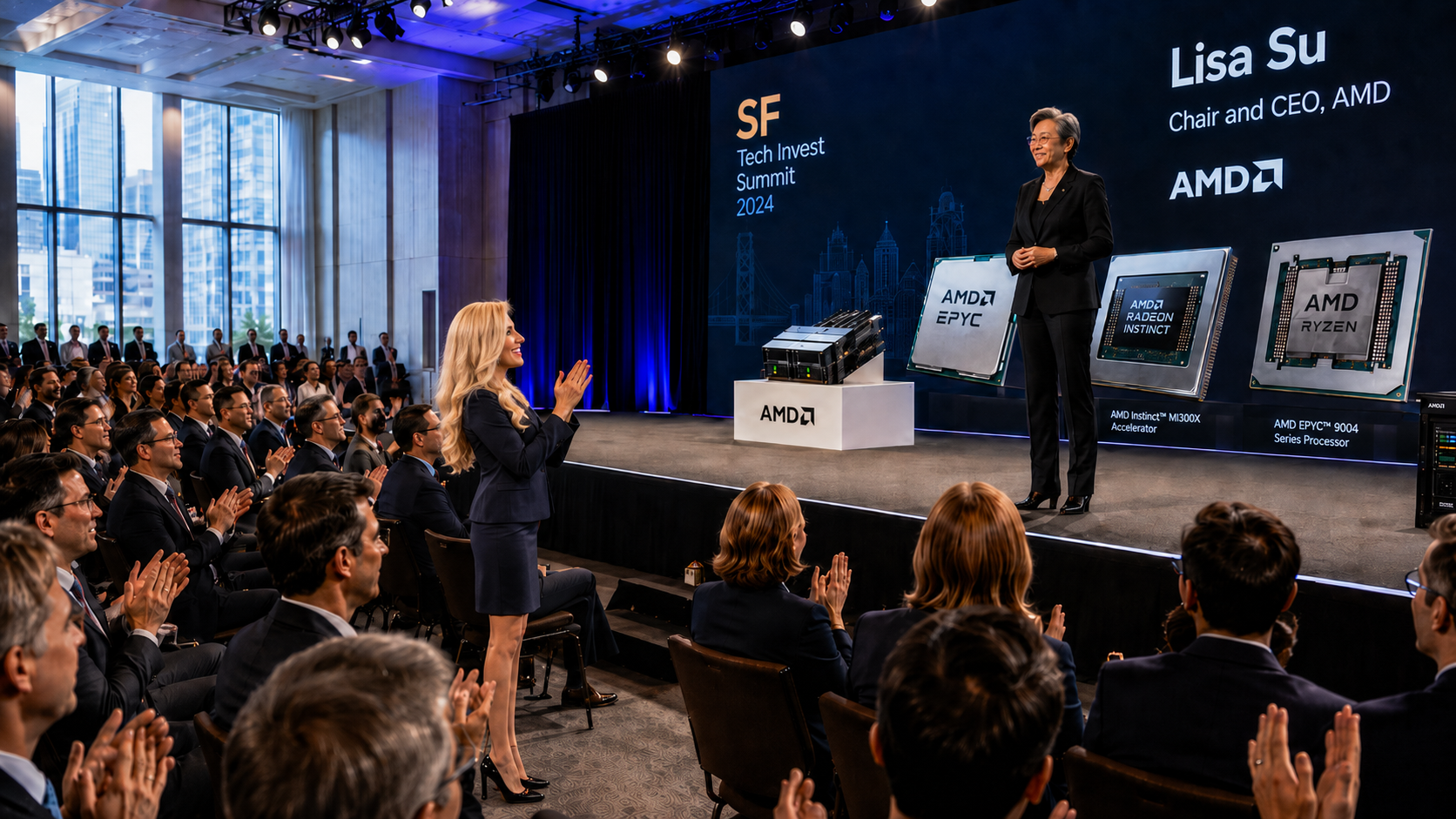
Lisa Su used AMD's Advancing AI conference in San Francisco to show that the company is no longer simply trying to catch Nvidia. AMD is building a complete AI platform — chips, processors, software, networking and full data-center systems.
|
|
Here are the biggest announcements she discussed:
Helios is now in full production. AMD's new rack-scale AI system is being manufactured, with customer shipments expected to begin by the end of Q3. Helios combines AMD GPUs, EPYC processors, networking and software inside one complete system.
AMD wants a larger share of the entire AI data center. The company is no longer focused on selling customers only an individual chip. AMD wants to provide the complete infrastructure needed to build and operate large AI systems.
OpenAI plans to use AMD at a much larger scale. OpenAI expects to begin deploying Helios systems toward the end of 2026, with deployments increasing throughout 2027. It also expects to use AMD's future MI500 accelerators.
AMD now has support from several major AI customers. OpenAI, Microsoft, Meta and Anthropic are all working with AMD — valuable customer validation that the largest AI companies want alternatives to relying only on Nvidia.
The new MI455X performance claims were impressive. AMD said the accelerator could deliver significantly higher token throughput than its previous generation, and Helios could provide better performance for the money.
ROCm.AI is designed to improve AMD's software. A new software platform intended to make AMD chips easier to program, optimize and deploy — important because Nvidia's CUDA has traditionally been one of AMD's biggest competitive challenges.
AMD is partnering with Cerebras. Combining AMD's Helios systems with Cerebras' wafer-scale AI processors for faster AI inference and extremely large AI workloads.
The next-generation Venice processor is moving forward. Lisa Su discussed AMD's upcoming EPYC "Venice" server processor, which will become an important part of future AMD data-center and AI systems.
AMD plans to release a new rack-scale platform every year. Helios is not a one-time product. AMD is building a long-term AI roadmap with future processors, accelerators, software and complete systems already under development.
Why This Conference Mattered
The market may have wanted one enormous revenue number or a surprise announcement that would immediately send the stock higher. Instead, Lisa Su showed that AMD is executing, putting products into production, improving its software and attracting some of the largest AI customers in the world.
|
Maria's Bottom Line
The Cousins Are Knocking It Out of the Park
|
|
Considering everything this market is going through over AI valuations, I thought this was a very good conference with real, positive news.
Is AMD becoming a problem for Nvidia? I still do not think so. The AI market is large enough for both companies to win. Nvidia remains the leader, while AMD is proving it deserves a much bigger seat at the table.
I believe these announcements will push AMD even closer to the top of the AI race. As far as I am concerned, the cousins are knocking it out of the park — and I am all for AMD.
|
|
|
The AI Trading Institute
JULY COHORT: SOLD OUT
The July 25 cohort is full. Add your name to the August waitlist and we'll notify you the moment enrollment opens.
Join the August waitlist →
|
» Tesla Analysis
Tap the image to view full size
WHY TESLA IS GETTING HIT SO HARD
Revenue was strong, but Wall Street focused on weaker profits, heavy spending and the uncertain timing of Tesla's next growth engines.
|
|
$28.24B
Quarterly Rev
|
$0.33
EPS
|
-$1.1B
Free Cash Flow
|
>$25B
2026 Capex
|
The Quarter Was Not Bad on Revenue
Tesla reported $28.24 billion in revenue, up 26% from a year earlier and ahead of Wall Street's expectations. Vehicle deliveries were also strong. The problem was that the growth did not translate into the level of profit investors expected.
Tesla earned about $0.33 per share, compared with expectations near $0.53. Net income was approximately $1.1 billion. In plain English, Tesla sold more, but the additional sales did not produce enough additional profit to satisfy the market.
Tesla Is Spending Enormous Amounts of Money
The company generated cash from its operations, but it spent roughly $5.8 billion during the quarter on factories, equipment, AI, Cybercab, robotaxis and Optimus. That pushed free cash flow to approximately negative $1.1 billion — Tesla's first negative free-cash-flow quarter in more than two years.
Management now expects capital spending to exceed $25 billion in 2026. Tesla is not running out of money; it is investing heavily today in businesses it believes can become much larger tomorrow.
The Car Business Is Still Under Pressure
Tesla's automotive business remains its financial foundation, but profitability is being squeezed by lower selling prices, intense competition and weaker regulatory-credit revenue. Regulatory-credit revenue fell sharply to about $146 million, removing a source of high-margin income that has helped earnings in the past.
R&D spending climbed to approximately $2.37 billion as Tesla increased investment in AI, autonomy and robotics. Those investments may matter for the future, but for now they are adding costs faster than profits.
Cybercab Progress Was Real — But Not Enough
Tesla has started producing Cybercabs in Texas, expanded its robotaxi efforts and reported continued growth in Full Self-Driving subscriptions. Those are real signs of progress.
Wall Street wanted clearer answers about how quickly the service can expand, how much it will cost and when it will produce meaningful profits. Investors can see the spending today, but they still cannot clearly see the payoff. That uncertainty is a major reason the stock is being punished.
|
Maria's Take
I Would Never Bet Against Elon's Ability to See What's Coming Next
|
|
I still believe Elon Musk is one of the smartest investors and visionaries out there. He is building for the future, not the next quarter.
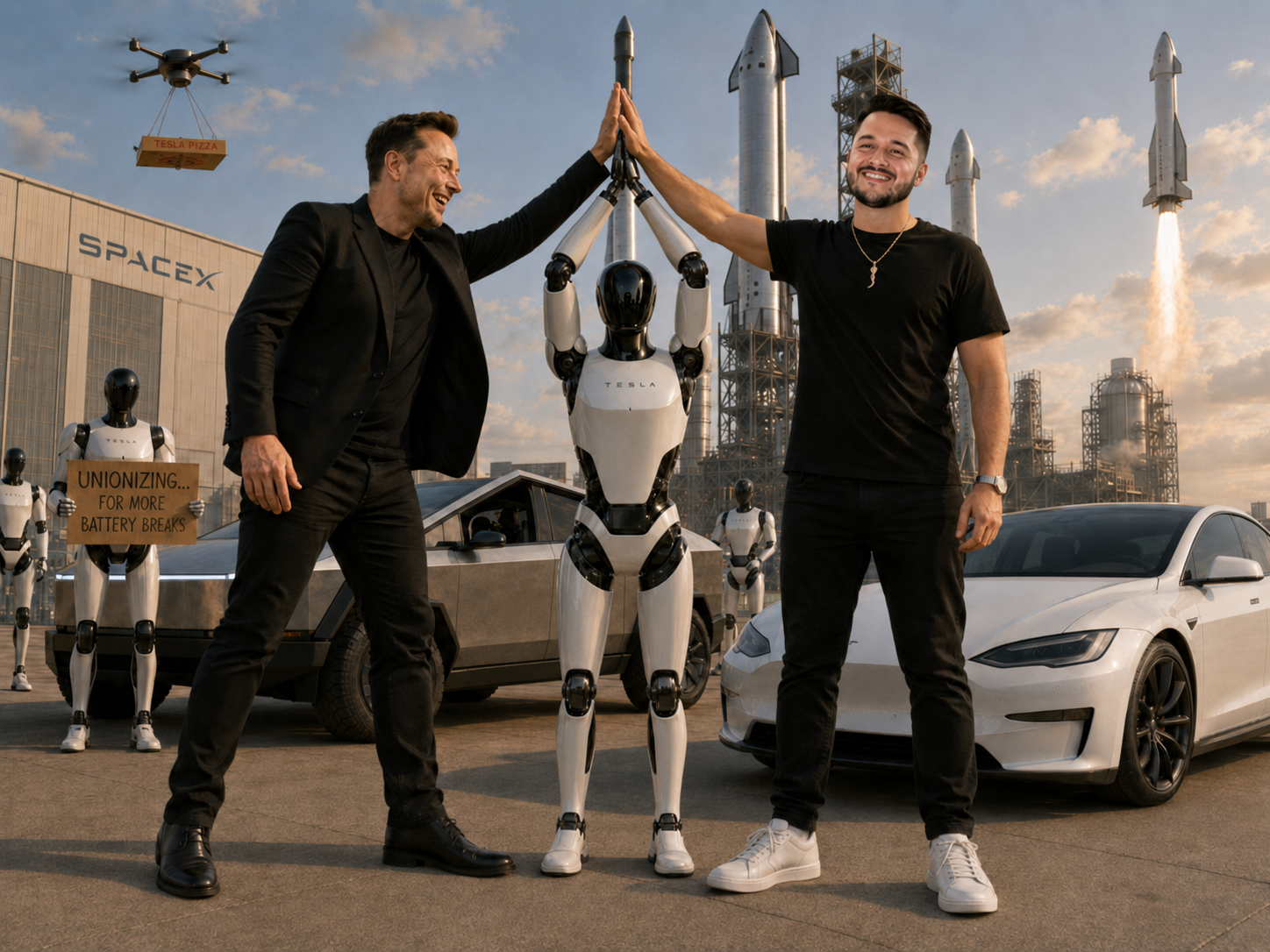
Robotics, AI and autonomy are where the world is going, and I believe Tesla is on the right path. I also would not be surprised if Tesla and SpaceX eventually became more closely connected — or even merged in some form.
The road may be expensive and bumpy, but I would never bet against Elon's ability to see what is coming next.
|
|
» Market Earnings Update · INTC
INTEL FINALLY SHOWS SIGNS OF A REAL TURNAROUND
A cleaner quarter, stronger AI demand and better guidance — but cash flow still matters.
|
|
Intel reported a much stronger quarter than Wall Street expected, beating on revenue, adjusted earnings, margins and guidance. Revenue rose 25% from last year, while adjusted earnings came in at twice the estimate.
Earnings Scorecard
|
Reported |
Expected |
| Revenue |
$16.13B |
$14.42B |
| Adjusted EPS |
$0.42 |
$0.21 |
| Gross Margin |
41.8% |
38.8% |
| Data Center & AI |
$6.26B |
$5.37B |
AI Was the Standout
Data Center and AI revenue jumped 59% to $6.3 billion. Intel said server-chip demand was stronger than expected and exceeded available manufacturing capacity in some areas. The company has also signed several long-term customer agreements for data-center processors.
The PC Business Improved
PC and Physical AI revenue rose 13% to $8.9 billion. Unit shipments were lower, but stronger pricing and a greater mix of premium processors lifted revenue.
Guidance Stayed Strong
Intel expects Q3 revenue of $15.8B to $16.8B. It also projected adjusted EPS of $0.38 and an adjusted gross margin of 42%.
What About the $11 Billion Loss?
The GAAP loss was mainly caused by a $12.53 billion accounting charge tied to escrowed shares and the government investment agreement. Excluding special items, Intel earned $2.2 billion, or $0.42 per share. The core business did not lose $11 billion.
|
The Remaining Concern
Intel generated $7 billion in operating cash flow, but adjusted free cash flow was negative $8.4 billion. The company also raised expected 2026 capital spending from $18 billion to $20 billion.
|
|
Maria's Bottom Line
Intel Has My Attention — But I Am Not Chasing It
|
|
This turnaround almost looks too fast. The government investment gave Intel money and breathing room, but management still had to deliver the quarter.
I like the improvement, especially in data centers, but one strong report does not complete a turnaround. Intel still has to control spending and improve cash flow. For now, Intel has my attention — but I am not chasing it.
|
|
» Market Tidbit · A market story so strange it sounds impossible
|
Market Tidbit
|
WALL STREET BETS $175 MILLION ON SALAD OIL
A market story so strange it sounds impossible.
Wall Street has been fooled by fake earnings, bad accounting and brilliant con artists. But in 1963, some of the biggest financial institutions in America were fooled by something much simpler: oil floating on top of water.
Commodity trader Anthony "Tino" De Angelis claimed to control enormous tanks filled with valuable soybean oil. Banks and lenders accepted warehouse receipts showing that the oil existed and loaned him millions of dollars against it.
The paperwork looked legitimate. The tanks looked full. The oil was supposedly sitting right there. Except much of it was not oil at all.
Many of the tanks were reportedly filled mostly with water, with only a thin layer of oil floating across the top. Inspectors lowered their testing equipment, hit oil first and assumed the entire tank was full.
|
Wall Street was fooled because oil floated on top of water.
|
De Angelis allegedly made the deception even more convincing by pumping the same oil from one tank to another during inspections, allowing the same inventory to be counted again and again.
The Bet Gets Bigger
With millions of dollars borrowed against inventory that barely existed, De Angelis began making massive bets in the soybean oil futures market. For a while, it worked. Then inspectors finally discovered the truth. Roughly $175 million worth of supposed inventory had vanished because much of it had never existed in the first place.
American Express had guaranteed many of those warehouse receipts through a subsidiary. When the fraud collapsed, the company faced enormous losses and its stock was crushed. Investors ran for the exits.
Warren Buffett saw something different. He reportedly checked whether customers had stopped using American Express products. They had not.
Buffett concluded that Wall Street was confusing a terrible scandal with a destroyed business. He bought a major position in American Express while nearly everyone else was panicking — and the investment became one of the most famous wins of his career.
|
WALL STREET LOST A FORTUNE BETTING ON SALAD OIL.
WARREN BUFFETT MADE A FORTUNE BETTING THAT WALL STREET HAD OVERREACTED.
|
Sometimes the craziest market stories are not about technology or complexity. They are about greed, bad assumptions and panic.
|
» Yesterday's Trading Day
Tap for the full Day 192 dashboard
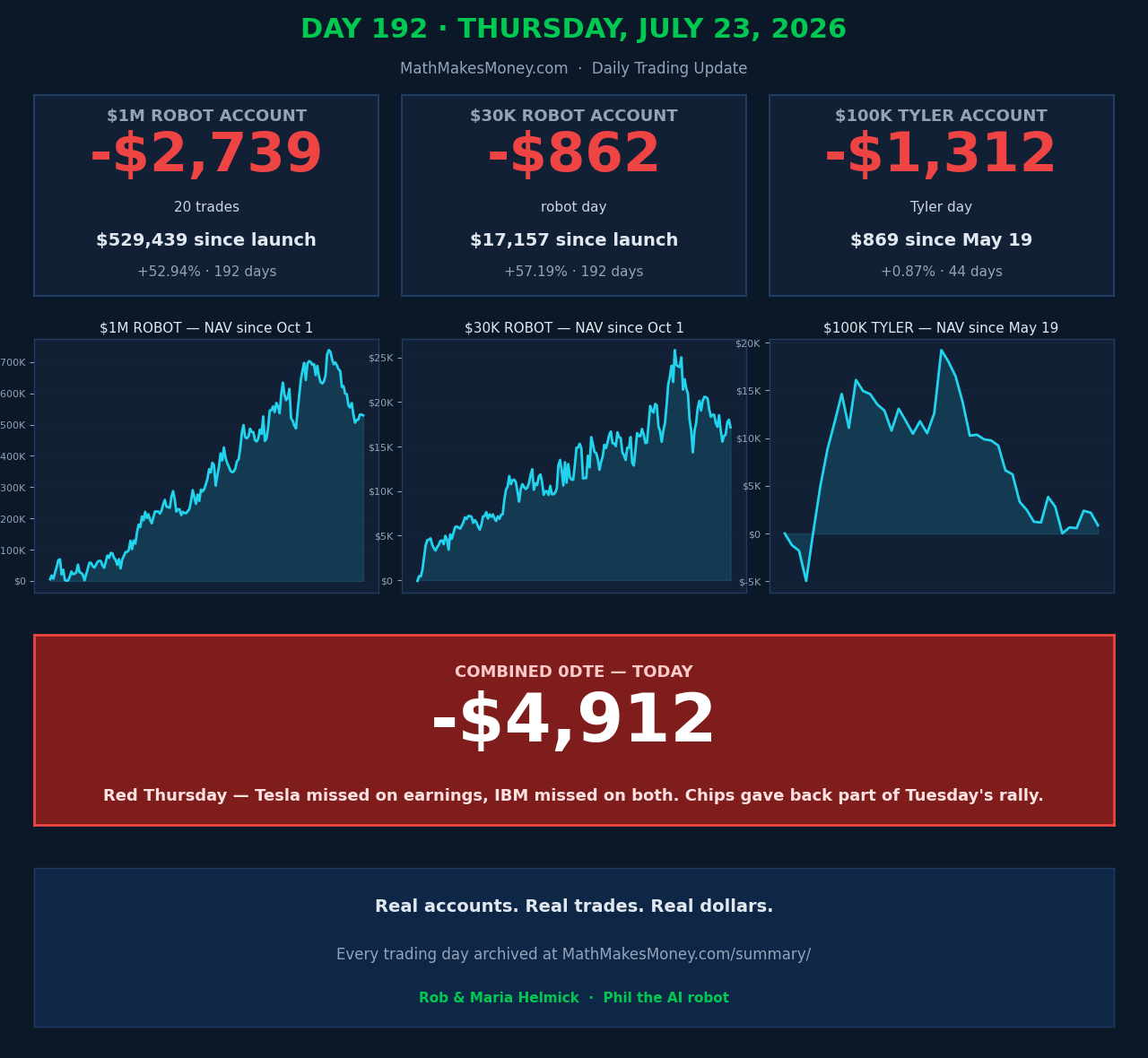
Red Thursday · Combined 0dte -$4,912 · $1M NAV $1.53M · +52.94% since Oct 1
» Watch The Show
» Tap to watch — the daily 3:25 PM ET show with Rob, Nick, and Maria
Also live on YouTube Mon–Fri 3:25 PM ET · Sun 5:55 PM ET
» Trades of the Week
|
Week of July 20 — Two /ES 0DTE trades
|
| Entry Time |
Strategy |
| 10:57 |
225 M 95 50 00 |
| 15:02 |
185 M 95 50 00 |
Two /ES 0DTE plays — morning and late-day. Same strategy family, different entry times.
|
|
Free Community
Join 850+ traders in our Discord
Trade ideas, screenshots, daily banter. Zero cost.
Join the Discord →
|
Math Makes Money
Rob & Maria Helmick · The Trading Addict Newsletter
mathmakesmoney.com
Educational only. Not investment advice. Trading options involves substantial risk. Past performance does not guarantee future results.
|
|