What Really Happened
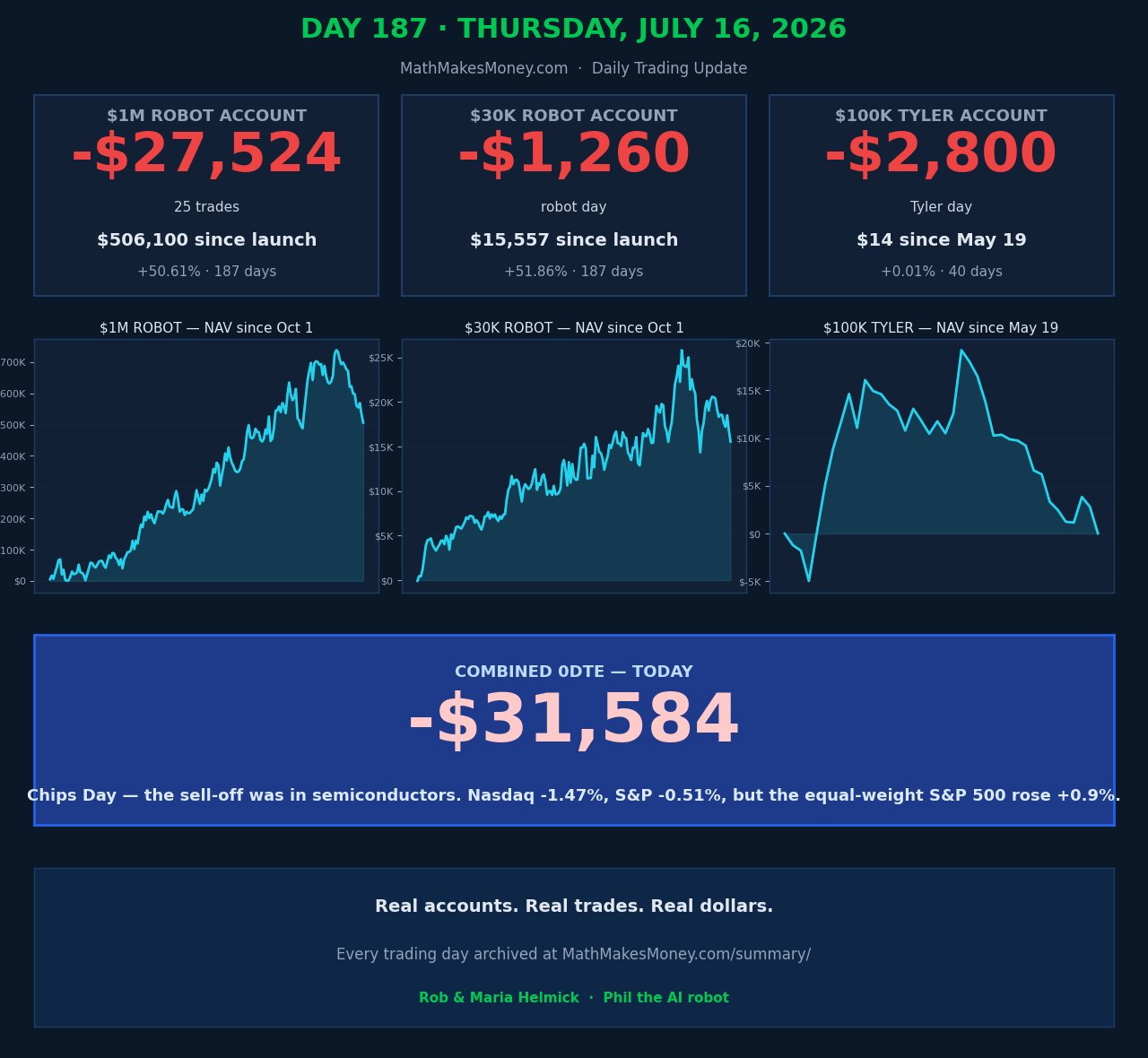
The Nasdaq fell 1.47%, the S&P 500 lost 0.51%, the Dow slipped only 0.20%, and the Russell 2000 was nearly flat. At first glance, the screen looked ugly, but this was not a broad market collapse.
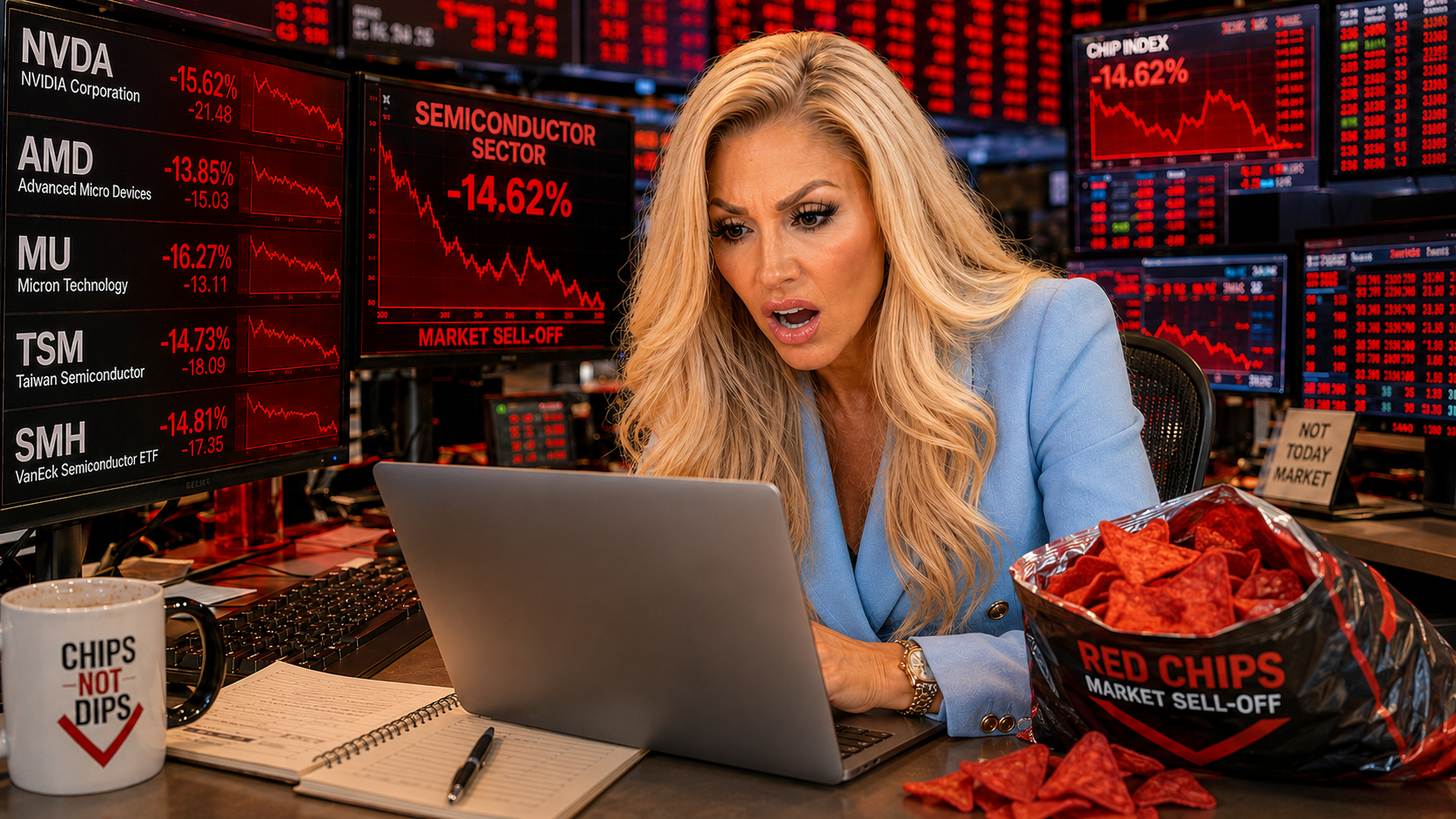
Most of the damage came from semiconductors and the biggest winners in the AI trade. When Nvidia, AMD, Micron, Intel and the rest of the chip group fall together, they can make the entire market look much weaker than it really is.
The semiconductor sector dropped about 4.3%, while the overall technology sector fell roughly 1.8%. Chips now carry so much weight in the major indexes that a sharp selloff in that group can pull the Nasdaq and S&P 500 lower even when many other stocks are holding up.
TSMC Crushed Earnings — And Investors Sold It Anyway
TSMC reported the kind of quarter most companies would celebrate. Quarterly profit jumped 77% to approximately $22 billion, revenue was strong, margins held up, and demand for advanced AI chips remained enormous.
Even so, the stock fell about 2.3%. That tells me the problem was not the company or the earnings report. The problem was expectations. Investors had already priced in an almost perfect quarter, and TSMC's excellent results were not enough to push the stock higher.
That is what happens when a trade becomes crowded. The business can still be performing extremely well, but the stock falls because investors had already counted on the good news before it arrived.
UnitedHealth Showed Where the Money Was Going
UnitedHealth told a very different story. The company beat earnings expectations and raised its full-year outlook, helping lift the healthcare sector while technology was under pressure.
The stock gave back part of its early gain, but the reaction still showed that money was not simply leaving the market. It was moving away from crowded chip names and into sectors that had not already been pushed to such high valuations.
That is an important difference. A broad selloff usually takes nearly everything down with it. This market was rotating.
Netflix Was Good — But the Forecast Was Not Good Enough
Netflix reported a solid quarter, with revenue growth, slightly better-than-expected earnings and strong operating margins.
The stock fell after hours because the company's forecast came in below Wall Street's expectations. Netflix had already moved higher before the report, so investors were looking for more than a good quarter. The results were not bad, but the outlook was not strong enough to support the stock's valuation.
What Most Investors Will Miss
The equal-weighted S&P 500 rose about 0.9%, and more stocks inside the S&P 500 gained than declined.
That matters because the regular S&P 500 is heavily influenced by a few giant companies. When the biggest technology names fall, they can drag down the entire index even though much of the market is doing fine.
Healthcare gained, consumer staples held up, and the equal-weighted market finished higher. That does not look like investors abandoning stocks. It looks like money rotating out of the most crowded AI and semiconductor trades and into other parts of the market.
Strong Economic Data Added Pressure
Economic data also came in stronger than expected, with jobless claims falling to 208,000, the Philadelphia Fed manufacturing index rising to 41.4, and retail sales increasing 0.2%.
That pushed Treasury yields higher and added pressure to expensive technology stocks. The renewed U.S.–Iran conflict created more uncertainty, but it was not the main reason for the selloff. The bigger issue was that the market's largest semiconductor stocks were all falling at the same time.
Was This Panic?
Not really. The VIX rose 6.76% to approximately 16.73, showing that investors became more nervous, but it remained well below the levels normally associated with real market fear.
This looked more like aggressive profit-taking and sector rotation than investors running for the exits.
|
Maria's Take
Bullish, Patient and Not Forcing the Trade
|
|
Because technology makes up a large part of my portfolio, I was prepared for a red day. The chip stocks were hit hard, and when that group falls together, I am going to feel it. Still, I did not see anything today that made me panic or question the long-term AI story.
There were a few opportunities, but the VIX never moved high enough to produce the kind of option premiums I want. I am not going to force a trade just because the market is down. A red screen does not automatically mean a good entry.
For me, this was a fairly uneventful day. The market rotated, technology took a hit, and the rest of the market held up better than the indexes suggested. I remain bullish, but being bullish does not mean I have to buy every dip.
Sometimes the best trade is to sit, watch and wait for a better price.
|
“Sometimes the best trade is to sit, watch and wait for a better price.”
|
|
|