Issue No. 33 • Wednesday July 8, 2026
THE TRADING ADDICT
NEWSLETTER
by Maria Helmick
» Macro Watch · Fed, AI, and Inflation

Tap the image to view full size
Can AI Help the Fed Beat Inflation?
AI may be the future, but the Fed still has to deal with today’s inflation.
Artificial intelligence is no longer just a Wall Street growth story. It is starting to become part of the Federal Reserve’s inflation story.
Fed officials have acknowledged that AI could eventually help lower inflation by boosting productivity. If companies can produce more with the same workforce — or produce the same output at a lower cost — inflationary pressure naturally begins to ease.
The challenge is timing. AI may help lower inflation over time, but today’s Fed is still dealing with today’s inflation — wages, oil prices, consumer spending, employment, and Treasury yields.
One interesting insight comes from Treasury Secretary Scott Bessent, who has said he meets weekly with the Fed Chair over breakfast or lunch. Those conversations are not about negotiating interest rates. They focus on the broader economy, Treasury markets, financial stability, debt issuance, and risks building in the financial system. Those meetings are a reminder that the Fed’s job is much bigger than reacting to a single inflation report. It has to weigh the health of the entire economy before making its next move.
Productivity is the cleanest way to cool inflation, and that is where AI gets interesting. If companies can get more done without their costs exploding, they do not have to shove every price increase onto the customer. That helps margins, helps earnings, and over time, can help bring inflation down. AI is already showing up in software, customer service, logistics, manufacturing, and data analysis. It does not fix inflation overnight, but if those efficiency gains spread across the economy, it could become a real disinflationary force over the next decade.
|
The payoff may come later, but the spending is happening now. Think of it like getting a facelift. You spend the money today, deal with the pain now, and hope the results make you look better for years to come. Companies are doing the same thing with AI — pouring hundreds of billions into data centers, NVIDIA chips, power, cooling, networking equipment, and construction in hopes of becoming leaner, more productive, and more profitable tomorrow. That buildout may create the next productivity boom, but right now it also adds demand for electricity, materials, skilled labor, land, and infrastructure, which is exactly why the Fed cannot ignore the inflation pressure happening today.
|
Oil is another reminder that inflation can heat up quickly. Crude recently surged nearly 5%, and higher energy prices do not stop at the gas pump. They ripple through shipping, manufacturing, transportation, and production costs, making the Fed’s 2% inflation target even harder to reach.
That is why the Fed cannot trade on hope. It has to look at what is actually moving the economy right now — inflation, jobs, wages, oil, Treasury yields, and global risk. Wall Street can get excited about what AI may become five years from now. The Fed has to deal with the pressure sitting in front of it today.
Maria’s Bottom Line
The Fed does not have the luxury of focusing on just one number. It has to balance inflation, jobs, oil prices, global conflicts, politics, consumer spending, financial markets, and the overall stability of the economy before deciding whether interest rates should move higher, lower, or stay right where they are.
That is why I stay disciplined. I keep buying-power usage low, maintain plenty of cash, and let the market come to me instead of chasing it. When volatility creates opportunity, I want to be ready.
Now if you’ll excuse me, all this talk about facelifts has me wondering if AI is working on wrinkles yet.
|
|
Educational only. Not investment advice.
|
» New Cohort · Institute Starts Sat July 25
Apply to The AI Trading Institute
Learn How We Actually Build, Run, and Update Our AI Trading Robot Phil
The next Institute group begins Saturday, July 25.
Applications close Friday, July 24 at 5:00 PM ET.
Seats are limited. Rob and Nick Battista review every application personally and do a personal interview with each applicant via Zoom.
APPLY AT MATHMAKESMONEY.COM →
|
» Market Commentary · Where the Money Really Goes
Tap the image to view full size
|
|
Market Commentary
Is Passive Investing Warping the Market?
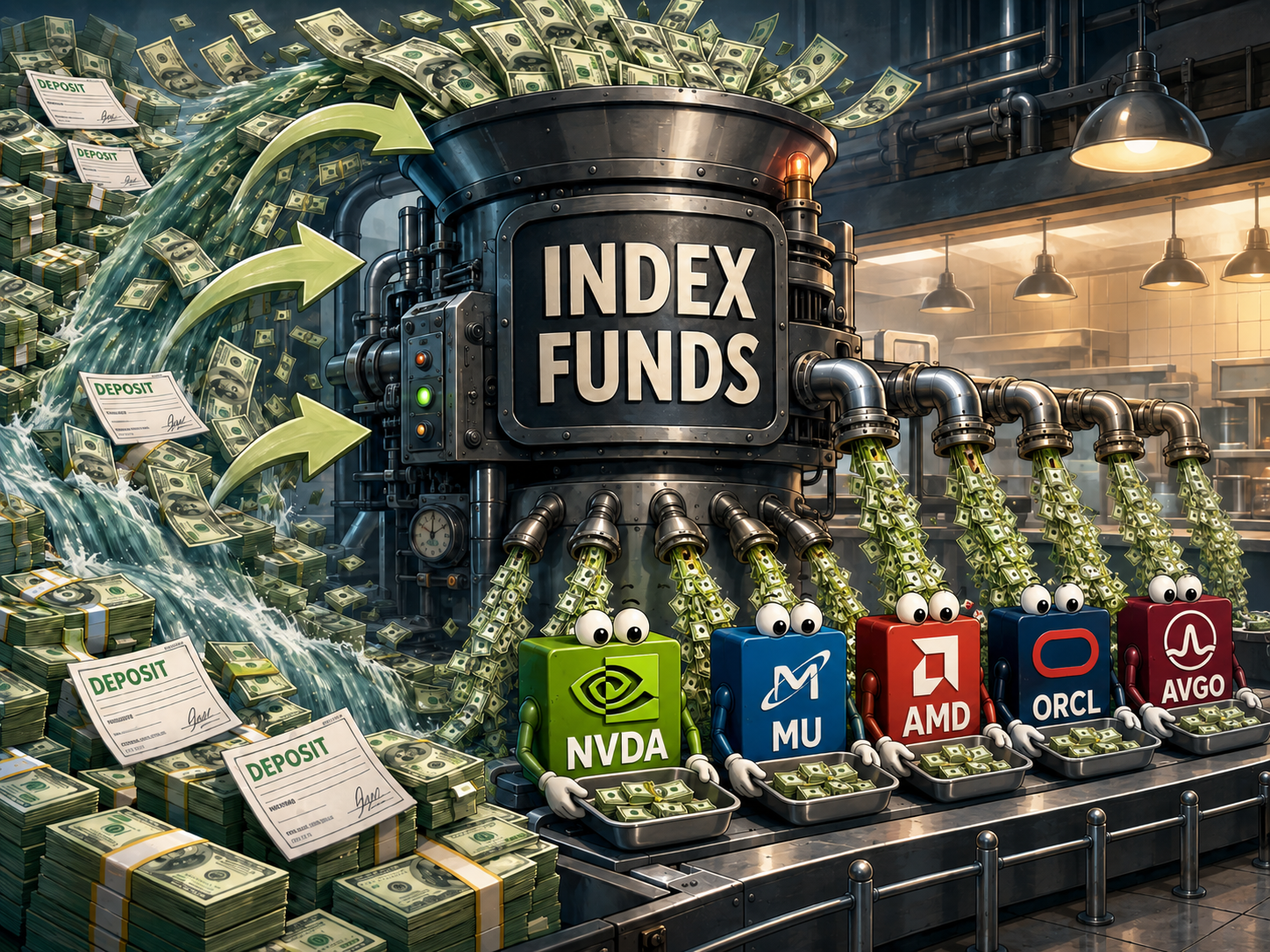
A well-known fund manager recently said something that made me stop and think: index funds don’t care about valuation. They buy what is in the index.
Honestly, he has a point. Every payday, money flows into retirement accounts, index funds, and ETFs. That money is not sitting there asking, “Is this stock cheap? Are earnings strong? Is Wall Street getting carried away?” It simply follows the index and buys what it is told to buy.
That is where the market can start to get a little strange. The biggest companies receive the biggest share of the money because they already carry the biggest weights in the index. As those stocks rise, their weight gets even larger. Then the next wave of passive money comes in and buys even more of them.
That is how size starts feeding on itself.
|
According to the Investment Company Institute, indexed mutual funds and ETFs held about $21.8 trillion in assets as of May 2026, more than the $18.8 trillion held in active mutual funds and ETFs. That is not a small side story anymore. That is a major force in the market.
|
This does not mean index investing is bad. For many people, it has been one of the easiest and most effective ways to build wealth over time. The point is not that passive investing is wrong. The point is that investors need to understand what is actually moving prices.
Sometimes a stock is going up because earnings are improving, margins are expanding, and the business is getting stronger. Other times, the stock is going up because a wall of money keeps getting pushed into the same large names automatically.
That matters even more today because the market is so concentrated. The Magnificent Seven have grown so large that they represent roughly one-third of the S&P 500. So when money flows into an S&P 500 index fund, a meaningful chunk of that dollar is going right back into the same handful of mega-cap stocks.
This ties directly into the AI trade.
Investors keep asking whether semiconductors or software will be the bigger winner. I think that is the wrong question. AI needs both. The chips power the machine. The software turns that power into products, subscriptions, margins, and real profits.
Semiconductors have had the spotlight because the world needs more chips, more data centers, more memory, more networking, and more power. That is why names tied to AI infrastructure have been such a huge part of the market’s story. But software still matters because eventually companies have to turn all that spending into useful tools, customer demand, and earnings growth.
The real question is not whether chips beat software. The real question is whether these companies can grow earnings fast enough to justify the prices Wall Street is paying today.
That is the part investors cannot ignore. A great company can still become a bad investment if you overpay for it. A less flashy company can become a great investment if the earnings are improving, cash flow is growing, and the valuation still leaves room for upside.
The market can reward hype for a while. It can reward size. It can reward momentum. But eventually, it wants numbers.
Maria’s Take
I like momentum, but I do not like blind buying. Just because money is pouring into a stock does not mean the price still makes sense.
Passive money can keep the big boys running, but it will not protect you from overpaying. I want companies that can back up the move with earnings, cash flow, and real growth — not just stocks floating higher because another index fund had money to spend.
In the end, the biggest name does not always win. The best business at the right price usually does.
|
— Maria
Sources: Investment Company Institute, Active and Index Investing May 2026; MacroMicro/Motley Fool market concentration data, 2026.
|
Educational only. Not investment advice.
» Live Trade Example · This Morning’s Crazy Ivan
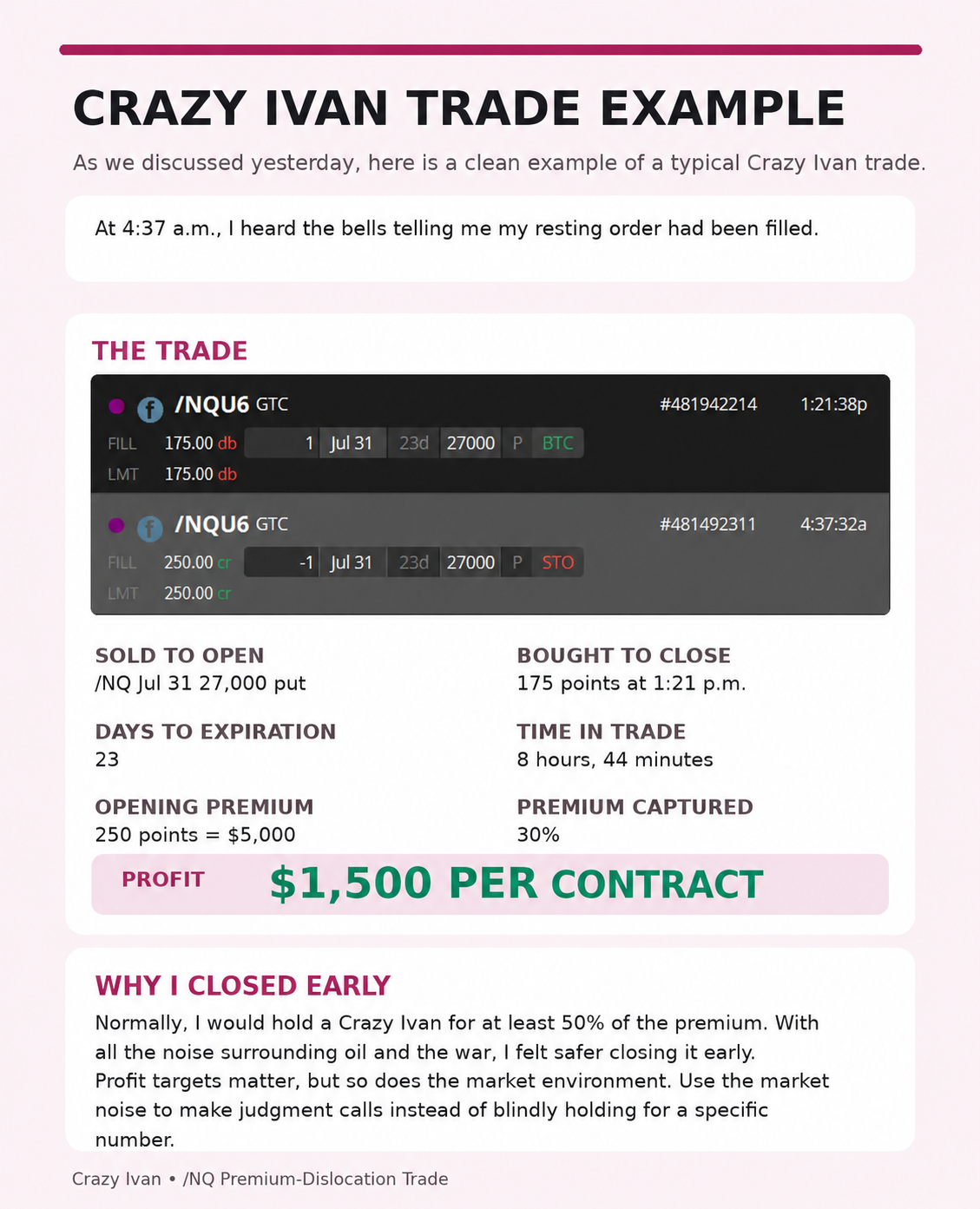
Tap the image to view the full trade breakdown
» From the Trading Floor · History Special Edition
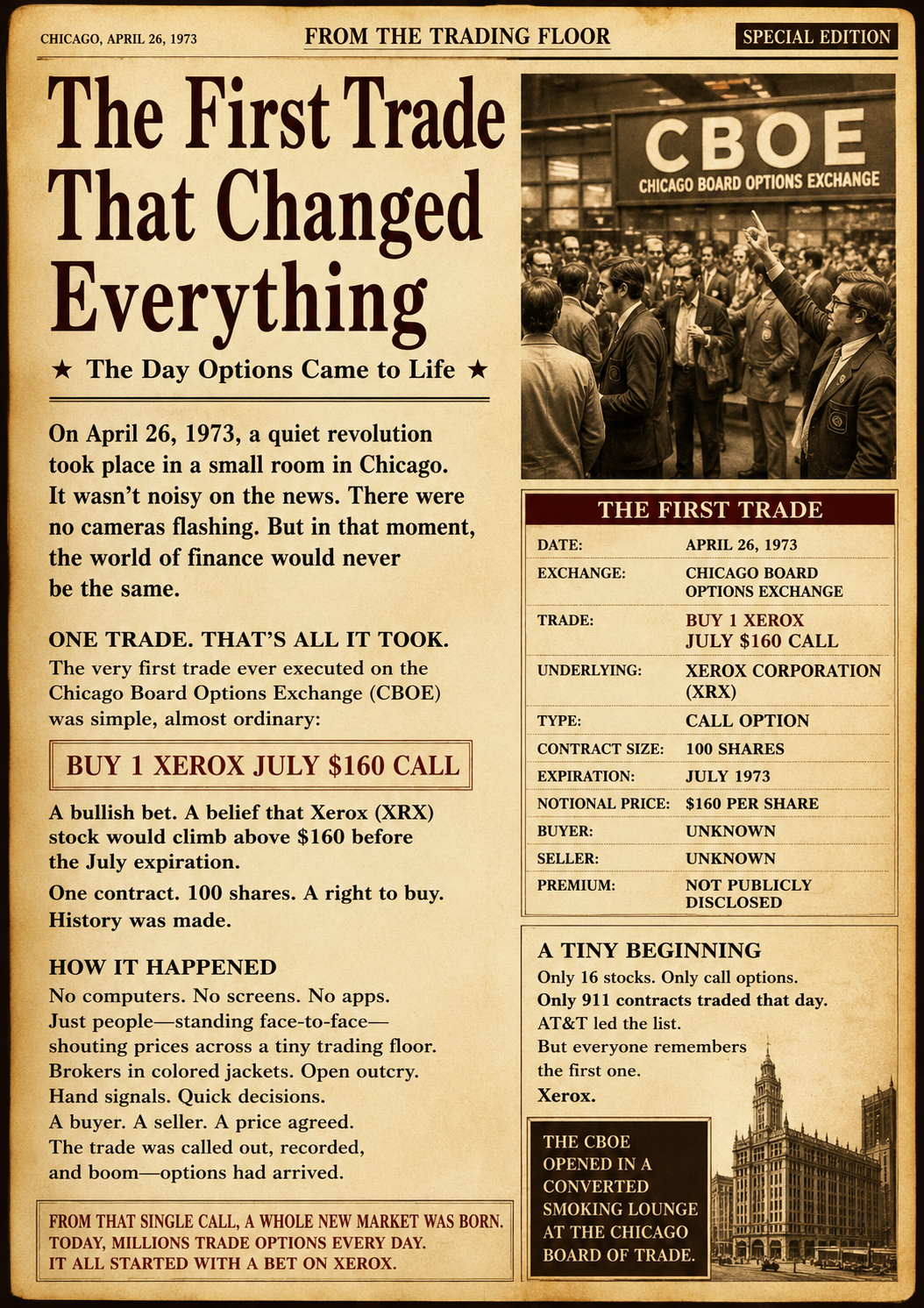
Tap the image to view full size
» Today’s Trading Update · Three Accounts
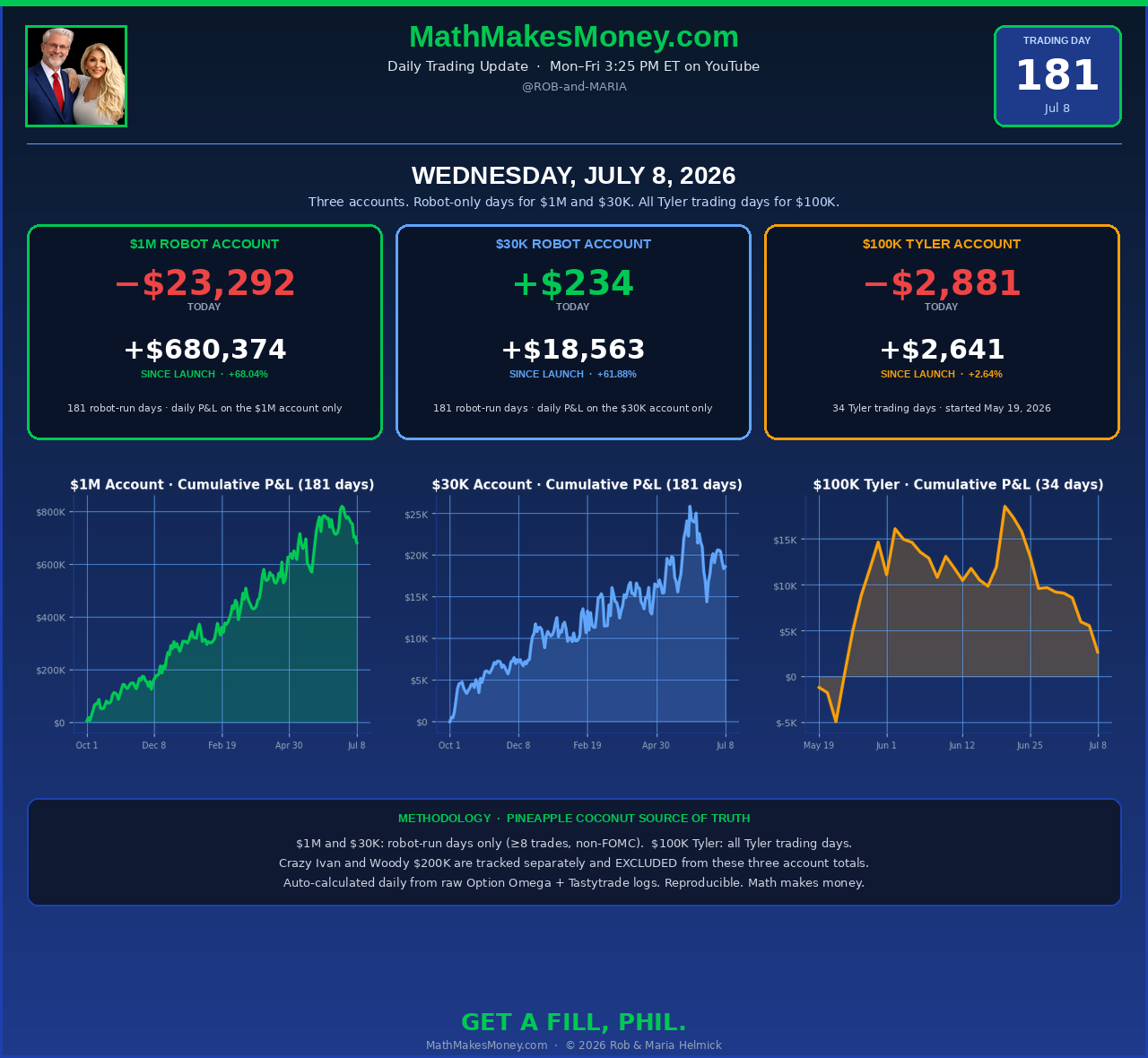
Tap the dashboard for the full Day 181 results page · Crazy Ivan and Woody are tracked separately and excluded from these three account totals
|
» Join the Community
Trade With Us In Discord
Live trading with the AI robot every session. Ask Maria and Rob questions in the YouTube chat. A community of trading addicts.
JOIN THE DISCORD →
|
Get a fill, Phil.
© 2026 Math Makes Money · Rob and Maria Helmick
Educational only. Trading options involves substantial risk of loss.
|
|