|
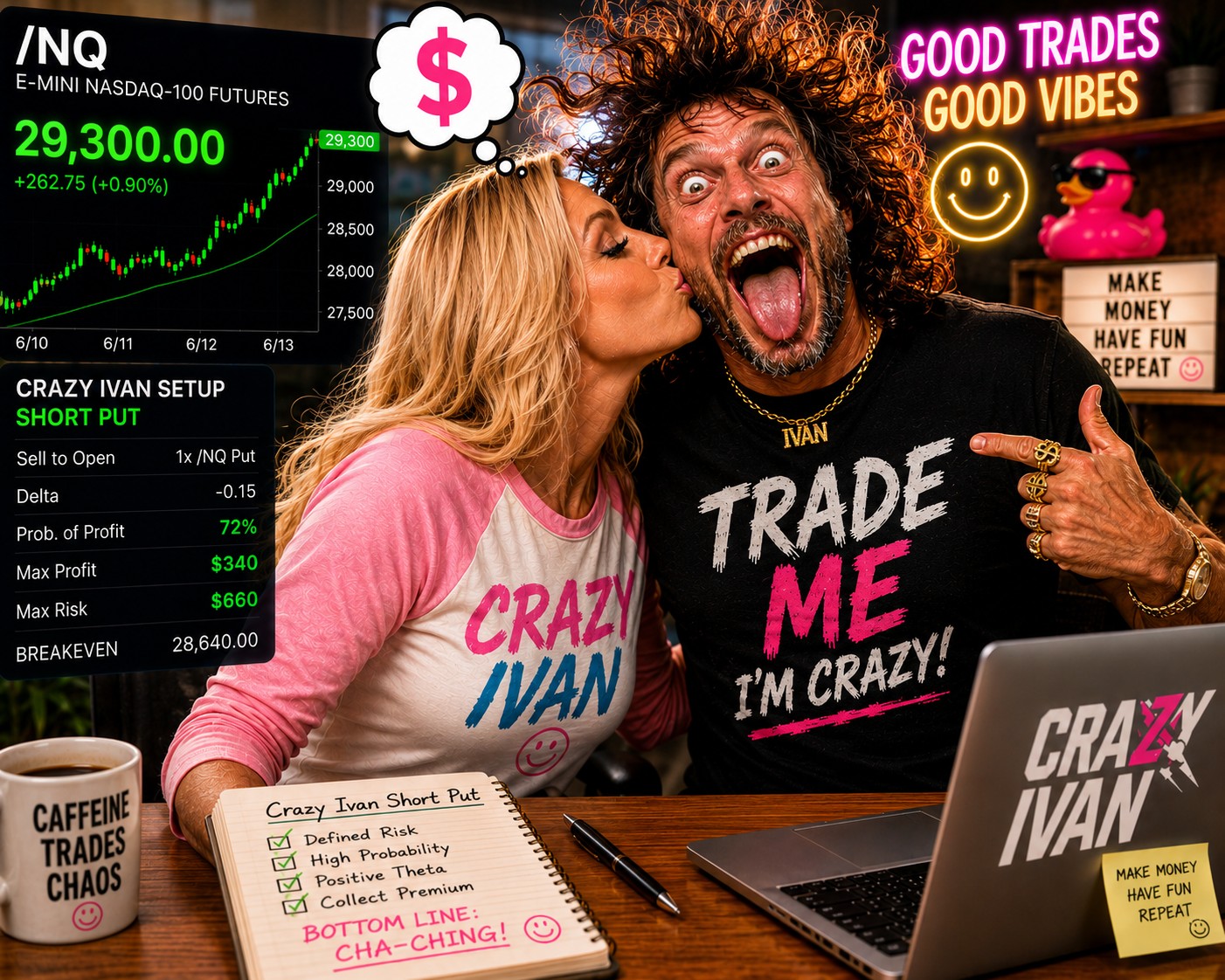
Crazy Ivans are short puts on /NQ futures, but the edge is not simply selling a naked put. The edge comes from demanding a much richer premium than the market is currently offering, entering during a temporary fear spike, and keeping enough buying power available to manage the trade properly.
I typically look for a short /NQ put in the 14-to-18 delta range with approximately 24 to 44 days until expiration. The most important part of the trade is the premium.
Rather than selling at the current market price, I place a resting sell-limit order roughly $40 to $50 above the ask and leave it working in the gutter. I will often leave the order working overnight, but I do not leave it working over the weekend. A sharp drop in /NQ can quickly expand put premiums and implied volatility, allowing the order to fill at a much better price than the market was offering earlier.
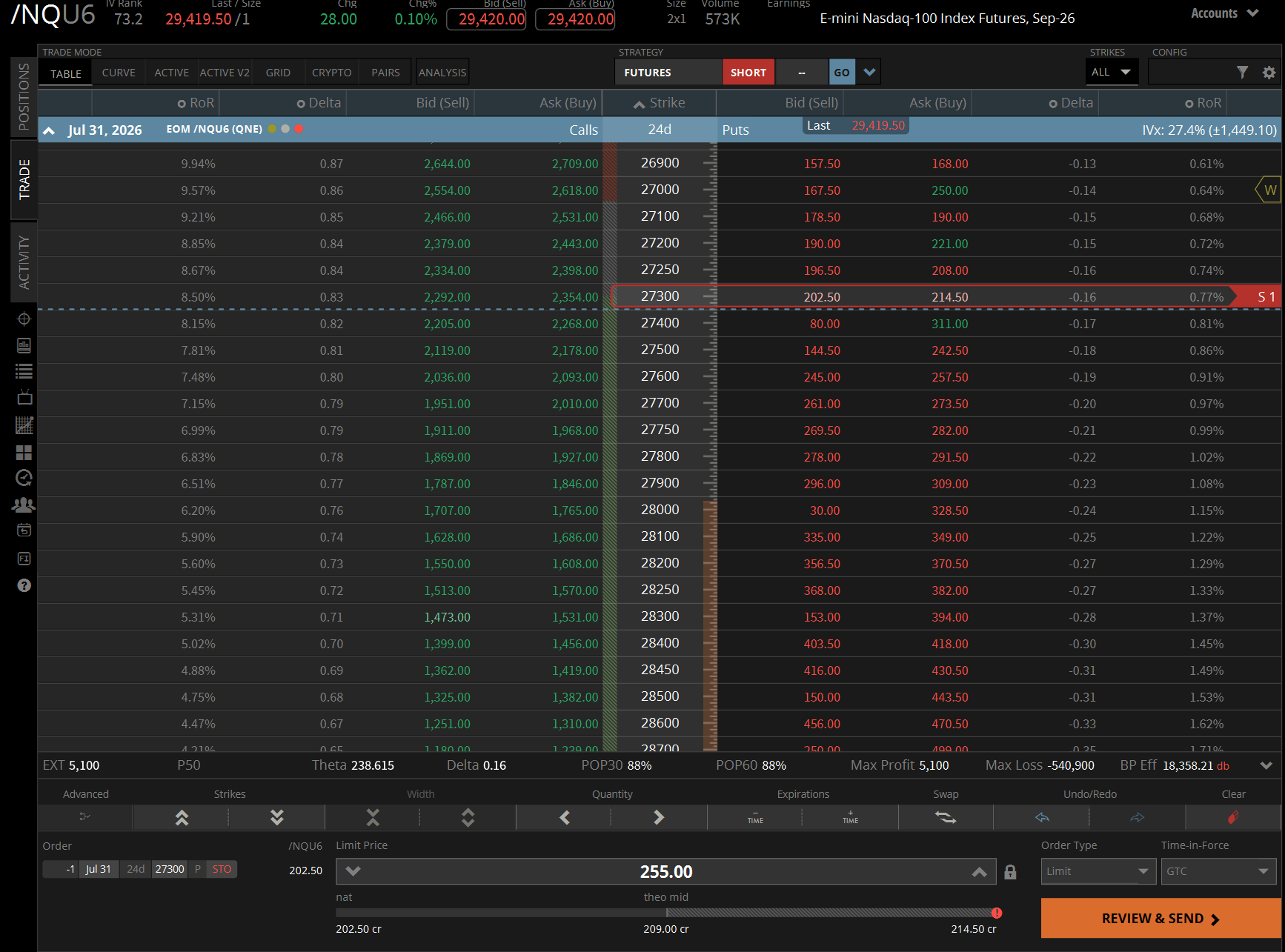
Crazy Ivan entry example: /NQ is trading near 29,420, the selected 27,300 put is around 16 delta with 24 DTE, and the resting sell-limit order is set at 255.00 — well above the current market — to wait for a sharp drop and volatility expansion.
|
|
I do not chase the trade. I choose the premium I want and wait for the market to come to me.
|
Why the Trade Can Turn Green Quickly
Crazy Ivans are often filled during a sudden decline or volatility spike. Once /NQ stabilizes, rebounds, or simply stops falling, the premium can contract rapidly. The relatively short 24-to-44-day expiration window also helps the percentage return build faster. With less time remaining, time decay can remove a larger percentage of the option's value, while a drop in volatility can accelerate the move toward profit.
These trades typically close within about 14 days. I usually look for at least 50% of the maximum profit, although my average close has been closer to 75%.
Why Crazy Ivans Fit This Market
This headline-driven market creates frequent bursts of fear. One day, war headlines, inflation concerns, interest-rate fears, or another unexpected event pushes /NQ lower. The next day, the market settles down and buyers return. Those short-lived declines can create inflated premium without always turning into a prolonged market drop.
The goal is not to call the exact bottom. The goal is to get paid extremely well for selling fear that may prove temporary.
Other Futures That Can Be Used
The same basic strategy can also be used with /ES and /MNQ. /ES generally does not produce as much premium as /NQ, but it is also typically less volatile. /MNQ offers a smaller-sized alternative, although commissions and fees can take a larger bite out of the profits, especially when the trade is rolled or managed more than once.
Managing the Trade
I closely monitor the distance between /NQ and the short strike. When /NQ gets within approximately 500 points of the strike, I begin looking to manage the position.
My preferred adjustment is to roll the put down and out for a credit. That means moving to a lower strike, extending the expiration, and collecting additional premium. The roll should always be completed for a credit.
Closing the original put may realize a loss, but that loss becomes part of the recovery plan for the new trade. The lower strike creates more distance, the added time gives the position room to recover, and the new premium helps offset the loss from the original trade. The objective is for the added time and new proceeds to recover the prior loss and return the overall position to profitability.
I do not pay a debit to roll a Crazy Ivan.
Buying Power Is the Safety Net
Buying-power management is critical. A sharp decline in /NQ can cause margin requirements to expand quickly, even when the short strike remains out of the money.
I generally keep total portfolio buying-power usage at 25% or less while Crazy Ivans are open. I consider 30% the absolute maximum and do not go above it. The unused buying power gives the trade room to breathe and provides the flexibility to roll, absorb margin expansion, and avoid being forced into a bad decision.
|
Crazy Ivans work best when patience creates the entry, fear creates the premium, shorter DTE accelerates the percentage payoff, and market normalization creates the profit.
|
|