| » FINAL HOURS — AI TRADING INSTITUTE WAITLIST CLOSES TODAY 5 PM ET » |
Issue No. 18 • Monday June 15, 2026

|
|
THE TRADING ADDICT
NEWSLETTER
by Maria Helmick
» Single Story Issue · Market Commentary
Tap the image to view full size
Kevin Warsh Warned the Fed About This 16 Years Ago
Now He Has to Prove He Meant It
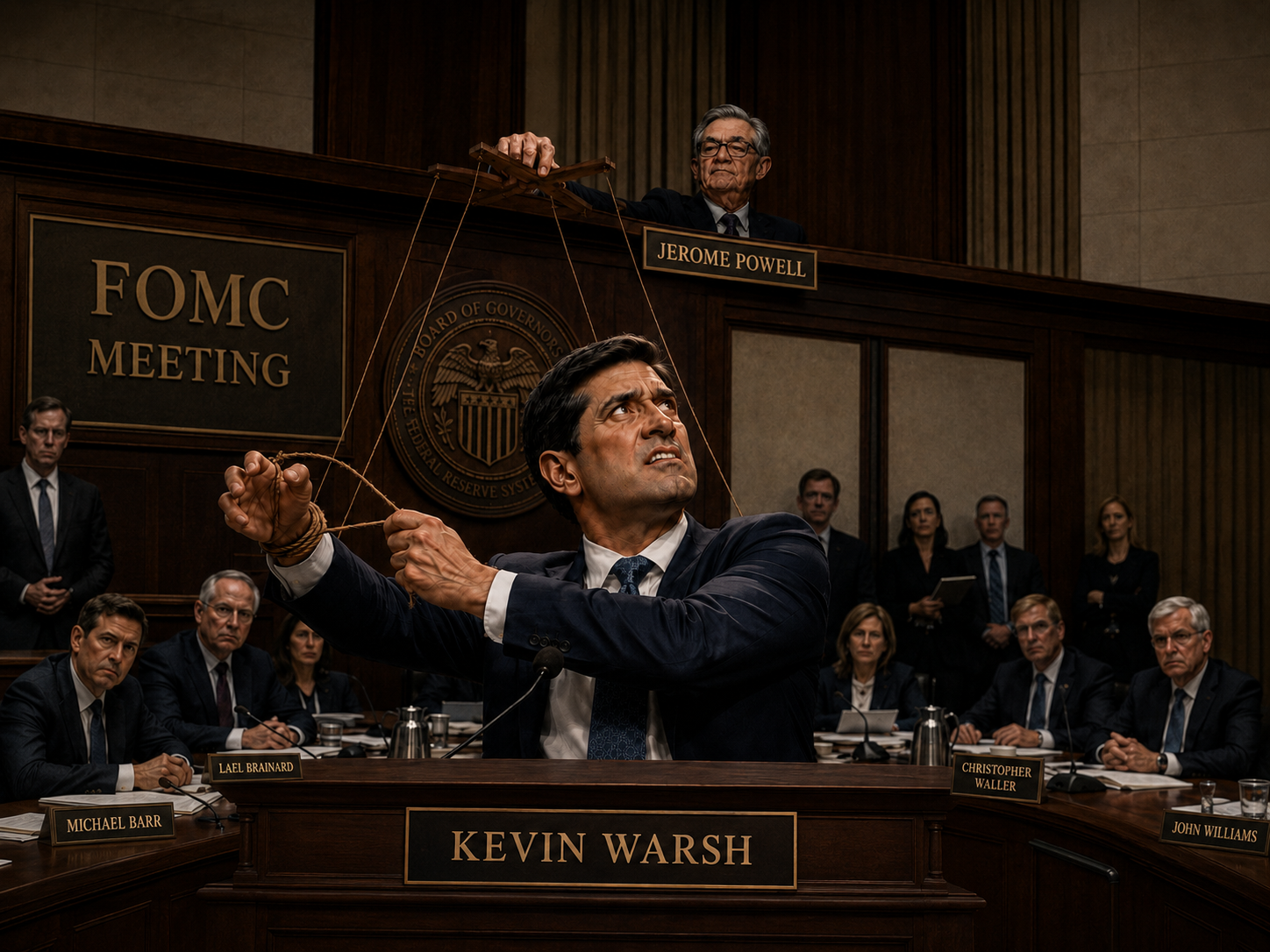
In March 2010, Kevin Warsh delivered a speech titled “An Ode to Independence.” At the time, he was a young Federal Reserve governor warning about political pressure, rising government debt and the danger of a central bank losing its credibility.
His message was simple:
|
“The Federal Reserve’s greatest asset is its institutional credibility.” |
Warsh argued that the Fed must remain independent from the demands of Washington, the influence of Wall Street and even pressure coming from inside the central bank itself.
|
He is the person sitting in it. |
Warsh warned that politicians and financial markets would often want the Federal Reserve to keep interest rates lower for longer. Lower rates can temporarily support the stock market, encourage borrowing and reduce the cost of financing government debt.
But those short-term benefits can come with a larger long-term cost.
If the Fed allows inflation to remain high or changes its standards simply to make policy easier, it can damage confidence in the institution. That can lead to higher inflation expectations, higher long-term interest rates, weaker purchasing power, rising commodity prices and less confidence in the U.S. dollar.
Those were warnings in 2010.
Today, they sound much more relevant.
Warsh took control of the Federal Reserve with inflation still above the Fed’s long-term 2% target. The labor market remains relatively strong, government debt is near record levels, borrowing costs remain high and political pressure for lower rates is growing.
That puts Warsh in a difficult position.
Cutting interest rates too quickly could cause inflation to accelerate again. Keeping rates higher for longer could weaken economic growth, pressure the stock market and increase borrowing costs for consumers, businesses and the federal government.
There is no easy answer. The real question is whether Warsh will follow the economic data or give in to pressure for faster rate cuts.
|
Jerome Powell is also still hovering in the background. |
Powell has continued warning that political interference could damage the Federal Reserve’s independence and cause the public to lose confidence in its decisions. His message is that the Fed must make decisions based on inflation, employment and the economy — not on what is best for a president, a political party or the stock market.
That creates an unusual situation. The new Fed chair is being tested by the exact problem he warned about 16 years ago, while the former Fed chair continues warning about the same danger from the sidelines.
Federal Reserve credibility matters because interest-rate expectations influence stock valuations, Treasury yields, mortgage rates, corporate borrowing, the U.S. dollar, gold, commodities and consumer spending.
If investors believe the Fed is making decisions based on political pressure instead of economic data, confidence could weaken. Bond investors may demand higher yields to compensate for inflation risk. The dollar could come under pressure, while gold and other hard assets may attract more attention.
None of this guarantees a market crash.
But it does mean investors should pay close attention to what Warsh does — not just what he says.
Maria’s Take + Bottom LineKevin Warsh warned in 2010 that political pressure could weaken the Federal Reserve, damage its credibility and allow inflation to return. Now he is facing the exact test he once described. Inflation remains above target, the economy is still creating jobs and political pressure for lower rates is growing. Meanwhile, Jerome Powell remains in the background, warning that the Fed’s independence must be protected. The real question is not what Warsh said 16 years ago.
Investors should not panic, but they should closely watch inflation, Treasury yields, the U.S. dollar and the Federal Reserve’s voting record. Those will tell us whether Warsh is following the data — or the pressure. |
Educational only. Not financial advice.
|
⚠ FINAL HOURS ⚠ AI Trading Institute Waitlist Closes TODAY at 5:00 PM ETThe next class starts Monday, June 29. After 5:00 PM ET today, the waitlist closes and you will have to wait for the next cohort. Seats are limited and the group is curated. Rob reviews every application personally and does a personal interview with every applicant. Learn how we actually build, run and update our AI Trading Robot Phil. APPLY BEFORE 5 PM ET TODAY → |
|
Math Makes Money TRADES OF THE WEEK0DTE SPX • $30K SCHWAB ACCOUNT Week of June 15, 2026 |
|
All trades 0dte SPX iron condors on the $30K Schwab account. MEIC = Multiple Entry Iron Condor. 50W = 50-wide wings. 95% = stop loss on short leg. No profit target — let trades expire. |
|
Risk Warning At the time of this writing, we plan on entering most of these trades, but they are part of a much greater and larger trading program and should be considered for educational and entertainment purposes only. Not financial advice of any kind. Trading involves substantial risk and is not suitable for every investor. You can lose some or all of your money. Nothing here is financial advice or a recommendation to buy, sell, or copy any trade. Do not copy trades blindly. Do your own due diligence, understand the risk, and make decisions based on your own account, risk tolerance, and financial situation. |
Join the Live Daily ShowMon–Fri 3:25 PM ET • Sun 5:55 PM ET Live trading with the AI robot. Ask Maria and Rob questions in the YouTube chat. A community of trading addicts.
|
» Daily Trading Update · Day 165 · Tap for live dashboard
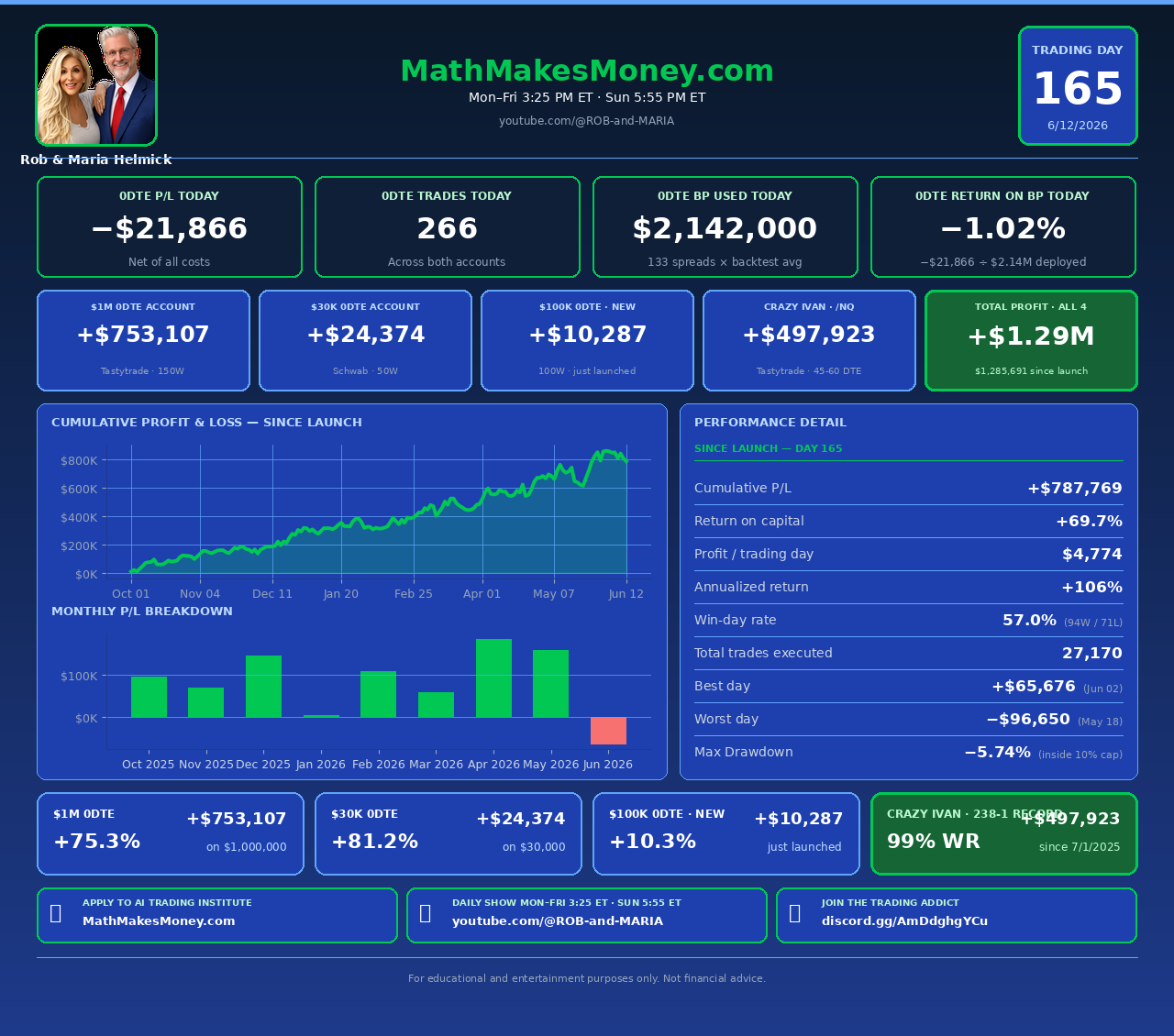
Friday closed a rough week. The AI robot was down $21,866 across all three accounts. The system stayed the same.
|
» Quick Short · Watch on YouTube FOMC Trade Is 50 and 0
|


Trade small, trade often.
Trade with your head, not with your heart.
Math Makes Money.
Get a fill, Phil.
— Maria
Math Makes Money · AI Trading Holdings LLC