Issue No. 7 • Friday, May 29, 2026

|

|
THE TRADING ADDICT
NEWSLETTER
by Maria Helmick
» Daily Trading Update · Day 154 · Tap for live dashboard
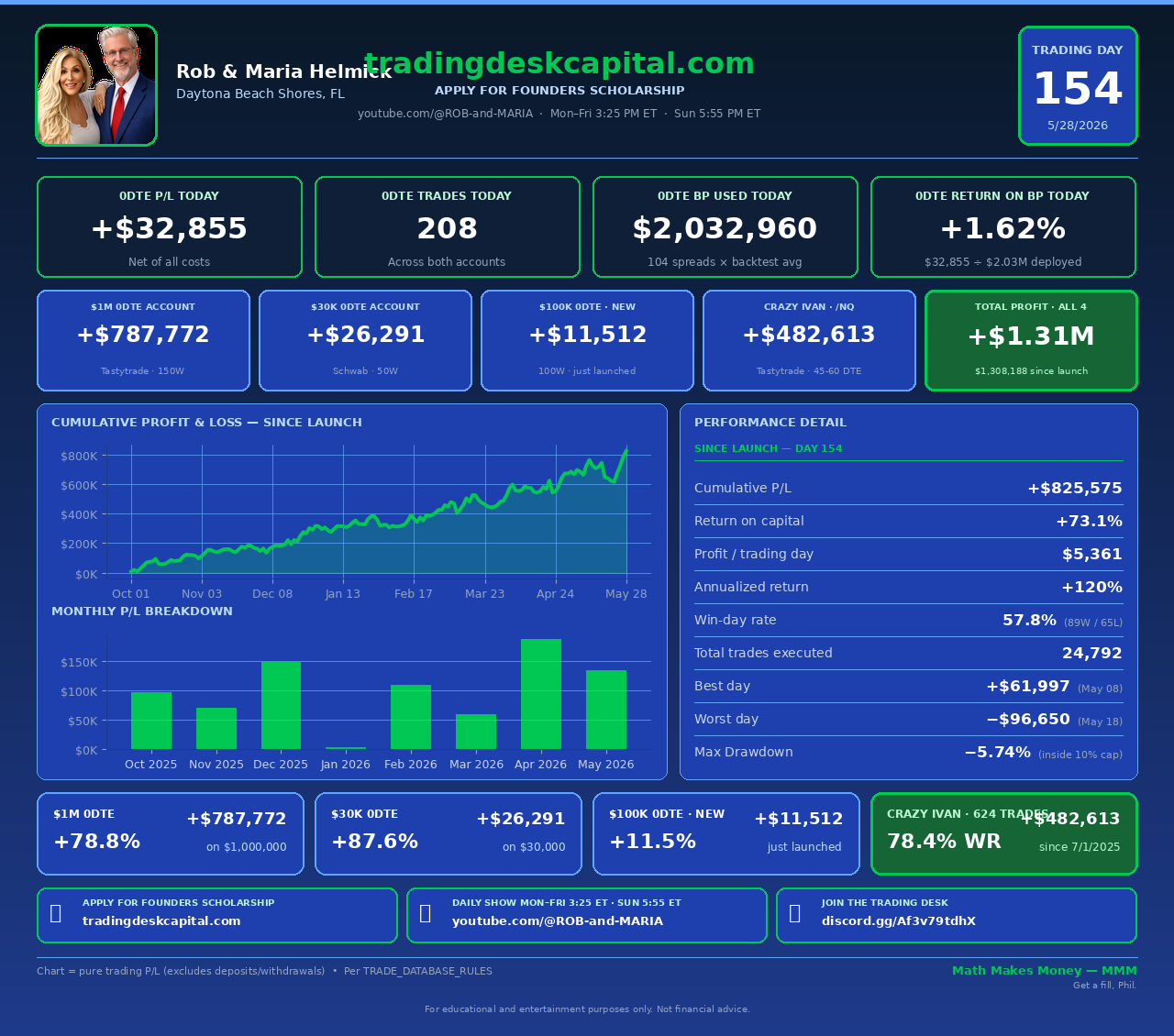
Tap the dashboard to open the live, interactive version at mathmakesmoney.com
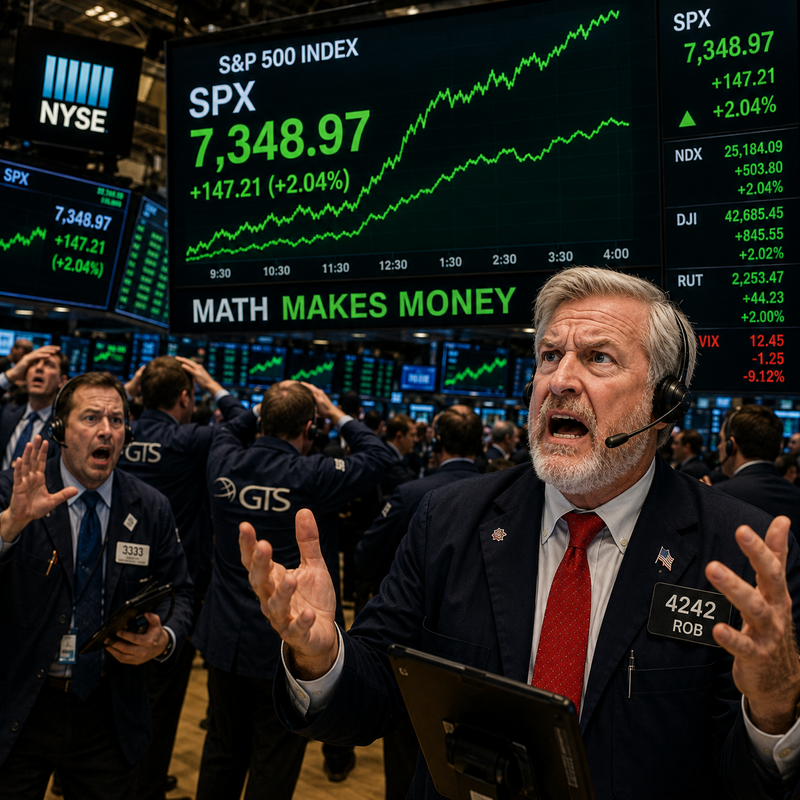
FOMO Is Back — But Chasing Is Still Not a Strategy
The market is not just drifting higher. It has been making new highs.
As of May 28, 2026, the S&P 500 was up about 10.5% for the year, the Nasdaq was up about 15.8%, and the Russell 2000 was up more than 18%. Those are not small moves. When indexes are already up double digits and the strongest stocks keep pushing, it creates real pressure on traders who feel underinvested.
That pressure has a name:
FOMO.
And it is not just something retail traders joke about online. Investor research has shown that FOMO can influence real money decisions. A FINRA Foundation and CFA Institute study found that half of U.S. Gen Z investors said they had made an investment because of fear of missing out.
That matters because FOMO usually does not feel reckless in the moment. It feels reasonable. It sounds like, “The market keeps going up.” It sounds like, “I should have bought more.” It sounds like, “If I wait any longer, I may miss the whole move.”
That is where the risk starts.
Strong markets can make patience feel like a mistake. Cash feels useless. Waiting for a pullback feels painful. Every green candle starts to feel like proof that a trader should be bigger, more aggressive, and more exposed.
But regret is not a trade setup.
Just because a stock has already gone up does not mean it has to fall right away. Strong stocks can stay strong longer than traders expect. But the higher they climb, the more important it becomes to avoid chasing and manage risk.
Professional traders talk about this constantly, even if they do not always call it FOMO. They call it chasing, impatience, emotional trading, poor timing, overtrading, or abandoning the plan. Schwab’s trader education says active traders should know their entries and exits, stick to the strategy in their plan, and not let FOMO become a factor. Schwab’s trader psychology series also highlights professional trader Kathy Lien’s focus on risk management and process, not chasing every missed move.
That is the professional mindset: the trader does not need every trade. The trader needs the right trade.
Research supports the same point. Morningstar’s investor-return research has repeatedly shown that investors often earn less than the funds they invest in because of poor timing decisions. Barber and Odean’s classic study, “Trading Is Hazardous to Your Wealth,” found that individual investors who traded more actively paid a major performance penalty.
That is why FOMO becomes dangerous. It does not usually start as a reckless decision. It starts as a quiet feeling that the market is moving without you. Then the trader begins looking for a way to catch up. The entry gets rushed. The position gets bigger than it should be. The risk gets ignored because the chart still looks strong.
That is not strategy. That is emotion taking control of the process.
The better question is not whether stocks are too high. Strong markets can stay strong, and expensive stocks can become more expensive. The better question is whether the trade still offers a clean setup at the current price.
A disciplined trader can buy strength. A disciplined trader can participate in momentum. A disciplined trader can stay bullish in a strong market. But that trader still has a process. They know where the setup is valid, where it is wrong, what support needs to hold, and whether the reward is still worth the risk.
That is the difference between trading a strong market and chasing one.
The market does not care what a trader missed last week. It does not care that cash is sitting on the sidelines. It does not care that a trader wishes they had bought more earlier. The only thing that matters now is whether the next trade makes sense from this price, with this risk, under these conditions.
That is why cash still matters.
Cash is not always a failure to act. Sometimes cash is flexibility. It gives a trader the ability to wait for a cleaner entry, a better pullback, or a setup where the reward is actually worth the risk. In a market that has already moved higher, that patience can be an advantage.
The goal is not to call the exact top. The goal is to avoid turning missed opportunity into a forced trade.
FOMO is not a trade plan. Regret is not a signal. A clean setup, defined risk, and a disciplined entry still matter — especially when everyone else feels pressure to chase.
Maria’s Bottom Line
FOMO is real when stocks are high and traders feel underinvested. But chasing because you feel late is not discipline — it is emotion.
And this is not just a retail trader problem. Average traders feel it. Professional traders feel it. Even traders on Wall Street can feel pressure when markets are running and they are not positioned the way they wish they were.
The difference is that professionals are trained to respect the process. They may feel the pressure, but they still have to ask whether the trade makes sense at today’s price, with today’s risk, under today’s conditions.
The market does not reward regret. It rewards clean setups, defined risk, and patience.
If the trade still makes sense, take it with a plan. If the setup is stretched, wait. Keep dry powder and let the market give you a better entry.
No chasing. No emotional catch-up trades. Defined risk first.
Risk Warning
Educational only. Not financial advice. Trading involves substantial risk.
Sources Referenced
AP market report on May 28, 2026 market levels (apnews.com) · FINRA Foundation and CFA Institute Gen Z investor FOMO research (finra.org) · Schwab active-trader education (schwab.com) · Morningstar Mind the Gap (morningstar.com) · Barber and Odean, “Trading Is Hazardous to Your Wealth” (ssrn.com).
Founders Scholarship — Apply Now
Want to Learn the System That Phil Runs?
Applications for the Founders Scholarship cohort close Monday, June 15, 2026 at 5pm ET. Full program details, eligibility, and the application form are at the link below.
APPLY AT MATHMAKESMONEY.COM →
Trade small, trade often.
Trade with your head, not with your heart.
Math Makes Money.
Get a fill, Phil.
— Maria
Math Makes Money • Daytona Beach Shores, FL
We will never ask you for money or personal financial information.